Episode Transcript
[00:00:02] Speaker A: Welcome to Home Health Revealed, where we share real stories from industry leaders about home health, palliative and hospice care brought to you by Velocity. Grow your home health or hospice agency with the power of Velocity. Velocity's easy to read coding and revenue cycle dashboards let you grab your cup of coffee and quickly see the health of your organization.
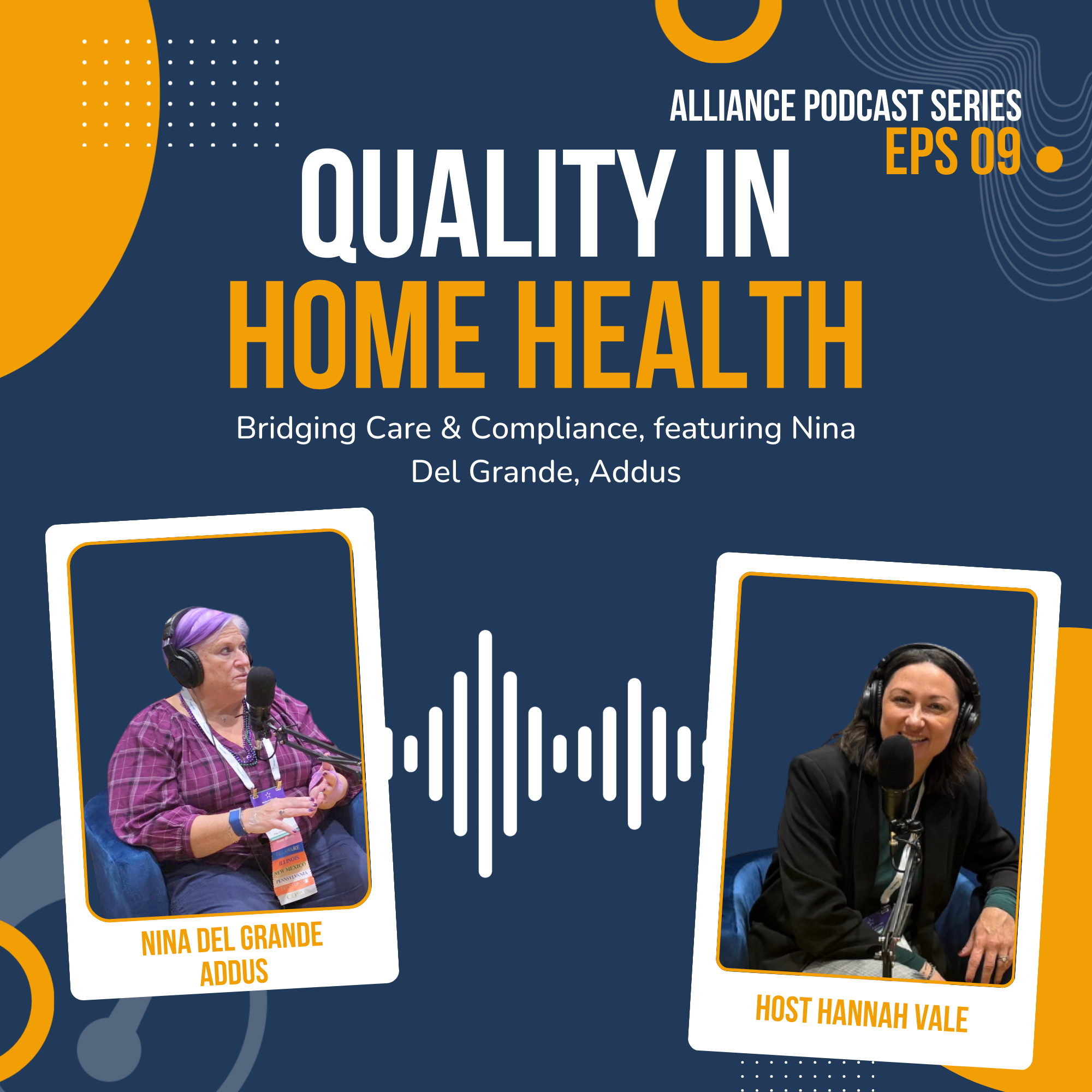
All right, we are here at the alliance for Home Care 2025, and we are in New Orleans, and I am sitting down here in our booth. You can kind of hear some background noise. We just got through ready for sessions this afternoon, but I have Nina sitting down with me. Nina, will you introduce yourself and who you're with? Sure.
[00:00:39] Speaker B: So my name is Nina Delgrande, and I am with Addis Home Care, and specifically in the home health division.
[00:00:45] Speaker A: And we were talking for just a minute. I dragged you over here to sit down and do this podcast. You are decked out in purple today. It looks amazing. I know you guys can't see it, but she looks amazing.
And we were talking about your passion for. For quality, and I want you to just kind of share where you're at with that today.
[00:01:03] Speaker B: Yes. So I am the quality director of the home health division, and I have a huge passion for quality. Because without quality, you know, everything's based on quality, Right? So we have a passion for quality care, for patient satisfaction. And so we feel like quality drives everything. It drives your finances, it drives everything, your referrals. Everything starts with quality. And so from your star ratings to pretty much everything, the documentation that the clinicians are providing, the care they're providing, infection control, every single aspect of quality.
[00:01:35] Speaker A: Ooh, you're preaching to the choir. I mean, when you're thinking through the quality piece, we have to think about, or I do the patient and the care that's given directly to the patient face to face, that is one thing, but that's not how quality is actually measured. Right. That's where the quality has to take place. But kind of in the back office, you're building what I like to call the paper patient, and that's your documentation. Those are the things that actually bring those star ratings. Make sure you're doing all the things so that you're maximizing the reimbursement and getting those things that are going to cause your agency to grow. How do you, from a very practical standpoint with what you do, balance that patient facing care and what actually happens at the bedside of the home care and the compliance piece when it comes to documentation?
[00:02:19] Speaker B: So that's a great question. And so we have Educators who work with onboarding first and preceptor programs to make sure we have good preceptors onboarding our staff so that they're actually providing the quality and measuring up to our standard at attis. And then on the back end, we have what we call a workflow team who scrubs every new start of care looks to make sure that not only are we answering the OASIS questions, right, and if they're not, then we reach out to the clinicians and kind of have that conversation, get them changed to the correct so that we're getting our maximum reimbursement.
[00:02:54] Speaker A: Re educating in the same vein too, right?
[00:02:57] Speaker B: We use a coding company to make sure we're getting our maximum coding. And then I have an internal team who does internal and external audits, but we do internal audits weekly and a random selection of patients. And we send those audits to the operations team and say here's kind of the corrections you need to do to bring this chart into compliance. So we educate that way as well. So the clinicians constantly are learning from.
[00:03:18] Speaker A: Just internal audits that we do, creating efficiency all around. Right. So if the clinician does it correctly on the front end, that allows your team to not have to make those changes and go back to your clinician. So if they're learning and being educated and actually taking that to heart. Right. Because sometimes we like to just make the same mistakes, not speaking from experience at all, but we like to do the same crazy things. But if we can really get that education piece. So I love that you brought up your educators. Cause sometimes it's a particular M item, right. That just correct. It's a pain in your side. It's going back to those, is it a one, a two or a three looking maybe at that guidance over and over until you're cross eyed to make sure, okay, does this patient actually ambulate in the way that they say? You know what I mean? You gotta watch, do that OASIS walk, watch the patient in the home, get that in your brain so that it can get onto your paper patient.
[00:04:09] Speaker B: And we'll, we will like track and trend. Like is it in just like a, is it a home health division wide issue? Like everybody's missing this, like they're all missing the GG items, which is huge for your value base or is it specific clinicians? So we need to do more one on one training with just those clinicians. So we, the quality team will kind of track and trend all that data for the operations team. And we work very closely with operations and we sort of work hand in hand. Because you have to.
[00:04:33] Speaker A: Yeah.
[00:04:34] Speaker B: You can't. Like, you can't work in silos anymore.
[00:04:36] Speaker A: Yeah. Nope. You got your clinical, your operational and your financial teams. And if they are not working together to make sure that what's happening with the clinician is blowing over to your operations and then hitting your financials, you've got issues. So it sounds like you guys have a really good system.
[00:04:53] Speaker B: We do.
[00:04:54] Speaker A: Because of people like you who are so passionate about it, probably people. You have to have that person.
Usually it's like. And don't take the. I'm not calling you this name. Okay. I'm just. I'm just saying you have to have. I won't even look at you while I say it. That Roz. Do you know who Roz is from Monsters, Inc. Who's like, I'm watching you, Wazowski. You gotta have that person in the office who's like, get your start of care done within your 24 hours or whatever the requirement is. She's chasing people down and she is passionate about doing the right things.
[00:05:26] Speaker B: They know that I'm the facilitator.
[00:05:27] Speaker A: Yes.
[00:05:28] Speaker B: Like, I will.
[00:05:28] Speaker A: That's such a nicer way to put it. I will. Yes.
[00:05:30] Speaker B: But I'm Roz. And I will, like, put the purple.
But I will put people together.
[00:05:36] Speaker A: Yes.
[00:05:36] Speaker B: And say, like, I may not be the one, but, like, billing and ops, you guys have to talk together.
[00:05:41] Speaker A: Yes.
[00:05:41] Speaker B: And so I'll facilitate a call.
[00:05:43] Speaker A: Good.
[00:05:43] Speaker B: Get everyone together. And I may not be the one that's going to solve it, but I'll get them together and get them talking. Yeah.
[00:05:49] Speaker A: And that's sometimes just all it takes. Right. We got to be in the conversation, be at the same table.
[00:05:54] Speaker B: Absolutely. If you're.
[00:05:55] Speaker A: If they don't know what's going on with their other team, they don't know how they're impacting them. So good to talk with you. Thank you so much for agreeing to sit down with me today.
[00:06:02] Speaker B: You're welcome. Thank you.
[00:06:03] Speaker A: Yeah.