Episode Transcript
[00:00:02] Speaker A: You're listening to Home Health Revealed, where the business of home health comes to life. Hosted by Hannah Vail, each episode brings real conversations with the leaders, innovators and experts shaping the future of the industry. From reimbursement and technology to leadership and growth, this is Home Health Revealed.
[00:00:20] Speaker B: Okay, so let's go ahead and jump in. Go ahead and introduce yourselves.
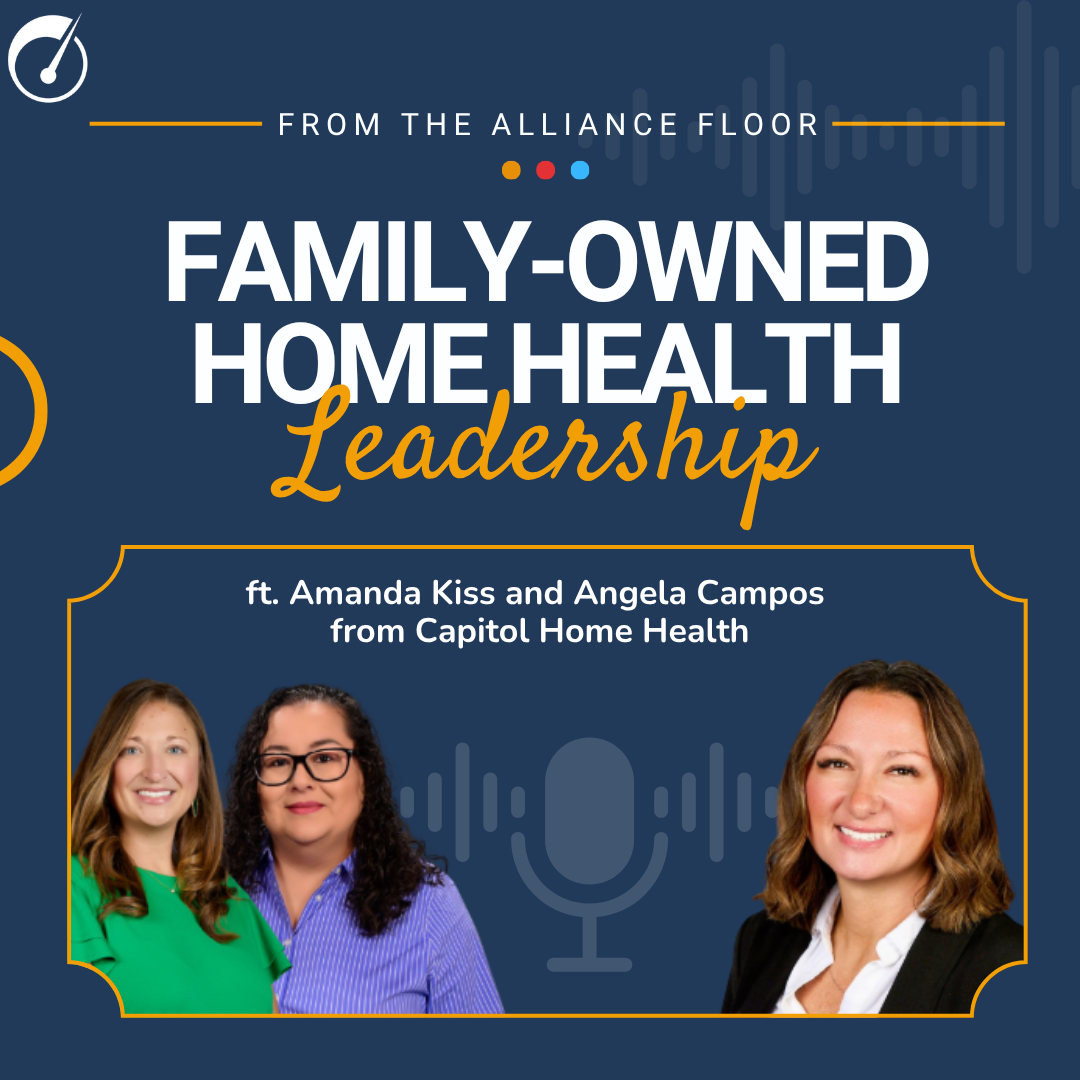
[00:00:24] Speaker C: My name is Amanda Kiss. I am an RN and I'm administrator for our home health agency in Austin, Tex. We have a branch and temple as well.
[00:00:33] Speaker B: Okay. And
[00:00:35] Speaker D: hello, I'm Angela Gonzos, rn.
I'm also an administrator for our San Antonio branch with Capital Home Health.
[00:00:44] Speaker B: Very nice to have both of you. We're at the Alliance 2026 in Washington, D.C. so just wanted to get to sit down and talk with you all about some of the things you're facing, some of the challenges that you're having. Go ahead and jump right in. Amanda, will you start?
[00:00:58] Speaker C: Sure. So we're a family owned agency. We're very blessed. We just have a great group of people that we get to work with every day. And I think our biggest challenge right now is the growing industry, all the different platforms. AI now is the word out that we're just trying to find what's the right solution for us so that we can scale, we can grow, but all while providing the best patient care that we can. That's why we're in this. And I think it's somewhat of a pressure because you want to make the right choice for your clinicians. We don't have a lot of turnover, which is wonderful. So our clinicians are relying on us to make the best choices that, you know, that they can use whenever they're taking care of their patients so that they have all that access and resources that they need. So it's just a lot of layers within the industry, within our team, and just trying to make sure that we're making the right choices. And that's kind of why we're here at the alliance is really seeing where other people are struggling. And it's the same from our ladies in Rhode island that we talked to this morning from California. You know, it's. We're all having the same challenges, but differently. I guess it was nice just kind of seeing how rural folks do it because we're in Texas, so we have city, we have rural. Like, how does Montana do their, you know, patient visits as opposed to, you know, Rhode Island? Yeah, it was. It's just, it's a lot of learning and seeing how people do things. But we all are trying to get to the end result, which is having, giving great patient care, keeping our patients in their home, but also supporting your clinicians and helping them to feel a part of the team so that we can grow. Because if you lose your clinicians, you're not going to grow because now you're trying to find people who are going to go see these patients. So it's a lot of layers. So trying to figure out just the right solutions for our team.
[00:03:00] Speaker B: Now are your clinicians pushing for this? Have they come to you and asked for some of these solutions or are you out here just kind of preemptively?
[00:03:09] Speaker D: We're out here preemptively.
Our clinicians are great. Like she says, our tenure is really good. We do not have a lot of turnaround on our clinical staff, which is amazing.
[00:03:21] Speaker B: That is amazing.
[00:03:21] Speaker D: Which is, you know, it's great for a patient to go, oh, you know, I want to be seen by therapist, so and so. And they're still with us, so it's pretty amazing. And you know, as, as a company as a whole, like we say, we are family owned and we're very blessed.
They are very big advocates for work life balance.
So they're kind of seeing all the changes in our industry, you know, trying to do more with less. What can we do to make things easier for our clinicians? Because when they're not stressed and they're happy, they're providing the best patient care that we can ask for. And we are very patient driven.
So preemptively we're out here looking for what's the best AI solution, you know, how can we make their job easier so that way they can just concentrate on that great clinical care for our patient.
[00:04:09] Speaker C: And they do like, they rely on us to tell them what's coming up the pipe. Like what are we looking at? And we communicate so well with our team. We do daily standups, everybody knows what's going on. And the different softwares that we have allow us to communicate with the entire team with all the branches. So if something is coming up the pipe, hey, what do you guys think about this? You know, is this something that you think you'd want to add to your day to day? Is this going make your life easier? I mean we do, you know, we do interoffice polls. We do, you know, we're getting everyone's opinion all the time. So it's every, the buy in is there because they've known what's going on along the way. So it's, it's one it's, it's just a really great setup that we have and we have a wonderful leader and so she makes sure that nobody ever feels left out.
[00:04:55] Speaker D: Yeah. One thing I have to say, you know, working with Capital Home Health is we are very transparent. You know, we have both worked with other employers, you know, where you kind of find out last minute or you don't find, find out at all, you find out second hand.
One of the great things about our leadership here at Capital is that they're very transparent with us as administrators. And as administrators, we're very transparent with our team. And I think that's something that they really do respect.
And then we both attended the leadership conference that was here prior to this conference starting.
And it's one of the big factors that they talked about is the communication and transparency is what makes, you know, a good leader. And the fact that, you know, our owners, you know, our governing staff that are very transparent with us, we practice a transparency with our clinicians, you know, even as well with the patients when they sometimes come with questions. You know, we're very transparent with what we can and cannot provide.
And I think that's what makes us stand out.
[00:05:57] Speaker B: Yeah, it definitely starts with leadership and trickles all the way down. So aside from the daily standups I know you mentioned, what are some other things you do really to provide that transparency? And I, I would like to ask specifically about data, because I know you mentioned data when we first sat down and just the inundation of all of the data we have at our fingertips. But how does data play a part in that transparency?
[00:06:21] Speaker C: Oh, our clinical supervisors and case managers we have in office, they're running reports on our clinicians in the field all the time. So we know who's not having the best outcomes, who needs a little bit more help in certain areas.
There's so much data. So, you know, our QAPI program, you know, we, we are not an agency that's putting QAPI on the back burner like we are every quarter. We are talking about things we are in real time. These are our numbers, this is what we look like.
You know, we've demoed quite a few different things. And so just trying to, I mean, there's some that are out there right now that we're looking at that can tell us what we're going to look like in a year, two years, what we're on track to make, what we're not doing so well at so we can make changes now. Like there's, there's just so Much information at your fingertips. If you had like a month, you would still not have enough time to find all the data that you might want to be pulling. But of course, your CMS reports and things like that. So we are in all of our reports constantly on, you know, discharge, function, score, you know, all the things that matter for reimbursement and all the things that CMS is throwing at us constantly. We have to shift adjustments, make new changes. And that's healthcare, right? Like, you have to be able to shift and change with the times and what information you're given and how much time you have to do it.
But your main question was, the clinicians too, they know.
So I invite them to our qapi. So we do our QAPI presentations with our governing board and then we present it to our teams. So after I've presented it and I've gone through all the data with them and they have questions or recommendations and I need a new game plan, maybe I'm not doing something as great as I should have been, or I missed something.
Like, we're just so open to feedback. Like, I'm okay to say that I'm wrong about something and because I need to grow always.
So if there's a better way that I can be doing something, you know, Angela's so amazing. She's gonna be like, this is how I've been doing it and it's been really effective. And I'm like, that's amazing. Like, if it's finding a new vendor that is gonna give my, you know, clinicians a better option on supplies and it's gonna cost, you know, it's gonna cut my cost like 50% on a foam dressing or something, you know, like just all the little things matter.
We just, we work together every day and we want to be on the same page. And that's been really important to us as leaders in growing this company is that we have one another and our governing board and just our leaders in the industry itself. We're family owned. So it's not like I gotta wait from someone in another state to tell me if I can do something.
Yeah, it's been really nice.
[00:09:01] Speaker D: And we really do drive like that. Family culture. The one thing we can say is our clinicians have no problem coming directly to us and saying, hey, this is something I'm encountering out in the field. Is there anything we can do about it? Or, hey, you know, I've noticed this. You know, what do you think about implementing this? And we take the positive feedback, we take negative feedback. And we work with that, you know, versus, you know, the shots are being called from above and you got to do what you got to do here. Like, we have open communication. One thing that we are need going through all the learning. But at the same time, even though it hasn't happened, we're letting our clinicians know this is in the pipeline. This is where we're at. This is what we're looking on. These are some of the areas that we can see of improvement. The way also, Amanda talked about Kwabi. We're very transparent with our Kwabi, with clinicians. And we like, you know, we give kudos, you know, when it's deserved. Like, look, guys, we're doing so great and all this.
We also.
Some people think it's crazy that we actually review every patient survey that we get back in. So we review every patient survey and I know they have like the freehand pipe where they can, you know, type in. They can write in a concern that they might have some area of improvement, or sometimes they're just boasting about how great the care was and they'll sometimes mention clinicians by name.
So we recognize them during our we case conference, like, hey, you know, you know, we receive recognition. So. And so this is what they said about your care. And we're really big about also, like recognizing the good work that they do because sometimes you're out there and we have to. The reality is healthcare is a thankless job.
So when our clinicians get called out, whether it be on a Google review, whether we get a phone call, you know, that's something that we put on our monthly newsletter. So that way they all see who got the kudos, you know, and, you know, we reward them for it as well. So always showing that appreciation and letting them know that, yes, you're out in the fields, you know, we don't see you every day, but we know you're doing a great job. And thank you.
[00:11:07] Speaker B: That's incredible, really, because it is thankless at times.
I know that clinicians, a lot of them are very intrinsically motivated and they do what they do because they care. But I'm sure getting that feedback and then assist also in front of your peers, it can also prompt meaningful conversations about the care that you're giving, I'm sure, and means a lot for them to hear that. So that's really incredible. I love that you guys are doing that when you leave the conference. And I know there's a lot to think about. We have new regulations. I was able to sit in several sessions yesterday and just. It is information overload.
What do you feel like is a takeaway so far? I know we're not through, but when you leave, you're like, okay, this is it for me. Like, this is the one thing I want to do, or this is the one thing I want to dive deeper in and think more about.
[00:11:57] Speaker C: So we still have another day or two. I know, but.
But for me, I. I want to, I want to grow my. In office supervisors. So we had, we received a lot of tools, a lot of ways to look at the different generations that we're hiring. And that's kind of something I don't always think about. Like, what generation are you from? How do you receive information? How do you receive feedback? So I need to do better at that.
But my first thing will be to get with my team and ask them, you know, what can I start right now? What should I stop right now and what should I continue? Like, as for me as a leader, I want to get feedback on how they view me as their leader. I think the day gets so busy and I maybe need to be more engaged with them as humans as well as clinical staff. So I need to do that. So that, that was the first thing for me from the first day that I was like, okay, I. I need to. They don't need to know how busy I am and all the other things that are going on that I'm dealing with because that they don't. They. That may not affect their day.
So that, that's kind of my first thing. I want to, I want to talk with my leadership. I want to see how they want to grow. And just because we do annual reviews every year and we, we get, you know, game plan for them for the next year, but maybe it needs to be more of a conversation than just once a year.
[00:13:23] Speaker B: And I like that you said, what should I stop and what should I start? Because I think a lot of times we always think about starting something, implementing something, bringing something else on.
But I do think that stopping something can be just as important because maybe we are doing something that's taking too much time or not meaningful anymore that we can cut out of our day to create more space for something that fills it in a better way.
[00:13:46] Speaker D: Most definitely. And I know that's one conversation we were having yesterday. And you know, it's something that we. Good feedback that we got from the conference. And it's like, you know what, it opens our eyes and it's like, we really should do like this survey. So that way we know what areas in our sales as leaders that we can approve, you know, for the better of our company, for the better of those who work with us, and you know, also growing our leadership staff, you know, the clinical supervisors, you know, lead them to a path of growth.
So that way we can provide that information and then, you know, the clinicians out in the field that talk with them every day can feel more supported as well.
[00:14:26] Speaker B: Yeah. You're investing in them, right? As your leaders, as your future, continued future of your business.
Well, I love that. Thank you guys so much for sitting down. I've really enjoyed getting talked with you. Is there anything I haven't asked that you think I should?
[00:14:42] Speaker C: No, I think I want to know when the moratorium is going to be over.
[00:14:46] Speaker B: Amen, sister.
[00:14:47] Speaker C: That's really what I want to know. And I was like, come on, we've got this lady up here tonight, she's talking to Dr. Oz.
I mean, that was like the best thing though is that I realized they do care and they do know what we're going through and, and, and the big why, Right. I get it. And I knew that they're why they did it, but I don't know. That's what I'm hoping. Well, I'm not going to get that answer. But
[00:15:13] Speaker B: I was hoping too that we would come here for some big announcement on what we're doing. And I think, I think you're right, though. I think it's just been this saturation of an understanding of what, what's going on. Because I know a lot of agencies have really kind of taken it personally even.
And so to come together and think through, okay, this is why things are happening and this is how we're moving towards a solution. We're not getting there as quickly as we would like to, but we'll get there. Yeah.
[00:15:41] Speaker C: As life goes. I just asked Palmetto a little bit ago when review Choice demonstration, when the demonstration was actually going to be over. She's like 2029. I'm like, God, these people, these are short term things, I thought, you know.
[00:15:54] Speaker B: Yeah, exactly.
[00:15:55] Speaker C: So anyway. Yeah, but it's just nice seeing all the people that we see over screens, seeing them in real life and like engaging in a face to face. Because that world is sometimes, you know, it doesn't exist. Exactly. Used to.
[00:16:08] Speaker B: Well, thank you guys again.