Episode Transcript
[00:00:02] Speaker A: Welcome to Home Health Revealed, where we share real stories from industry leaders about home health, palliative and hospice care. Brought to you by Velocity. Velocity's easy to read coding and revenue cycle dashboards let you grab your cup of coffee and quickly see the health of your organization.
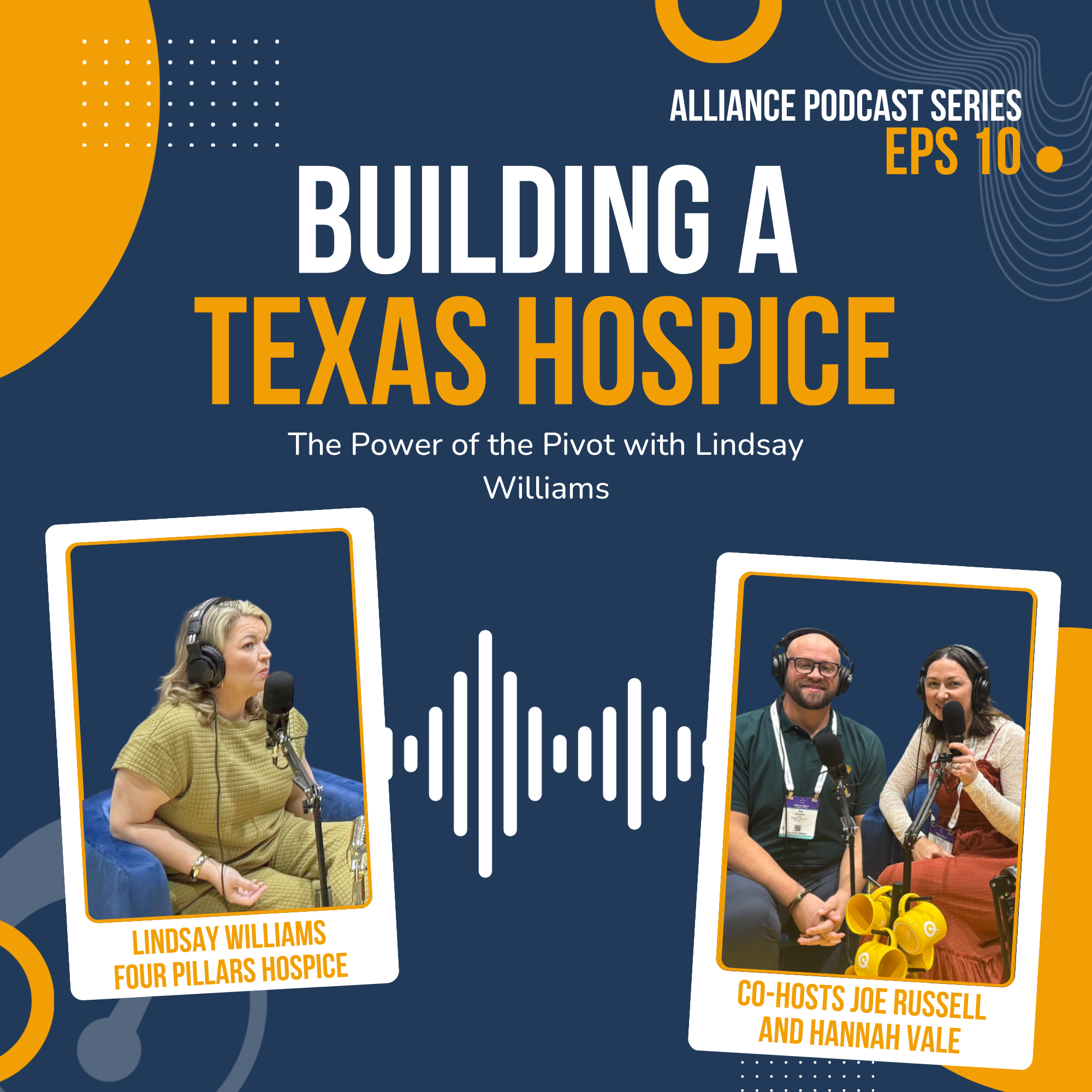
Welcome to Home Health Revealed. We are here at the Alliance 2025 and it's day two. We're here in New Orleans. It's the Tuesday. Things have been buzzing. It's been a great couple of days. And we have the opportunity today to sit down with Joe Russell hosting with me. Joe, welcome. Tell us who you are, what you do.
[00:00:35] Speaker B: Thank you. Thank you. I am the vice president of network management and contracting for Strategic Healthcare. Strategic Healthcare is a healthcare consulting firm and we do managed care consulting and government relations. So where the two worlds collide, that's. That's the space we work in.
[00:00:53] Speaker A: Joe is also a fellow Ohioan. So we have heartbreak that we share with the Cleveland Browns. We have triumph that we share with the Ohio State Buckeyes, with the Guardian slash Indians. It's a whole racket, so.
[00:01:06] Speaker B: Well, don't want me in with the Browns because I'm a Bills fan.
[00:01:08] Speaker A: Oh, yeah, that's. Forget about that.
[00:01:10] Speaker B: But I do share the pain of many Ohioans.
[00:01:12] Speaker A: Yeah, yeah, we're there for it. But today we have Lindsey Williams with us. And Lindsey, I'm gonna let you intro yourself and tell us who you're with.
[00:01:19] Speaker C: I'm owner and CEO of Four Pillars Hospice.
[00:01:22] Speaker A: Welcome and tell us where Four Pillars is located.
[00:01:24] Speaker C: Four Pillars is located southwest of Fort Worth, Texas.
[00:01:28] Speaker A: Fort Worth, Texas. And so, Lindsay, you are relatively new, not to this industry yourself, but you've recently started Four Pillars Hospice. And so tell us a little bit about that, where you're at with that. And then I want to talk about some of the, the challenges as you're entering this market.
[00:01:46] Speaker C: There's been definite challenges. We have learned a lot over this last year.
Starting this, it was a startup. There's lots of changes going on right now, lots of regulation changes, lots of things that are, you know. Yes, we knew the red tape was going to be there and the hoops were going to be. Have to, you know, jump through. But this last year has been a definite learning curve for me and my team.
[00:02:06] Speaker B: Have you guys seen any impact of or any scrutiny? You know, there was the whole conversation over the last couple of years about fraud in the hospice space. You know, as someone who's kind of starting one, what are some of the barriers that you've seen in that process there is.
[00:02:21] Speaker C: We actually purchased a hospice company that was out of Houston, which is getting a lot of the scrutiny right now.
[00:02:26] Speaker B: Oh, wow.
[00:02:26] Speaker C: One example is we were not able to change our home office. So when going into this process, you know, we were under the assumption that we could come into our community that we serve and do a really well, you know, a good job with just the community that we are embedded in. And now we have to actually start a home office in Houston.
[00:02:50] Speaker B: Oh, wow.
[00:02:51] Speaker C: So that was not.
[00:02:51] Speaker B: You don't like Houston, do you?
[00:02:52] Speaker C: No, that was not in the cards. No, we love Houston. But I'm saying we're. It just wasn't in the cards. I mean, we're not from there. I'm actually more West Texas. I'm from El Paso and then was raised in oil and gas, so Midland, Odessa.
[00:03:07] Speaker B: Awesome.
[00:03:07] Speaker A: Yeah.
[00:03:08] Speaker C: Yeah.
[00:03:08] Speaker B: Texas is a big state.
[00:03:10] Speaker C: Friday Night Lights.
[00:03:11] Speaker B: Yeah. Friday Night Lights.
How long have you ever driven across the state?
[00:03:15] Speaker C: Yes.
[00:03:15] Speaker B: And how long did that take you?
[00:03:17] Speaker C: At least 14 to 15 hours.
[00:03:19] Speaker B: Wow.
[00:03:19] Speaker A: Oh, my goodness.
[00:03:20] Speaker B: We can get across Ohio. Like four.
[00:03:23] Speaker A: Well, yeah, yeah, Maybe like three for me. Cleveland down to, like, Cincinnati. Four.
[00:03:28] Speaker C: It takes me four hours to get back home just from where I'm at.
[00:03:30] Speaker A: Oh, my gosh.
[00:03:31] Speaker C: And it takes me eight hours to get to El Paso.
[00:03:33] Speaker B: Are you going to get a company helicopter here soon?
[00:03:36] Speaker C: We actually. We actually just leased a jet because it is going to be. Because we actually, our. Our plan was we were going to go back home, West Texas, to go open a rural office there.
So from Crane, which is south of Odessa, to Houston, you're looking at 12 hours.
[00:03:53] Speaker B: Wow.
[00:03:54] Speaker A: Are you driving the jet?
[00:03:55] Speaker C: No, no.
[00:03:57] Speaker B: She's drinking mimosas in the back. Come on now.
[00:04:00] Speaker A: Well, one of the things that you mentioned earlier, we were talking about was how to serve a rural population. So talk to me about some of those challenges and really your mission, your drive to serve that population. So.
[00:04:12] Speaker C: So, again, I'm from a very small town. One stop lot, 3,000 people in the heart of oil and gas. So the industry that's there, you know, you think about money. Yes, there's a lot of money there, but there's also a lot of poverty. There's a lot of things that are going on in those communities. And even though there's wealth there, there's a lot of mismanagement of money as well.
[00:04:32] Speaker B: Sure.
[00:04:32] Speaker C: So. But what we see is just the need because you don't even have, like, a chain grocery store closer than 30 miles away.
[00:04:41] Speaker B: Wow.
[00:04:41] Speaker C: When it comes to health care, getting the help that those patients need in those areas.
It's hard. You're getting very bare minimum care. So going back home, I had conversations about six months ago to a year ago, just about what the need was. And you have big name hospice companies that have come in and they're offering bare minimum.
[00:05:01] Speaker A: Why?
[00:05:01] Speaker C: Because it's hard for them to get their nursing staff to get out there, their CNAs out there. I mean, they don't have the support that they need. So for us, we're really wanting to just go into where we're from. My administrator, Brian, is actually from my hometown as well. So we're going to go in, we're going to just create a culture that's different. We're going to pull people that we know that have their nursing degrees, have their CNAs to be able to treat that population and have a team there that can do a really good job because they deserve the care that, you know, Dallas Fort Worth is getting.
[00:05:37] Speaker B: Sure. Fantastic.
[00:05:39] Speaker C: That's really our drive. You know, our teachers are getting older and our people that helped raise us. And so that's what I think about. Even like in Granbury, that's where I'm at now. And the same thing. I mean, there's a population there that they don't get the standard hospice care. I mean, there's cut corners, there's. And it shouldn't be like that.
[00:05:58] Speaker B: Sure.
[00:05:58] Speaker C: I mean, we're. We're all able to do a really good job. And why not do that?
[00:06:03] Speaker A: One of the other things you mentioned was utilizing the computing, utilizing the community.
[00:06:09] Speaker C: Community.
[00:06:10] Speaker A: The opportunity in the community. Yeah, was utilizing the community. Even some of those resources that maybe aren't commonly thought of to pull in.
[00:06:19] Speaker C: Talk a little bit about what you're.
[00:06:20] Speaker A: Planning to do with that.
[00:06:21] Speaker C: So, I mean, you think about the history of hospice and where hospice originated from. It was volunteers, it was a community, it was people helping people. So if we can get back to that, we're going to do a really good job. You know that not only are the boxes going to be checked, but we're going to actually be servicing people that truly need help. I mean, I told you recently, I lost my mom and I've been in this industry. I know what's going on. And to get subpar care, it's very frustrating because I know what's on my heart, I know what's on my team's heart. It's not that hard.
Yes, we're checking boxes, but you should be able to do over and beyond, just bare minimum. So utilizing community, utilizing the Volunteers and communities want to get involved. Communities want to help their neighbors.
So that's kind of us that we just want to be the glue that helps fill in the gaps and do what's right.
[00:07:15] Speaker B: And the challenges that you guys would that face as more of a rural provider and think I would assume that there's also opportunities in that. Right. I mean if you've got your providers can only see a couple patients a day because they're so spaced out, that also an opportunity to provide more personal care and spend more quality time than you might otherwise in an urban environment. Can you talk a little bit about some of the challenges that are unique and maybe some opportunities for you?
[00:07:44] Speaker C: So I mean, of course you want to feed into your staff as well. So something that we've created is that.
[00:07:51] Speaker C: Our entry level staff, which would be like our CNAs, are actually on a salary. And the reason that we do that is because yes, they may not be doing patient care, but there's something in the community that they can be doing. There's something that they can be doing even for us in our organization, building up something. And right now, especially since we're a startup, I mean we're trying to feed into them, we're finding girls that are wanting growth, so changing lives even inside of our organization.
So that's actually really huge to us as well.
[00:08:21] Speaker A: A lot of agencies are really on a pay per visit or a certain level of points required, so many points for different levels of visits. Right. And so you're starting them off on a salary. How did you come to operationally, how did you work through that?
[00:08:37] Speaker C: So it was not easy, you know, because you're gonna get. And I have a team of people that are looking at me as well. You know, I have investors that are like, hey, you need to explain this to us. Thankfully, they are the same mindset and we just align really well on the fact that if you do right by people, people are gonna do right by you. And again, in your organization and outside of your organization.
So with the cna, the structure would be where, yes, they're seen in doing patient care, but they're also helping us with some of our marketing so stuff. So wearing multiple hats, giving them roles where they may not have had the opportunity in other organizations to do some of the things that we're letting them do. You know, they go to events with us. They are our team. They're. They're sitting right next to the owner, CEO, coo, you know, the administrator. We're showing them that there's more out There.
And that has proven to be. I mean, they're there.
You tell them, hey, you're here for me from 8 to 5. But they go over and beyond. So, again, if you're doing the right thing for the right reasons, it's gonna end up making sense.
[00:09:43] Speaker B: Absolutely.
[00:09:43] Speaker A: You're valuing them in a way that's beyond a dollar.
[00:09:47] Speaker C: Yeah, yeah. And it's more important. What we do is more important than the bottom line, period.
[00:09:52] Speaker B: Absolutely. I mean, the two most important days in everyone's life is the day they're born and the day they die. And, you know, if you can travel that journey with somebody, obviously means a lot to them, but also to their family. So it's more than just providing a service or to someone. It's part of their life.
[00:10:11] Speaker C: Well, Kelly has an amazing. I don't know where she went, but she has an amazing thing that we teach our girls and our staff. I say our girls. We have boys as well, but I.
[00:10:20] Speaker B: Was gonna ask about that.
[00:10:21] Speaker C: Yeah. What's wrong with the boys?
[00:10:22] Speaker B: They don't like prospects.
[00:10:24] Speaker C: No, they do.
[00:10:25] Speaker B: No, I say. I say guys a lot, even if we're talking about women.
[00:10:28] Speaker C: Yeah.
[00:10:28] Speaker B: It's got. Become more sensitive, but it's like, I think you guys know what I'm talking about, you guys.
[00:10:33] Speaker C: But we have one chance to get this right. That's it.
[00:10:36] Speaker A: Yeah.
[00:10:37] Speaker C: There's not. We don't get to make this up. We don't get to come back later and do a better job next time. Because sometimes when we go into that family's home, that's it. You have one chance to get it right.
[00:10:49] Speaker A: And first impressions are very important. When you're walking into a hospital hospice situation.
You know, the notice of enrollment and all of the things. I mean, from start to finish, tensions are high, questions are aplenty. You know, emotions. Right. Are kind of in turmoil. A lot of times, there's conflict within families. And hospice really goes deeper beyond the patient. You are working directly with the family even past the time of death. And so when you're in a rural environment, how are you meeting the needs of families beyond the time of death?
[00:11:24] Speaker C: So, again, it starts with the community. We start at the community level, in the churches. We start in the community. I don't get a lot of referrals from doctor's offices. I get more referrals from people in the community, whether it's the nonprofits that I'm part of, whether it's the chamber of commerce. We get referrals from our community sources. And why? Because I do a lot of education in the community. I'm constantly out teaching. This is what we do, this is how we can help. I'm putting puzzle pieces together so we actually have a group of people that it doesn't matter if you need a haircut at home or you need financial advice. I've got somebody that you can call that I trust and that helps to alleviate some of those stressors with the families.
[00:12:05] Speaker A: That's good.
[00:12:07] Speaker C: And that's how it's been. I mean, yes, I can go into doctors offices just like everybody else does, but it, it's more than that. And thankfully where we're at and where we're going, the doctors are really loving what we're doing because they're not having to have those conversations with their patients. And that's the thing that we've seen too is they don't want to have them, they don't want to have those conversations.
[00:12:27] Speaker B: Probably the worst part of that job isn't it telling someone that they're terminal and like, oh, sorry, really, here's your options, you know, and then they have.
[00:12:35] Speaker C: To be so black and white about it. And how awesome is it to have somebody that hey, I've got a friend, I want you to talk to them. And my thing is, even if they don't choose us as their hospice provider, we have great ones that we partner with. So a lot of collaboration goes into it. We're not the cutthroat, we're just trying to do right by the patient. So if I have a nurse that is, you know, if right now we're heavy in a certain area and we, it's not a good idea to come down somewhere and water down care because he, hey, it's stretching my nurse really thin. I have people that I can call and say, hey, what is it looking like? Can you go out to Pecan? Because I, you know, right now we're Weatherford heavy or however, you know.
[00:13:18] Speaker B: Right.
[00:13:19] Speaker A: Yeah.
[00:13:19] Speaker C: So we collaborate really well with other hospice companies.
[00:13:22] Speaker B: What is, you know, so what's next for you guys? I mean, what does the next couple of years look like and what maybe some of the things that you're worried about. What are your biggest pain points?
[00:13:32] Speaker C: So growth is going to happen. We have plans for growth. We have three offices that I know that we're going to start in January again like I said that, that Houston office, we have a Stephenville office and we have back home. We're going back home to Crane.
We have teams that are already there that are kind of already being prepped of what our vision is and what we're wanting to do. So growth is going to happen. And if I can just continue to grow and change, even just move the needle a little bit on what hospice is and what it should be.
The things that I'm scared about are, of course, just the changes, the provisions that are coming down, because there's times that you can't help but feel like you're trying to do the right thing and the people that are regulating the right thing kind of make you stay in this box of.
But this isn't right. This is not. We're not doing. I actually made a comment to somebody not that long ago on the phone with. I think it was cms. And it's like, so you're literally telling me that I need to essentially lie because this is not what I'm. This is not what I'm doing. So it took a minute to kind of work through that, and we got on the same page. It's.
[00:14:36] Speaker A: It's some hard conversations.
[00:14:38] Speaker C: It's some very hard conversations.
Well, like I said, moving to Houston, that wasn't in the plan, but we're going to make it work. Power of the pivot. We, you know, and we always feel like sometimes those doors open because we really, really need to walk through them.
[00:14:51] Speaker B: Yeah, it's great.
[00:14:53] Speaker A: Well, thank you so much for sitting down. And it's been great to hear about what all you have going on. Lots of plans for growth, and we really just wish you the best.
[00:15:01] Speaker C: Thank you so much.
[00:15:02] Speaker A: Yeah, thanks for what you do.
[00:15:03] Speaker C: Yeah, absolutely.