Episode Transcript
[00:00:03] Speaker A: Welcome to Home Health Revealed, the podcast for home health and hospice leaders who want to stay connected to the industry and ahead of what's next.
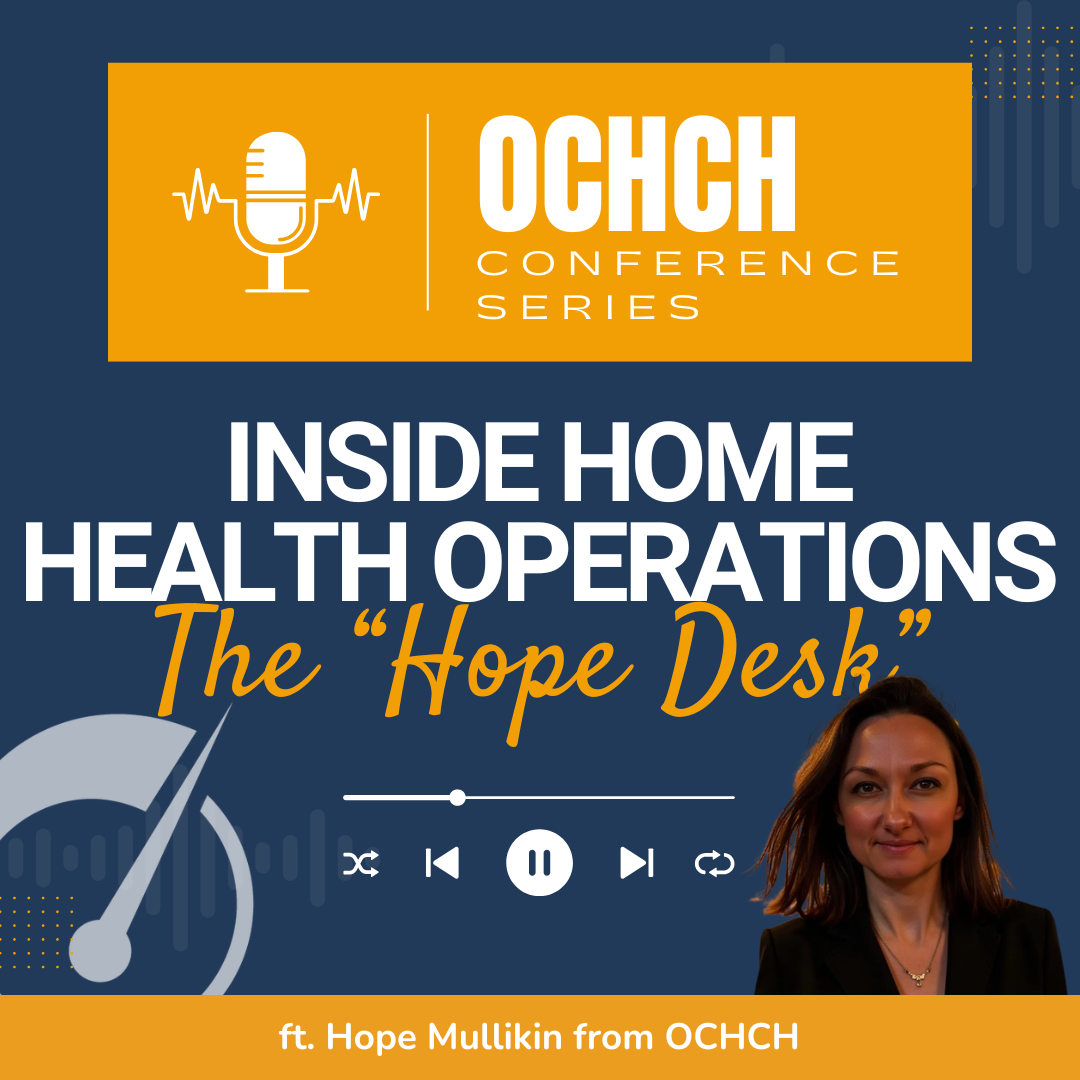
[00:00:10] Speaker B: Hi, my name is Hope Mullikan. I'm part of the team with Ohio Council for Home Care and Hospice.
I was an agency operator and owner for many years. Been in home health for this year, will be 20.
[00:00:23] Speaker A: So long time and Hope and I got to talk for a little while last night at Hofbrau Haus, which is right next door to where we are. Awesome. I think it's German and Polish food.
[00:00:32] Speaker B: Yes.
[00:00:32] Speaker A: It's the Reuben balls. They're amazing.
But Hope gets to do something really cool at the Ohio Council, and I wanted to talk about that and kind of what she's providing there because they have become such a resource for all of these agencies within Ohio. So tell us about the help desk, which we're gonna call the Hope Desk.
[00:00:51] Speaker B: So agency member agencies will reach out for any problems they have, whether that be denials, you picks, new rules, new operations, what it's like to grow, how can they fix their oasis problems from A to Z? I feel like it's all over. We never know what question we're going to get.
[00:01:14] Speaker A: Yeah.
[00:01:15] Speaker B: But we've been successful with it, being able to help whatever it is. And if I don't know, there are others that will. So, yeah, get the help they need.
[00:01:24] Speaker A: Your experience as an rn, as an owner, operator, as somebody who's built a business from scratch, and I loved getting to hear the story about you and your husband and building this business.
It's really cool. But it also gives you, gosh, such a vast amount of experience to be able to answer some of these questions and. Or find answers for people who are coming in. And it's such a place where no judgment. Right. You call, you ask your question, Hope's on the other line. Or Hope find somebody to find the answer for you.
[00:01:57] Speaker B: Yes. And right now we're in the middle of so many changes in Medicaid and it's a lot. It can become overwhelming. And with EVV and all of the changes, the member agencies can just reach out and we can help get them the direction that they need. They can get their EVV taken care of. We have Christy Pyles. She's wonderful. So. So, yeah, it's a great resource.
[00:02:19] Speaker A: Talk a little bit about Medicaid and Medicare because that's been a hot topic before.
[00:02:24] Speaker B: You would send in, you would request an authorization for Medicare or Medicaid. Now when they're dual eligible, they have you know the same provider? Well, they're going to decide if it's going to be Medicare or Medicaid and then they'll send your authorization that way. So there's a lot of different changes.
They're choosing where before they did choose as well, but now it's across the whole state.
[00:02:49] Speaker A: Okay, so when you say they.
[00:02:50] Speaker B: The insurance company.
[00:02:51] Speaker A: The insurance company, yes. Okay, so kind of walk me through this step by step because this is unique to Ohio. Right.
[00:02:58] Speaker B: I feel like with Ohio, we're the trial state.
[00:03:00] Speaker A: Yeah, we are.
[00:03:01] Speaker B: We get everything first.
[00:03:02] Speaker A: Yes.
[00:03:02] Speaker B: We get pre claim review.
We get everything first.
So there's just, there's so many changes. Well, they started it with specific counties and then they grew it across the whole state. So now the counties that already have been through it and have dealt with it, they've got it figured out. Well, now that it's rolled out through the whole state, everyone else is now coming in. So now the problems are just bigger because there's more counties involved.
[00:03:26] Speaker A: So they get a patient, the patient. They, when they check eligibility, is that when we're finding out they're eligible for Medicaid and Medicare?
[00:03:35] Speaker B: Yes. If they're dual. Yeah.
[00:03:37] Speaker A: How do we know if they're dual?
[00:03:38] Speaker B: When we'd run their eligibility.
[00:03:39] Speaker A: Okay. Okay. So an agency wouldn't know that necessarily until they run the eligibility and then they find out they're dual, they're requesting specific services for authorizations. And the state Medicare, Medicaid are determining whether they're eligible for those under one or the other.
[00:03:57] Speaker B: Yes. So if you have a managed care plan, I'm just going to use like Buckeye or Molina. So when they have those, they have both sides. They hold their Medicare, they also hold their Medicaid and then they will determine if the services will fall under their Medicare benefit or if it falls under their Medicaid benefit. And then some agencies are Medicare and Medicaid certified, and then some are not. Some are just Medicaid, some are just Medicare and some are both.
[00:04:23] Speaker A: So if they're not certified for both, they're only able to provide services for whatever falls under one or the other, whichever they're certified for. So are agencies looking to maybe partner with other agencies to fill those gaps or what are they doing to kind of figure it out? Are they scrambling for certification?
[00:04:41] Speaker B: Yes. So we're get, we're seeing, we're seeing all of that come to the help desk, cuz it'll, it'll be like, oh, well now I want to be Medicare certified. How do I Do that? Yeah.
[00:04:51] Speaker A: And you're like, well, that's a process.
[00:04:53] Speaker B: That's a big process. It's a long process.
So.
And then we're also finding the ones that want to be Medicaid for AAA's will find that it's becoming challenging, too, to get a hold of the right people. Just because I think there's so many people coming into the state that's wanting to do it now because of the rates.
[00:05:14] Speaker A: The rates are decent.
[00:05:15] Speaker B: The rates have went up. So.
[00:05:17] Speaker A: And so we have had an inundation with people coming into the state wanting to open agencies.
[00:05:23] Speaker B: Yes.
[00:05:23] Speaker A: Calling the help desk then to ask Hope how they, how they get this open. Hope you've done it before. How do you do it when agencies are providing this care to these patients?
Patients aren't always aware of how their insurance works or if they're eligible for certain things. Right.
So how are these things being communicated to patients? Or maybe even how should they be communicated to patients?
[00:05:47] Speaker B: So the help desk is not just for member agencies. We also take calls from the community.
So if someone calls in and they say, how, you know, my, my mother, she's home alone. She needs help. She doesn't.
She can't take her medicine when she's supposed to. She can't clean her house like she's supposed to. So then I will just give them resources of who can help do these things for that mother. And that's part of the ccbc.
[00:06:15] Speaker A: Okay. I didn't realize that that was all funneled through the help desk.
[00:06:19] Speaker B: Yes.
[00:06:19] Speaker A: That's. That's incredible. That's also a lot. So. So you have people calling literally from the community to find connections for where they can find resources for home care, home health.
So really, you're becoming a referral partner?
[00:06:34] Speaker B: Yes, like.
[00:06:36] Speaker A: Yep. Yes, I am.
What is maybe the.
What is the top question you get at the help desk?
[00:06:45] Speaker B: That's tough because I get so several a day.
I would say authorization.
Why does it take so long to get the authorization? What do I do? They deny everything.
That. That's probably the biggest concern that I see.
[00:07:06] Speaker A: What are, what do you give them
[00:07:08] Speaker B: as answers they need to appeal.
[00:07:10] Speaker A: Yes. You are the queen of appeals.
[00:07:13] Speaker B: They've got it. But you can either appeal on the, you know, you can appeal on the billing side or on the clinical side. So you just, just need to determine which one you should appeal at and why.
[00:07:26] Speaker A: We were talking about operational kinds of things yesterday because face to face is something that we see for denials. You did not accept a patient into care Without a face to face.
[00:07:38] Speaker B: Correct. How can you know your primary diagnosis without one?
[00:07:42] Speaker A: You didn't give it time. You didn't say, I need this within five days.
[00:07:46] Speaker B: No.
[00:07:46] Speaker A: You just said no face to face. I'm not taking that patient. I think agencies are afraid of doing that. Agencies are afraid to say they won't take a patient without a face to face because they're afraid it's going to make their referral sources not want to send them things.
Did you find that to be true?
[00:08:04] Speaker B: No. Because how are you going to give the proper care if you don't know what your educating the patient on? If you don't know their primary diagnosis, how are you going to deliver?
[00:08:16] Speaker A: Right. You're going in blind.
[00:08:17] Speaker B: Yes, absolutely.
[00:08:19] Speaker A: So I think in this conversation I would like to empower agencies to put at least some things in place to protect themselves. Because there are agencies who are going ahead and doing that initial start of care visit and they are putting themselves at risk.
[00:08:33] Speaker B: They have up to 30 days to get the face to face. So they can't. They can do that.
[00:08:38] Speaker A: Yes.
[00:08:38] Speaker B: It just makes it challenging because if your nurse is going in and doing a start of care and you're going in blind and you don't know your primary diagnosis and then you get your face to face and it doesn't match, you're not getting paid.
[00:08:52] Speaker A: Correct.
[00:08:53] Speaker B: So you'll be working for free.
[00:08:56] Speaker A: Right. Which is what we're all trying not to do. We love the work that we do, but we can't do it for free. Not right now.
[00:09:03] Speaker B: Right.
[00:09:04] Speaker A: Other things that we were kind of talking about that maybe we want to touch on was review of every visit note. I love something that you said yesterday. Every note has to stand alone.
[00:09:15] Speaker B: Yes. It has to tell a story and it has to show why that patient needed care. You should not read an entire chart to find out about this patient.
[00:09:24] Speaker A: Yes. And you said you required three things in every note.
[00:09:28] Speaker B: Yes.
[00:09:29] Speaker A: Can you tell me about those parameters?
[00:09:31] Speaker B: Every note had to have education for a medication, something to do with safety and something to do with nutrition because they're all tied together and one helps the other. If you have hypertension, you should most definitely be educating on sodium because that is going to affect your outcome. And your whole goal is to get their hypertension under control.
So it wouldn't do a whole lot of good to go in and educate on lisinopril and not talk about the diet and nutrition that goes along with it to help it do its job. So I just required everynote to have at Least three educational pieces in it. Because you need to really show why are you there, why does this patient need you and what are you teaching them and what are you doing?
[00:10:22] Speaker A: And that creates defensible documentation.
[00:10:26] Speaker B: Yes.
[00:10:27] Speaker A: Which is something we were talking about with an increase of audits, an increase of even UPICs, which to be involved in an agency, they're very challenging. You have to create documentation and verify documentation that you could take in a court of law if need be.
[00:10:45] Speaker B: Right.
[00:10:46] Speaker A: You hate to have to think of things like that, but really you do to create documentation that is defensible.
[00:10:52] Speaker B: Yeah. You need to be able to say why this patient needed you and what were you there for. Otherwise the insurance company, what are they paying for?
[00:11:01] Speaker A: Yeah. Why do they need home health?
[00:11:03] Speaker B: Right.
[00:11:03] Speaker A: Other things that you get to do. I want to know what is coming up with the Ohio Council? You get to do some really cool, like regional events and even you did a handbag event.
[00:11:13] Speaker B: Yes. Next one's May 14th.
[00:11:16] Speaker A: Okay, tell us about that.
[00:11:17] Speaker B: So the bag event is for charity. It's for ccbc, so it's the charitable arm for the Ohio Council.
And we are covering the cost for nurses to go to school. We will pay for their college, but in return they have to work in home and community based services. It can be home care, it can be skilled, it can be hospice, but they have to work in our industry and then we're covering the cost.
So it's a really great program. And it's also allowing the nurses to come in and get to see what home care is about. Because when you're in nursing school, you typically don't get to see that. You go to skilled nursing facilities, you go to hospitals. Well, now you'll get to see what home health is like. And the member agencies can get also get compensated to take on these new students and mentor them for, you know, six months.
And then they're able to bypass that year's experience that's required because they now have been properly trained. So it's really, really great.
[00:12:16] Speaker A: It is. And it's bolstering the workforce. It's bringing an awareness to maybe the staffing shortage things that we're seeing in home based care.
And I love that Ohio is doing this because I think it's so important that we get out there nurses learn about what other options they even have within the nursing field. I know I've heard people who I've talked to who are nurses say, oh, I never intended to get into home health. It does not seem like one of the choices that's at the forefront. You hear a lot of people say, oh, I wanted to work in peds or I wanted to work in the er. And I think a lot of that was just not an awareness. And those are incredible experiences. And we do have nurses who are entering the field of home health from some of those. But I think we want to give people the option from the get go, with education, with proper mentorship, to have the option to enter into home health hospice, home based care.
[00:13:08] Speaker B: Yes. Because you have to really be able to stand alone in home health. You get help, you have resources from your office staff, your co workers, etc. But you become a lot of things for that patient. When you're at the hospital, the lab's on site so they can come draw and do all your blood work, et cetera. Well, no, not in home health. You are the lab.
[00:13:30] Speaker A: Yes. You're the lab.
[00:13:32] Speaker B: Yes.
[00:13:32] Speaker A: Digging that trunk.
[00:13:34] Speaker B: Yeah. You're also the wound care nurse. Yes.
There's a lot of autonomy, but you have to know your stuff for sure.
[00:13:40] Speaker A: Yes, you do. And I got the chance to do a ride along with someone from Lisa's agency. But Hope was a part of that project and it was really cool. I did get to experience a nurse. Incredible, incredible nurse who had to be all things that day. Truly wound care kind of therapy as well. She was talking to some of the patients who were dealing with some emotional issues who were in the home, not the patient. Sorry. It was the patient's caregiver at that time. So she just, she was so with it and able to talk and do her job, get her lab paraphernalia from the back of her car and it was really great for me to get to watch. It really gave me a better picture of what a home health nurse goes through in a day's time. They're some of the hardest working, most flexible for sure people that I've encountered. I'm really grateful to get to be here and thanks for coming up and talking to me.
[00:14:34] Speaker B: Thank you. Bye.