Episode Transcript
[00:00:03] Speaker A: Welcome to Home Health Revealed, the podcast for home health and hospice leaders who want to stay connected to the industry and ahead of what's next.
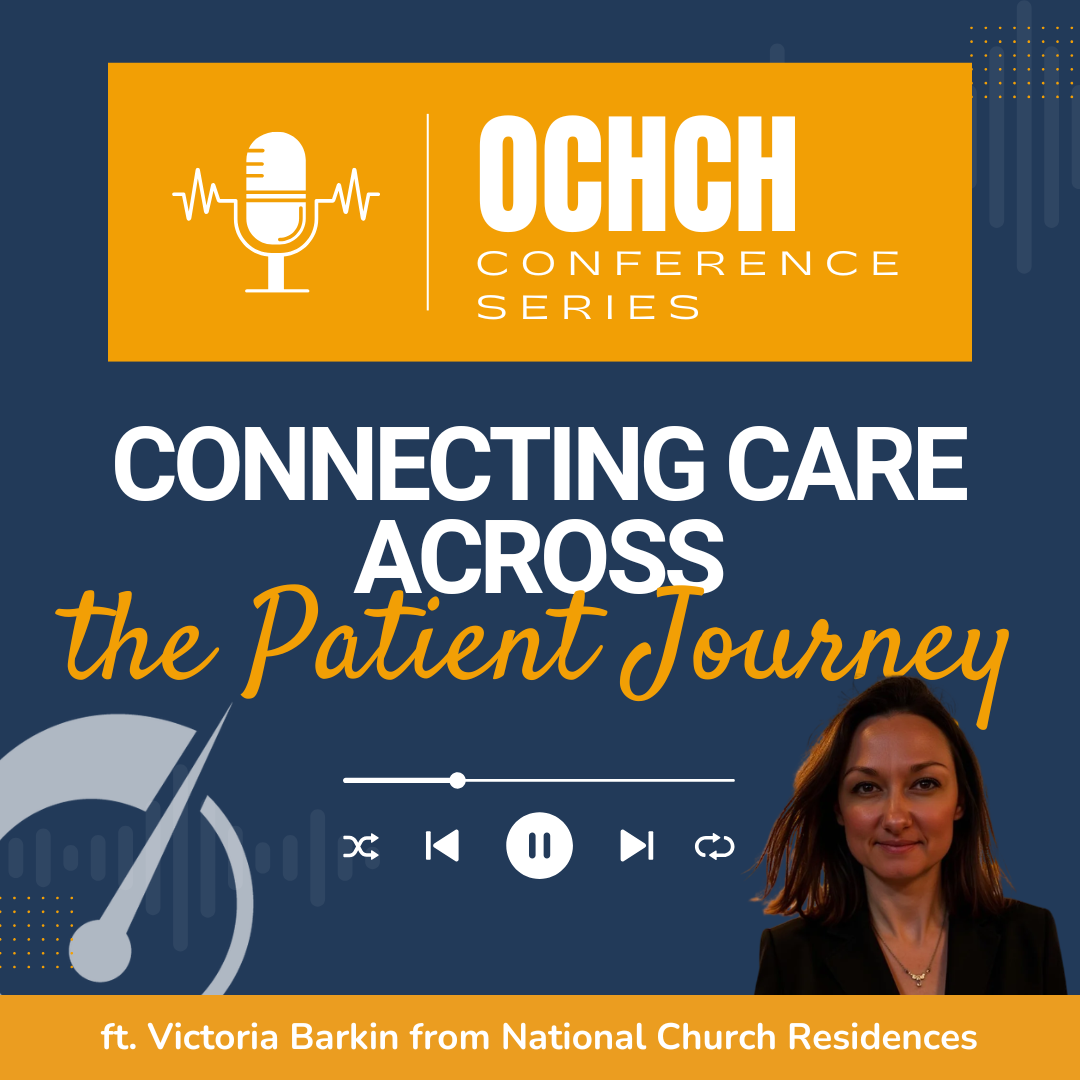
[00:00:10] Speaker B: So I'm Victoria Barkin. I'm the regional director of operations for Home health with National Church Residences.
[00:00:16] Speaker A: Okay. And located in.
[00:00:18] Speaker B: We're located in Columbus, Ohio.
[00:00:21] Speaker A: Operations is a ton of things in home health. Right. What are you super passionate about when it comes to operations?
[00:00:27] Speaker B: Gosh, there's so many things. But I think something that is really true to my heart is creating a true continuum of care for the patients that we serve.
[00:00:36] Speaker A: Continuum of care. I know that's kind of the patient journey in some of what people are experiencing through care and in the home specifically.
[00:00:45] Speaker B: Yeah. So I think when we talk about health care, we often talk about it in silos.
You've got your hospital, home health, primary care, hospice, senior living. But the reality is patients don't experience their lives in silos.
So true. Their needs don't pause and neatly transition from one service to the next.
So to me, care is continuous, or at least it should be. This is where the concept of either creating your own continuum of care is so powerful or, you know, if you have the luxury of working for a provider like National Church Residence is where we have our own built in continuum of care.
So what does that mean? We're able to support individuals across every stage of aging, health needs from independent living, assisted living, memory care, skilled nursing, to home health, affordable housing, hospice, private duty primary care. And we even have support services like Journey Guide and benefits Enrollment coordination where we help the elderly tap into different grants and opportunities to help them age successfully in place.
[00:01:53] Speaker A: So helpful. So many questions around a lot of those different aspects. I mean, you just named off, right, Some heavy hitters. Memory care, I think we've seen more patient opportunity in some of those areas. I think the education and having a place like National Church Residence where you really can educate the patient on what that journey looks like. Because you're right, it's not a stop and start and stop and start for the patient. They have one continuous, exactly, maybe changing need, but need nonetheless. And so some of that really probably falls back more on relationship than anything.
[00:02:31] Speaker B: You nailed it. You nailed it.
I have a story I'd love to share.
[00:02:36] Speaker A: Yeah, please do.
[00:02:37] Speaker B: So we had a patient who moved from out of state with his wife, moved to Ohio and within they moved to an independent living, one of our independent living communities.
And within a few weeks he was hospitalized.
This poor man, peg tube trach, multiple comorbidities. The hospital is Ready to discharge him Friday night.
Now, mind you, on paper, that might not sound unusual, but here's the issue. He's in an independent living setting. There's no established primary care provider, so you don't have a certifying physician. And legally, we can't start home health services without this.
[00:03:15] Speaker A: Right.
[00:03:16] Speaker B: You now have a complex patient, medically complex patient, that's being discharged to a new environment. With a spouse who's overwhelmed, there's no clear path to care. What do you do? So in our case, we were able to tap into our primary care group to get him set up. And because we're part of the care continuum, we were able to tap into our primary care services that are within our organization and got him scheduled and started with home health safely and appropriately.
But in most other situations, he would have ended up right back in the hospital.
[00:03:49] Speaker A: Right. Sent home, maybe with so many questions, no one to reach out to, no
[00:03:54] Speaker B: next step, and a wife who was overwhelmed, confused, unsure how to care for him.
And I still remember she was so exhausted and scared, trying to hold everything together.
And I think in that moment, we gave her a little bit of relief, a little bit of reassurance and a path forward.
[00:04:14] Speaker A: And that's such a good point. Also, it's not just the patients that you're caring for, the supportive care, the caregiver who's in the home, sitting there, you're really sitting down and caring for all of them, because they do have questions, a lot of that. They may feel like that load is going to fall on them if they don't know what to do. Are they going to make this person sicker? Are they going to do something wrong? I mean, I. I don't feel qualified to take care of somebody to that level, just having that community of support to say, this is what's going to be next. We're going to be here with you.
[00:04:46] Speaker B: Yeah, we're going to walk this side by side, hand over hand.
[00:04:51] Speaker A: Yes. That's a huge.
That's a huge mission.
[00:04:54] Speaker B: It is. It is. I think another story that resonates with me is we had another elderly patient who was in home health, and just during a routine visit, the nurse noticed that there was a significant decline. This patient was having a hard time breathing, but he was adamant he didn't want to go to the hospital.
This was it. So she knew we had to pivot kind of the direction. They'd been on service for a while, so they were very familiar with national church residences and wanted to keep within the family. So she called her clinical director who was able to get in touch with our hospice agency. And within an hour and a half, hospice nurse was at bedside, patient was, you know, admitted to that next transitional care point and avoided a hospitalization.
Chaotic hospitalization.
[00:05:45] Speaker A: Yeah.
[00:05:46] Speaker B: You know, we know he would have been sitting there in a cot for hours in the emergency department and I
[00:05:50] Speaker A: hate to think of that. So just, you know, the fact that you guys were able to be there and within an hour and a half.
[00:05:55] Speaker B: Yeah, an hour and a half.
[00:05:56] Speaker A: Because every minute counts when you're in those crises.
Level of thinking.
[00:06:00] Speaker B: Yeah. So. So, you know, to me, I just keep thinking back, if you don't have this within your own home, within your own organization, how important it is to make those relationships with vendors in your area, find like minded organizations who care about quality compassion, have the same kind of mission driven thought process.
[00:06:25] Speaker A: Yes. And that's a really great point. You don't have to have it all within your roof. If you can find. Yes. Like minded people who you can trust to hand off that referral, build those relationships with so you can text or call that person and say, hey, let me, I have a situation. Can you help? Yes, I need you. And it's important because these patients are important to us. We really do get to where they tug on our heartstrings and we want to do the right thing.
[00:06:50] Speaker B: Exactly. Yes.
[00:06:52] Speaker A: So as far as conference, how long have you been involved with the och? Kind of. What, what's your role? Role or take there?
[00:06:58] Speaker B: Yeah, so I'm, I still consider myself new to home health. My background is a nursing home administrator. I've been in senior living my whole career and came to this side three years ago.
[00:07:10] Speaker A: This side side.
[00:07:12] Speaker B: The dark side? No, this is the greatest side. I, I love being here. I still get to serve the elderly just in a different way.
And it's really rewarding to be part of something where again, you're letting the person age in place and bringing in supportive services to make that happen.
[00:07:30] Speaker A: Yes. Well, welcome. And then with och, you guys have been as an organization. Yes, we've been members, long standing members.
[00:07:38] Speaker B: Yes.
[00:07:39] Speaker A: And how does the OCH maybe impact what you do or how do you utilize the association to support your organization?
[00:07:47] Speaker B: That's such a great question. You know, I think what I have seen, there's kind of a difference between the senior living skilled nursing facilities side and home and community based services. I think in senior living people are very close. You share information, policies, qapi, you know.
[00:08:09] Speaker A: Yeah.
[00:08:09] Speaker B: When I first came to home and community based services, it was a little bit different.
So having an organization like ochca, somebody you can call, text, email, when there's regulatory questions, compliance questions, they're. They're a really great resource. So you don't feel kind of like a man on an island by yourself, you know?
[00:08:29] Speaker A: Yes, that support, Same thing. Continuum of support, really.
They do provide a lot within the Ohio organization and I know it's much appreciated. I hear kind of the same things over and over with. They're just a phone call away. The help desk is so helpful and
[00:08:45] Speaker B: they can help you tap into great organizations like Health Rev when you need that billing support or.
[00:08:51] Speaker A: Yeah, love that. Thanks for plugging that.
But yes, we love to be a resource and be a part of this community because you're right, there's within home and community based care. Maybe what you were alluding to is some competition, almost very, very competitive. But I think it's at these kinds of events we are able to put that aside and say, you know what, we're all on the same team, truly. We all want what's best for patients. There's plenty of patients to go around.
[00:09:17] Speaker B: That's right. You can borrow a cup of sugar anytime you need it from us.
[00:09:20] Speaker A: That's right.
[00:09:21] Speaker B: We're willing to share.
[00:09:23] Speaker A: So, so great to talk with you. Thank you very much for coming up and sitting down. Great to get to know you a little bit more and excited to get to see you again here. Will you be at the annual in the fall?
[00:09:33] Speaker B: I will.
[00:09:33] Speaker A: Okay. Well then I'll look for you there.
[00:09:35] Speaker B: Awesome.
[00:09:36] Speaker A: Thank you.
[00:09:37] Speaker B: Thanks.