Episode Transcript
[00:00:02] Speaker A: You're listening to Home Health Revealed, where the business of home health comes to life. Hosted by Hannah Vail, each episode brings real conversations with the leaders, innovators and experts shaping the future of the industry. From reimbursement and technology to leadership and growth. This is Home Health Revealed.
[00:00:17] Speaker B: Welcome to Home Health Revealed. I am your host, Hannah Vail, and I have a guest with me today that's bringing a lot of really great information and things that I've been wondering about. I bet you've been wondering about.
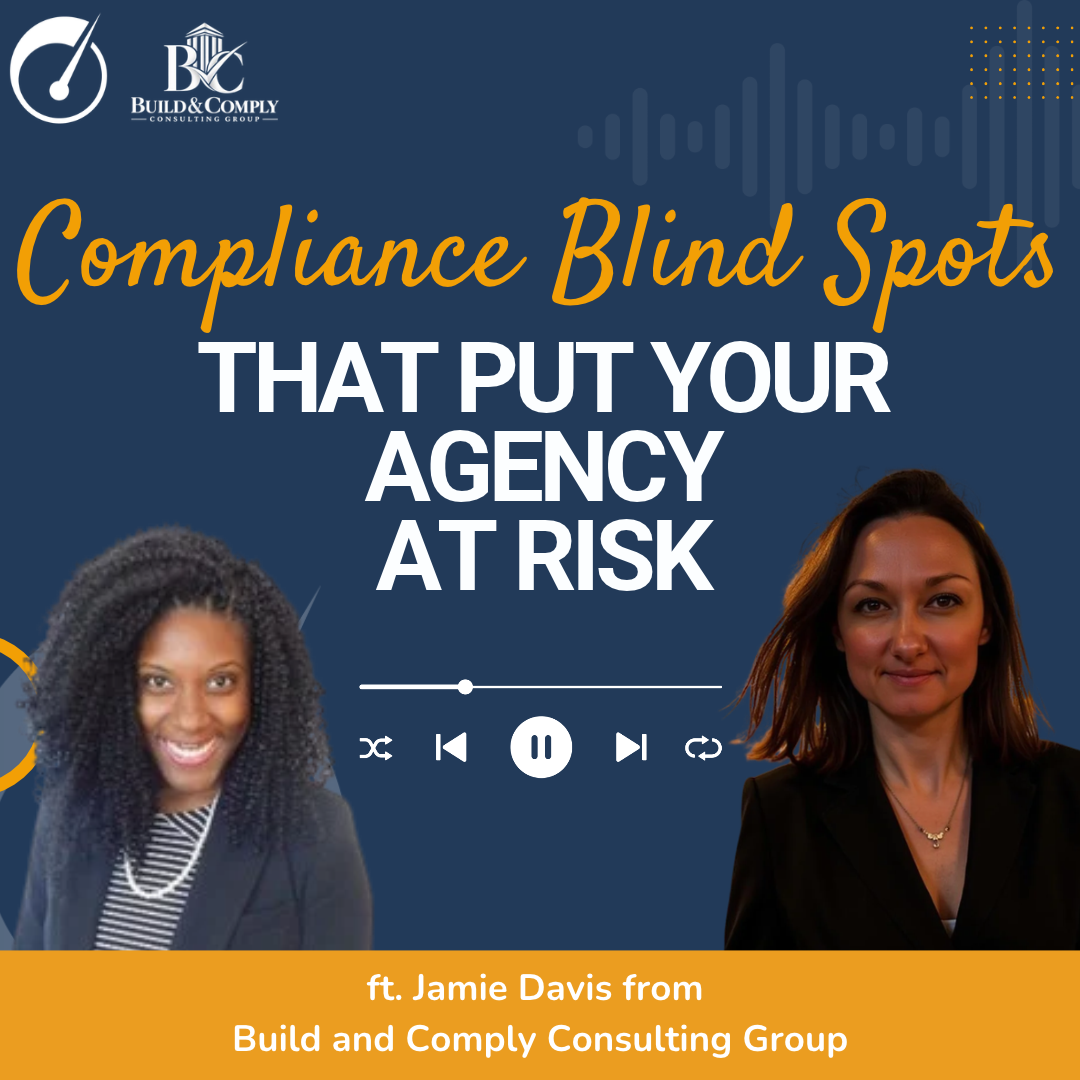
Jamie Davis is a fractional chief compliance officer and attorney who specializes in home health and home care in dme.
She is an attorney in New Jersey and turned owner operator of three health care businesses as well as an active real estate investor. She has spent nearly 15 years leading compliance at Fortune 1, Scales, Walmart, AMC. You may recognize some of those names before walking away to build regulated health care businesses simultaneously. So she now serves as fractional chief compliance officer to home care, home health and DME operators across multiple states as the founder of Build and Comply Consulting Group.
That combination, the compliance attorney lens plus owner operator is unusual. It gives her a spot specific, strategic, very unique point of view. And she was recently a guest speaker at the Health Entrepreneurship Tour in Miami and HME News in Austin on fraud and dme. Moratorium. So we're going to talk a little bit Moratorium today. We're going to get into some information about compliance with 1099 employees. We're just going to hit a bunch of these big topics, but welcome, Jamie,
[00:01:55] Speaker C: thank you so much for the invitation. Super excited to be here. And yes, I do have a different perspective being an attorney, a compliance professional and an operator myself. So I do, I have a different lens that I'm able to help my clients with with Build and Comply Consulting. So yes, I do have a different lens and a lot of times people are like, whoa, you've done a lot.
But when you see some of the gaps, you know, like I said, my goal is to help and to, and to be a service to those and to the patients as well.
[00:02:21] Speaker B: Yes. And I can see how that's so valuable for the people that you're working with and to have done so much in such a short amount of time. Truly. Congratulations and congrats on the new business.
[00:02:32] Speaker C: Thank you.
[00:02:34] Speaker B: You've talked about some real cases, operators who didn't know the law or knew it and ignored it anyway. Sometimes it's just ignorance is bliss. Right?
I want you to start by just walking us through one of these cases and what happened to them.
[00:02:52] Speaker C: Yeah. Now, I will, I will tell you, right?
A lot of times people aren't evil. They're not evil. A lot of times people get into things because they're either in a rush, they're just trying to rush and start their business. They're trying to rush and make money. They're just trying to rush and just get it started, Right. And then also you do see some greed as well, right? I think, you know, we have one case where, you know, he, someone was buying into a business and he trusted the seller, right? And so the seller had, he didn't do his due diligence, right? And when you think a lot of times about these stories about people buying these regulated health care businesses, you have to do your due diligence. So you have to really understand their billing company.
Because when you buy a business, you're buying their assets and you're buying their liabilities. And a lot of times people don't understand that. They're like, I'm excited. I want to buy a business. I want to, you know, and they're trusting the seller, right? Trust but verify the seller. Sellers are usually liars. That's what we say in real estate, sellers a liar. Because they're never going to tell you, oh, that this pipe burst in the apartment building that you're looking to buy. They're never going to tell you that unless they truly, truly have to. Right? So when you're looking to buy, whether it's a DME business, a mental health clinic, a hospice, you know, you want to make sure that you're doing your due diligence. You're, you're interviewing the staff, you're looking through the employee files, you're looking through the case files. You need to understand who is the billing company. And he trusted the seller, right? The seller said, oh, we have this vendor that does marketing for us. And nobody's job was to ask those hard questions, right? So a lot of times people say, oh, well, due diligence is boring, but it protects you, right? So now we're looking at different claims because you didn't do the part of understanding the ownership. You didn't understand the contracts that the owner was in that now you inherit because you bought the business. Right? So, you know, public example is like I kind of talked about, you know, there was a Texas DME owner that got 90 months in federal prison in March. Right. And they called it kickbacks because the marketing, if you're going to list someone else as the owner, you know, on your Medicare enrollment, that's fraud. If you're the owner, you're the owner. Also if you're doing, you know, but you're using that as the kickback. Right. For marketing.
So you can't put anyone else on your Medicare applications. You can't put anyone else on your NPI enrollment. If you are the owner, you're the true owner. Anytime you put a cousin, a daughter, a son, that is fraud. Because you're not being honest about who is leading the organization.
So, you know, when I'm protecting my clients and I'm talking to my clients that are looking to, to purchase, I talk through all this. Right, you talk through all this and you want them to understand that, yes, you're inheriting assets, but you're also inheriting liabilities. You need to look at the Medicare number. You need to look at the population that, that this particular business is serving, the price. You know, you need to check the billing history as well. Right. Because at any moment, you know, six months later, an old claim could get pulled up. And now we have an overpayment letter. Right. And it doesn't have the seller's name on it. It has yours. So these are things that I talk to my clients about. Because when you, like I said, when you buy a business, you get the Medicare number. You also get the history that goes along with it.
[00:06:08] Speaker B: Yeah, that's things that I really don't think people always think about. Especially you brought up, basically, ar, you're inheriting all of those things, billing practices, things that may or may not have been done correctly prior to you coming in.
And if you're not asking the right questions, which is what you're leading your clients to do, dig a little deeper. At least know what you're up against. When you take this over, you can really get yourself into a pickle. And I always think people are selling for a reason.
[00:06:39] Speaker C: Yes.
Yes. Yeah. And that's why in real estate, we say a lot that the sellers are liars because they're selling, they want to hurry and get done. Right. Whether it is a mom and pop and they've owned it for 50 years. Well, why did no one in their family want to want the business? Like these are things that you have to think about right now. Of course there's going to be some cases of old. You know, my daughter is an attorney, so she doesn't want to do this or she's a doctor or whatever the reason. Right. But there's some cases where you really want to ask, because if you're doing so well, per These numbers, then what's going on? And so that's why when I'm consulting with my clients at Building Apply Consulting Group, we dig through. We. And if you are buying a business, you have to have several people on your team to help you. You need to have a cpa. Right. You have to have someone that's looking at their financials and verifying. You have to have an attorney or a consultant that understands from a regulatory perspective what you're getting yourself into from an industry standpoint. Right.
And so these, I would say you definitely need those two. And then you want someone that actually has experience in that industry.
Right. Because you cannot take what the seller is saying for the gospel. Right. Because they're gonna. They might not tell you the truth. So you need another perspective in someone in that particular industry to say, no, that's not really what happens here, you know, and give you some additional, you know, additional perspective as well.
[00:08:02] Speaker B: Yeah. Now, the DME industry just went through a moratorium that was lifted.
[00:08:08] Speaker C: Yeah.
[00:08:08] Speaker B: What parallels do you see with the home health moratorium right now?
And what should operators expect in the next six months?
[00:08:16] Speaker C: Yeah, I would definitely tell them you really want to look to the DME as the playbook. Right. What, what I noticed when I was, you know, in the space and when I'm at conferences, we're talking, when I'm reading some of the information and going to some of the meetings and learning kind of what's going on. I, you know, we, we were a little nervous in the industry of, okay, are they going to extend it? Because that has happened in the past of moratoriums being extended. But what we noticed is when it was lifted, people were like, okay, the door is open. The door is open. But there's now new enrollees in the next six months or after. Right. There's a high scrutiny. So just know that it's going to be the same thing for home health and hospital. It's going to be the same thing. Right. In the sense of. It mirrors. It mirrors. Right. It was the six months. There's still going to be a high scrutiny. If they do lift it within the six months, you're gonna under. You're gonna have to understand that we should expect a backlog. Right.
It's going to take a little bit longer. Right. To get things done. Especially we have competitive bidding coming up. I think it's December 1st. Right.
You know, in that bidding time frame is I think, through the January 5th through March 10th. So. So we understand that there's a lot going on in dme. So I would say home health should expect the same pattern when it lifts, you're going to get more scrutiny, you're not going to get less, and you're going to really lean in on. Do I understand what's going on from a regulatory perspective as well. Right. So when the DME moratorium ended in August, a lot of people, they were just like, okay, we're back to normal. No, now you have an extra security guard there. That's like we're looking to see. And so I think that's going to be the same thing for. For the next lift as well, in my opinion.
[00:09:56] Speaker B: With home health and hospice enrollment, the moratorium taking effect May 13, we're really having this conversation in a very timely manner because we're just kind of holding our breath and waiting for. All right, the initial six months is coming to a close, and that puts the extended or expire it decision coming up really quickly. You talked a little bit about what's going to happen if they lift it. How can agencies prepare if they hold and extend the moratorium?
[00:10:23] Speaker C: Yeah, So I would definitely say if they extend, I. I would be very surprised if they extend. But if they extend, I think that is where you really need to dig in. And what I do is I'm big on history. Right. I'm big on history. So that's why I was. I was like, okay, if they extend what has happened in the past. What has happened in the past regarding extending and what did they find? Because a lot of times when they extend, that means the government is continuously digging and trying to find additional things. In my opinion, we. Why they lifted with DME is they, they didn't really find anything. Right. Like, that was. The whole point is to stop and to figure out is there additional fraud going on? Where is it going on? Where who. Right. And that. You didn't really see that. That's why it was lifted. Right.
And so that's going to be the thing. If it is extended, that means that they've either found something, they have to do additional investigation, and they don't have the time, so they need the additional time. So. So you will see that, right? If that is extended Now, I will say if it is extended, we still know that it blocks enrollment and it continues with kind of where we are. We're kind of in a standstill. Right. So if you're trying to sell majority ownership, you are not. Right. You're still blocked.
And so we still understand that. But I will definitely say, if it's extended, you know, you'll have to wait longer. And I think you have to focus on what you already have. I think you have to learn as much as you can. Maybe get a consultant who understands some of the regulations and who can give you some of the tips on how, what you can do from a business perspective. But I will definitely say, you know, if it does expire, it's going to be very similar to the DME is that you're going to get a lot of applications, it's going to be high level of scrutiny and it's going to be a. In my opinion, even in dme Home Health and Hospice, there's going to be a higher scrutiny with the member ownership changes as well. Right. That's something that we're going to see as well. But I think that you want to make sure that you're looking at your documents, you know, you want to make sure that you're doing what you're supposed to do from a business operation standpoint.
And so that's what I would tell people. This is a time for you to get your house in order from a complete client standpoint. Right. When, when there's moratoriums, that's when you dig in and you look at your policies and procedures and you make sure that they're aligned. You make sure they're embedded in the business and your team understands this is the time. Right. And that is kind of my advice to my clients.
[00:12:40] Speaker B: Even things like your coding, your documentation, your billing practices, making sure that all of your operations really are tightened up. Because like you said, most of the time people are not doing the wrong thing intentionally. A lot of times it's just things have gotten lax.
Knowledge wasn't transferred from one employee to the next. And so there are things that get missed in that. So just taking the time to really outline processes, take a good hard look at things, make sure that you're doing things by the book.
The way that I have seen this impacting agencies who are already in operation is maybe they have a home health they're looking to add on a hospice. And right now, if it gets extended, you've got to kind of put a pause on those business expansion plans.
[00:13:25] Speaker C: Yeah. And so that's the other thing, right. Is that now you have some individuals that have, whether they've taken business loans to extend their business. I mean, you have to think about all of this, right? You have a lot of people who were moving forward with business strategy and plans and different things that had to be put on hold. So, you know, I, I think that you'll see probably very similar that there will be a lift after the six months. But you just never know based upon what they're, what the, the government is actually finding during this time because they are investigating and they, they are doing their due diligence during this six month time. They're not just sitting at home, you know, just twilling their thumbs. And so I do want people to realize that when there's a moratorium, there's a reason. Right.
[00:14:06] Speaker B: Yeah.
What's the biggest myth that operators believe that really fight gets them into a place where they find themselves in trouble?
[00:14:16] Speaker A: Yeah.
[00:14:17] Speaker C: You know, I will definitely say, I think I talked about a little bit earlier about, okay, I'm just buying this company. You see that a lot. You see a lot of business brokers with different healthcare companies. And people don't realize, like, you are literally the problem stay with, you know, the buyer. I mean, it doesn't stay with the, the buyer. I'm sorry, I can't even say it. Right. The problems go from the seller to the buyer. There we go. Right.
[00:14:39] Speaker B: They get it.
[00:14:41] Speaker C: You get what I'm trying to say. I think that's one big myth. And I keep seeing that over and over and over. People don't realize. And that's why I think it's just so important to have a attorney that deals in these type of transactions on your team. So I think that's the first. First myth. I think the second myth is a lot of times people don't understand kickbacks and marketing and they just don't understand it. And because they don't understand it, they get caught up. And caught up is, oh, well, if it's marketing, it's marketing. Well, that's, that's not how that works. Right. Like, you have to be very clear, you're not paying per lead per all these things. And I think a lot of times when people get into the industry, they think of it of all the things that they can do to help, but they don't understand that some of the things that you're doing that you think are helping are hindering your business. Right. Oh, well, we need more patients, so let's go and hire this person. But is this person actually following federal law? Right. And so you are responsible for everyone on your team. You're responsible for every contractor. So your biller, you're responsible, responsible. And so that is something I don't think. I think a lot of people forget that they're just like, oh, well, I'm an llc, so I'm protected. No, that's not how that works. Right. And so I think that's a big myth as well.
And you know, once you, you get caught up with the legal system, you will see really quickly that I didn't know or it wasn't my fault or the seller didn't tell me. It's not a defense. Right. It's not a legal defense. It will not hold up in court. And so that is, like I said, something that I talk to, you know, my, my CL about. You're seeing over the past two years some of the biggest takedowns regarding fraud. And it's not going to stop, especially with AI we're going to see. And no longer can you say, oh, well, I'm just a small DME or I'm just a small home health or hospice. Gone are those days where you can say that you're under the radar because you only own one or two or three locations. Right. With AI and the different tools that the government's using, we're going to see more and more small mom and pops getting letters and saying, hey, let's talk through this. Right. Or I need additional information, I need additional document requests. So, you know, I think it's important for people to understand the culture we're in. And with AI and with technology, no longer can you hide.
[00:16:55] Speaker B: Yeah. And with the Operation Gold Rush that you were mentioning earlier too. Yeah, that. I mean, when we talk about dollar amount, $10.6 billion in catheter and DME claims and over a million stolen identities. So there's cause for these moratoriums and these additional levels of scrutiny.
[00:17:18] Speaker C: For sure.
[00:17:18] Speaker B: And as the taxpayer, I am behind and completely agree with the need for some of these additional checks and balances in place. But also you have an owner who is now serving 90 months in federal prison. So there are, there's real risk here.
[00:17:36] Speaker C: It is. Yeah, for sure. And, and that's the thing, right? When you go through, you open up because, you know, anytime you get a license, it's great you went through the process. But you should know the law. That is what we're telling you. You don't have an excuse. You are taught, you know, you have your policies and procedures. All these things are required. So when you think about. Yeah, Operation Gold Rush. Right. It was a lot of, you know, I will be honest. It was a foreign based network. Right. And they were using a lot of, we call them straw owners. So they were basically saying this person was the owner in it. They weren't. Right. And they were buying up several DME companies existing DME companies and probably from mom and pops. So then when they were doing that, then they were taking over stolen identities. And so you're seeing a lot of that now. What has happened in these moratoriums as the smaller DMEs, the mom and pops have gotten caught up in there as well. So yes, there are there in the past two years, we've seen a lot of these big fraud rings be brought down. And. And the thing is, when you see that, you're like, well, how many more is out there? Right? How many more is out there? And so that is something that you are going to see.
And you do see a higher scrutiny with catheters now, right. From a DME perspective. So you will, you know, like I said, there is a reason we have the moratoriums. I will say the reason it was great that we didn't get the extension is because usually federal government, they're like, okay, we probably got. Got the biggest, you know, problem problem people, you know, organizations. And so they're going to have to continue. And you'll see between Dr. Oz and the. The task force that they have, they'll continue to have, you know, sessions and they're going to continue to. This is something that the administration is really, really focused on is it's fraud and figuring that out and getting the bad actors out of the industry and, you know, out of the country as well. Because a lot of the. The operation gold rush was not U. S. Citizens. Right. It was. It was foreign entities.
[00:19:38] Speaker B: Right. So we have to protect ourselves in this. And then I know these task force people, they're humans. They're working through processes. They're trying to dig into how things are documented, how things are followed along with. They're trying to figure out a big systematized program and then drill it down. We feel it on an agency level as additional administrative burden. The scrutiny make having to do more work. I mean, it really does feel like more work and less pay in some of these cases.
But I do think as an industry, we're working together through it and we are going to come out the other side with some additional trust within the industry as well.
[00:20:22] Speaker C: I agree. For sure, for sure.
[00:20:24] Speaker B: I want to switch gears on you a little bit and talk about another topic that you're passionate about, which is 1099 versus W2, misclassification of employees.
[00:20:36] Speaker C: Yes, yes. And I will tell you, this happens a lot. So anytime I'm presenting and I'm talking to agency owners, this is like the first thing I'm asking about. Hey, talk to me about. About your team. Talk to me about who the mixture. Right. You know, I'll tell you, it seems like every caregiver, Caregiver that I talk to is. Is the 1099. Right. But the agency, they set their schedule, they're assigned them clients.
[00:21:04] Speaker B: Right.
[00:21:04] Speaker C: They set their pay rate, they require them to take notes regarding the care plan, the charting and all of that are things of an employee. Right. Of a W2 employee. And so you want to understand the Department of Labor is also looking within the healthcare industry because you're seeing more and more of the misclassification. And misclassification is also. Then. Then are we not paying them the taxes on the. Like, all these things come into play. Right. And so that's why you see now the Department of Labor really leaning in. Right.
So if the caregivers, if they wear an agency badge, if they're using agency tools or apps or are they getting trained by the agency, you have to start. These are all classifications of an employee. Right.
And I always want to be very clear that if they're only working for you week after week for years, they need to be a W2. They're no longer 1099. Right. Their work or the work that they do for you is their core business. So if you can't run a home care agency without caregivers, then I really think, and especially if you're doing the. Setting their pay rate, training them, then you really have to understand the classification immediately. So these are some things that I really walk through my clients with.
[00:22:21] Speaker B: Yeah.
[00:22:21] Speaker C: What.
[00:22:22] Speaker B: What in your mind is if there was a line, Right. This is the line because.
[00:22:26] Speaker C: Yep.
[00:22:27] Speaker B: I know attorneys don't always think there's a gray area, but I do think that sometimes as agency owners, we feel like there's a gray area or maybe we're just not sure. Again, not trying to do the wrong thing. But what is that true line between this is a legitimate 1099, what is that contractor, and then what should really be classified as that W2.
[00:22:48] Speaker C: I'll say it like this, right? So if you're. If you're telling them when to show up, who to see how to do it. Right. And how much they'll make, that's not a 1099.
Right. That's an employee with the wrong tax form. So I think that is very clear. If you're telling them when to show up, who to see how to do it and how much they'll make, that is not a contractor. So that I would say is the threshold there.
And so they just need to move forward with the right classification. But it, to me, it's really simple.
And this is where you see a lot of agencies get it wrong. And so that's why I work with my clients on making sure we get it right. Because we do know that this is a part of the Department of Labor's their, their strategy of what they're really looking out, looking for in this, in our industry.
[00:23:33] Speaker B: What is going to trigger an audit or an investigation into one of these matters?
[00:23:39] Speaker C: I will tell you.
If you have an employee that files for unemployment or a worker's compensation claim after someone was injured, or you even have someone disgruntled former employee that goes and gets an attorney, like people forget that a lot of the issues that come about are from whistleblowers. And whistleblowers are protected under certain laws. Right. And so if you have even like a wage complaint with the Department of Labor. Right. So I, I want us to be very clear, right? Anything can really trigger, if it comes to someone speaking up and speaking out, right. All it really takes is one person to speak up and speak out, right. So. And it could be them unknowingly or knowingly kind of doing it. Right. And so then there's tax exposures. Okay. Well, now there's back federal pay, right. There's, there's so many state unemployment tax. There's so many things that now come with it, right. Maybe there's unpaid overtime, some of the wage exposure. So any of these things can literally trigger an agency looking into your, your company. Now, I will say most audits don't start with the government. They start with maybe one caregiver, like I said, who went and you let them go and then they file for unemployment. So it's not like the government just looked up your agency and said, here we go, right. It usually comes from someone close to your business that either filed unemployment or there was a workers comp claim or something like that, and that one claim can then have you and your business looked into for three years. They can be looking into your payroll for three to five years. Right. It just depends.
[00:25:19] Speaker B: And then the financial or legal exposure on an owner, I'm guessing they're going to have to pay as a result of that audit.
[00:25:26] Speaker C: Probably all that. Fines, penalties, interest, all of that. Yes, yes, yes. All of that can be a part of your, the remedies to that.
[00:25:38] Speaker B: So if somebody's listening to this, they're an owner and they're getting that little pit in their stomach like, oh, shoot, I might be doing this all wrong. I gotta fix this.
[00:25:47] Speaker C: You need to fix it right away with nothing.
[00:25:50] Speaker B: Yeah. If they suspect they're misclassifying their employees or 1099s, what do they need to do? What's the first step to fix it before it does become an audit?
[00:25:59] Speaker C: Yeah, Well, I would say. And I would say the first thing, and this is what I tell my clients. And I will give you an example. I have someone that met at a event and they were kind of giving me an overview, and I immediately set up a consultation with them. Right. Immediately set up a consultation. Once we kind of went through a mini audit, I was like, okay, you know, let's go ahead. If we move forward and they're now a client, but I will tell you, you need to hire right away someone that can assist you with this. They need to do a deep dive into your business. They need to look through your files. They need to really understand what's going on with their business. And then you have to start the process of correcting. Right. And what does that look like? Well, that looks like actually making sure. Like, I'll give another example. A lot of times people say, well, oh, I'm not paying for trainings. Well, if, like I said earlier, if you tell them when to show up, how to do it, how much you pay, right. Then you have to pay, pay for their trainings. Right. Because their trainings are associated with the job that you were requiring them to show up for, that you were saying who they see. So these are things too, that I'm seeing. Also regarding, are we paying for different trainings? Are we misclassifying? You need to immediately make changes to your policies and procedures. You need to immediately make changes and get the correct forms. So a lot of times, like, you see that, oh, a 1099 is a tax form and not a business model. You need to make sure the government doesn't care what you call your caregivers. They care how you treat them. Okay, let me say that again. They care how you treat them. And when you misclassify, you're not paying them the full rate. And then you're also not paying the government as well. So that's a big piece of it as well. Right. You're not paying the taxes and things
[00:27:35] Speaker B: like they care about that.
[00:27:36] Speaker C: Yeah, they care about that too. Let's be. Let's be clear there.
So you definitely want to get someone that can assist you with. You're going to do a full audit. And it's not just like, oh, I'm just doing an audit, but you need to implement the things that your consultant, your attorney is now telling you. If you just hire someone and you don't put it into actionable steps and you don't actually, you know, fix the steps, right, Then that's going to be an issue. And also talk to an employment attorney, right, who can also assist you there. But the, the, I will say you have to fix it going forward. You have to move the people to W2. That's the cleanest path, is immediately do that. And then even look into the irs. They have a voluntary classification settlement program too.
And if you qualify, I think you can pay 10 of one year's employment, tax liability or something like that. Like it'll let you figure. They'll let you figure it out because. And then the irs, they won't audit you, right? So they'll kind of put you on pause as you're figuring it out because you're just basically saying, hey, I realize I didn't classify, right. So let me kind of figure this out.
And now I will say you can't already be under a tax audit and try to do that form that program, right? This has to be voluntarily. It has to be like, hey, you
[00:28:51] Speaker B: gotta be willing to tattletail on your own.
[00:28:54] Speaker C: Yeah. You're like, hey, I need some assistance, right? Yeah. But I will say this. If you're on listening to this and you're like, oh my goodness, oh my goodness, I will tell you, do not panic.
But I will tell you that you do need to call an attorney or consultant like build and Comply and they'll help you, right? They'll take the inventory and then they'll help you execute so that you can start implementing. But you want to make sure that you call someone and get the right help that can assist you right away.
[00:29:21] Speaker B: Well, that brings me very nicely to this next little point. If someone is listening, wants to help, wants help supporting their compliance, sorting out any of their compliance exposure, where can they get in touch with you or your company?
[00:29:37] Speaker C: Yeah. Build and comply consulting.com or they can email me at jamie@buildandcomply consulting.com and so, you know, I will definitely say that if anybody today, right. If it made your stomach drop a little, right. About some of the things I'm saying, that's okay, right? That's actually a good feeling because now, you know, oh, I might be doing some things I shouldn't be doing or there might be some risk. You know, I always offer like a free mini risk assessment where we'll look at some of your busy, biggest exposures and then I also run bi monthly webinars as well, kind of on some of these topics. And so I do this because what I am seeing over and over again is, like I said, people aren't trying to do the wrong thing. They just are starting their business, excited about their business, and maybe weren't educated fully right on the topic or the industry. And so that's really why we started Build and Comply Consulting Group is because we saw that there were so many in the healthcare space that were, let's just say nurses, but opened up a hospice or they were nurses and opened up a home health. Right. And maybe they just don't understand the full regulatory needs when it comes to that. So that's why we offer the many risk assessments and things like that. But definitely, if anything in here kind of tugged at you, we definitely want you to go ahead and reach out and get some assistance there because compliance is not there to slow you down. A lot of times people get. They're like, oh, here comes compliance, or here comes an attorney. The thing is, we want your business to grow in scale. Right. Compliance is not going to slow you down. Compliance actually helps you grow and grow faster. Because once you're on, once you're doing things with a system and doing things the right way, then it's very smooth for you to scale and it's very smooth for then you to sleep better at night. Knowing I have the right team, the right policies, the right procedures in place, and we're doing the right thing.
[00:31:31] Speaker B: Absolutely. So foundational to building a great business.
[00:31:35] Speaker C: Yes.
[00:31:35] Speaker B: Well, hey, thank you, Jamie, so much for this. This has been a wonderful conversation.
I am so excited to get this one edited and out into the world. I think people are really going to be interested in this conversation. So thank you very, very much.
[00:31:49] Speaker C: Thank you so much for having me. And I'm just. This has been a great conversation, too. I enjoy talking about compliance.
[00:31:55] Speaker B: It's evident. Thank you. We need people like you.
[00:31:58] Speaker C: I'm here.
[00:32:01] Speaker B: Okay.