Episode Transcript
[00:00:02] Speaker A: You're listening to Home Health Revealed, where the business of home health comes to life. Hosted by Hannah Vail, each episode brings real conversations with the leaders, innovators and experts shaping the future of the industry. From reimbursement and technology to leadership and growth, this is Home Health Revealed.
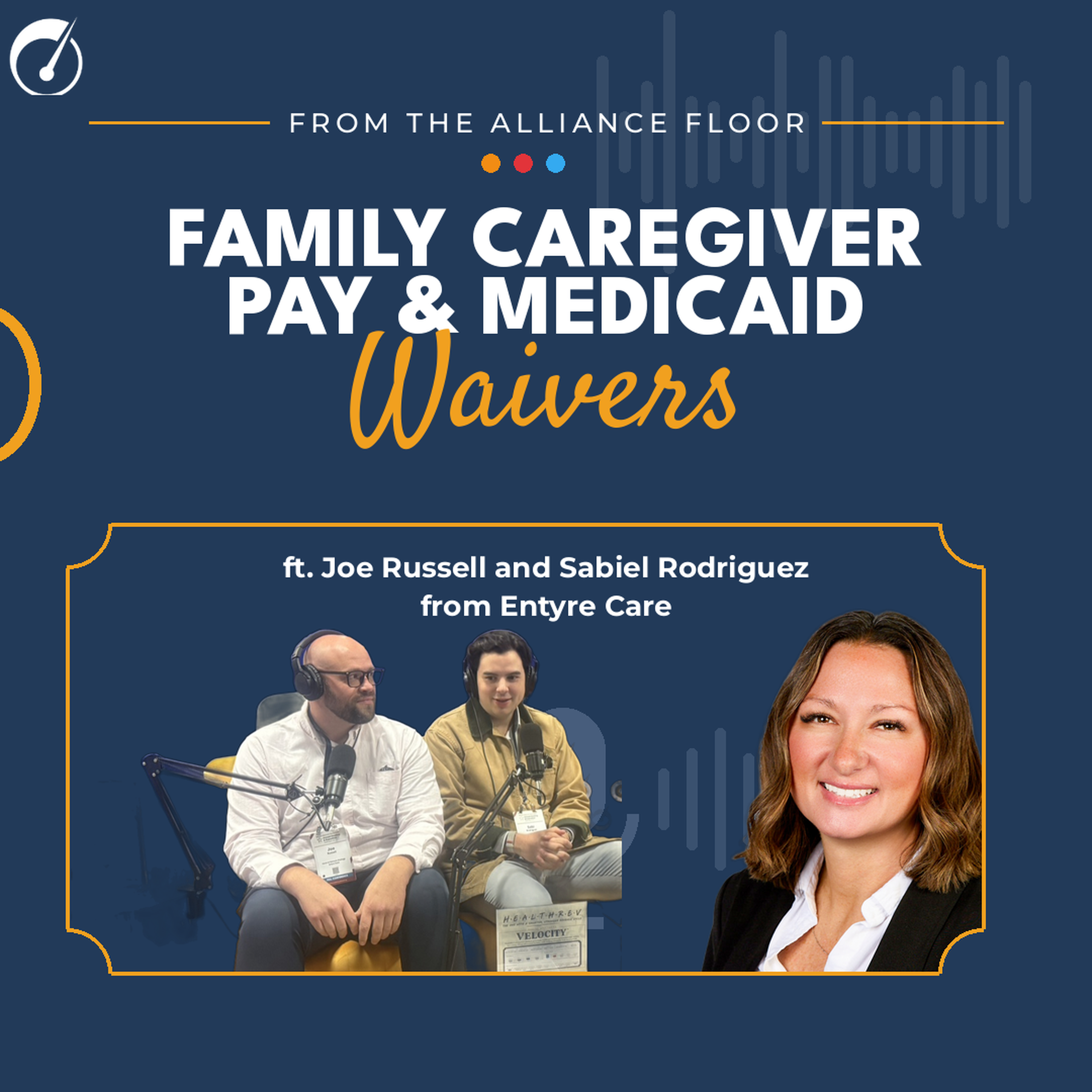
[00:00:20] Speaker B: All right, we're still here at Washington D.C. 's Alliance 2026, and I have a couple of guests. I'm gonna let them introduce themselves and we're gonna talk about some managed care.
[00:00:29] Speaker C: Yeah. So I am Xavier Rodriguez, the Xeric Care.
[00:00:33] Speaker D: And I am Joe Russell. I'm the new head of network strategy for.
[00:00:37] Speaker B: Awesome. Great to have you guys.
Let's just jump into a topic. I know, Joe, you and I have talked extensively about managed care.
And so talk to me about kind of where it's headed, government policy. Let's just. Let's see what we can unhash. Is that a word? That's not a word.
[00:00:52] Speaker D: I think it's a word. Sounds good. I'm
[00:00:54] Speaker B: making it up today.
[00:00:55] Speaker D: It sounds great. Yeah. It all starts with health care spending.
It all starts with health care spending. And for a long time, it's been kind of accelerating. It's continuing to accelerate. So everything that CMS and federal policymakers are looking at in state policymakers, how do we contain costs in a meaningful way? And so they're pushing all of that down. So when you start talking managed care, you start thinking about, okay, what are the ways to save money? Right.
Or at least contain costs? And it's becoming abundantly clear that there are real opportunities to work with families to help with that extension. Right. And family, there's plenty of data that supports that. When families are involved in a person's care, they're a lot more likely to be able to stay home and really not go into higher cost environments. That's where the story starts.
[00:01:46] Speaker B: Right.
[00:01:47] Speaker D: And then what makes it really complicated, though, is you've got 50 states and you've got 50 different Medicaid programs. Right.
And so when we talk about getting families involved in care at that level, it changes state by state and the makeup of those populations. You know, what's happening in Ohio, for example, is gonna be really different than a state like Arizona because those populations are very different. And then obviously the histories are very different. And so their Medicaid programs are very different.
[00:02:15] Speaker B: Now, with entire care, tell me kind of what you do and where you're coming at this from.
[00:02:20] Speaker C: Yeah, so entire care, we are bread and. But as I always like to say, is mainly unskilled. Quote, Unquote unskilled family care, where we specialize in a family member coming in and taking care of the person mainly through ADL's.
And we are currently in about 10 states, soon to be in 13 states.
[00:02:39] Speaker B: Lucky.
[00:02:41] Speaker C: In terms of cost, I would just like to like double tap on what Joe said. One of the best things that a state can do is have these waiver programs in terms of cost. It drives the cost down. It's also just better for the person receiving the care. Just think about it logically, right? Like if you are someone that does not need intensive care in a, in a hospital environment, why wouldn't you want your family member to take care of you and the family member to also benefit from that? A lot of the things that we see is that family members already doing this, but they don't realize that they can potentially get paid for doing something that they already have been doing.
[00:03:16] Speaker B: Now, what are the challenges and some of the pushback that we're getting with these waiver programs?
[00:03:20] Speaker C: Fraud, it seems like that is on, you know, on the national attention. Fraud, especially like if you look at states like Minnesota, where it's really, really hard to expand into a state like Minnesota when there is a freeze involved and just not to get overly political. But if you think about it like just from, from a face value, if someone's committing fraud, the best thing that can happen to them is a freeze to take effect because their licensing just goes through the ro.
So,
[00:03:53] Speaker D: yeah, and when the states, you know, the way the Medicaid program is funded, you have an fmap, which is a percentage of what the federal government's going to reimburse the state. So it's different in every state.
It's a pretty complicated formula I don't pretend to fully understand, but there is a formula that's used. And I think what a lot of states are realizing is that, oh my gosh, we can, we can create these waiver programs, get some support financially from the federal government.
But when you look at what, how many people can be cared for by that same pot of money where they would normally be spending it, you know, somewhere else upstream, right? It's a really good investment for these states. And fraud is a big concern. And our companies looking at this in terms of we can help states ensure that there isn't fraud in these programs because when they're working through our company, for example, as an intermediary, you know, we're crossing our T's and dotting our I's to make sure we're totally in Compliance. And so, you know, our message is we're here to help fight fraud, but we totally do also understand the concerns that are out there with some of these state policymakers.
[00:05:12] Speaker B: So what are some practical things that can be done to not say eliminate, but to definitely minimize fraud and things that are happening with these specific waiver programs? Because I think people who, when we're talking about it, we see the benefit of having a loved one or somebody close by, maybe it's a neighbor, whatever the case may be, care for a loved one. They already have that connection. They know them. There's not a relational barrier there usually. And so it just makes sense, proximity, all of the logical things that you can think through.
But there is that, I think, you know, fear in the back of people's mind that people are going to be doing this. Of course, you know, they could be collecting money, not actually giving care. Some of those things that I know people have brought to the surface. How do you practically address those?
[00:06:00] Speaker D: Yeah, well, in a situation where you have a waiver program where there is not a company like Entire Care involved, those risks are significant. Right.
And it's really hard to peer inside. I know states like Ohio, there was a carve out for EVV for family caregivers, and they've now reversed that because of the fraud concerns that have been exposed. And there's a moratorium now in Ohio on the Medicaid side, not just the Medicare side. So when you have a company like Entire Care able to help manage that and stay in compliance, then all of a sudden their fraud, the risk of fraud significantly decreases.
But, I mean, if we're. There's. There's a lot of different ways to do it. And I'm a big believer in payment integrity at the point of service.
It's complicated matter. And when we're talking about these waiver programs, it's even more complicated because while these family members do have some baseline level of training, fact of the matter is they're not a professional provider. Right. And that's a. It's a different animal. Right. I like to work on cars, and that's what I do. It's fun. But guess what? I'm not a mechanic, you know?
[00:07:10] Speaker B: Yeah.
[00:07:10] Speaker D: So if something breaks on one of my toys, it's not a big deal. But I'm not going to fix anyone's car and then have them crash it. You know what I mean? So it's a different animal. But yeah, we, we take it very, very seriously. And you won't, you won't find us Doing anything but support program integrity measures that make sense?
[00:07:31] Speaker C: Yeah, 100%. Like, it's actually really good that CMS is cracking down. I think the argument is more of, in terms of what the states are doing, how states are handling it, but coming back to integrity, like, EVV should be nationwide. Like, why it's. It's actually relatively easy to implement as a provider and it can cut down on, you know, bad actors.
[00:07:53] Speaker D: Well, and thanks for calling that out because, you know, I've. I had a front row seat during my time at the Ohio Council for Home Care and Hospice to the EVV issue. Ohio is one of the leading states on that.
And as it expanded across the country, what I noticed is in some of these regulatory structures, it was unnecessarily complicated.
Some, in some states that, you know, they're just asking for those EVV data to be attached to claims, and then in other states they have these very complicated structures and the technology is not working well. And then, you know, you've got some connectivity issues and all these types of things. And it's like, okay, what is the point of having an EVV system if you're in a rural area that doesn't have any Internet, that can't actually tag the location of where the service is being provided? Now all of a sudden we're just putting an administrative burden on people. Right. So, yeah, EVV is really critical to Sabi's point. And we need to make sure that we're advocating for structures that actually work and evv, because it is a good solution.
[00:08:54] Speaker B: Now, what does entire care do and who are you working with? Are you working with the agency or are you working with the patient?
[00:09:02] Speaker D: Yeah, we work. We're direct to family.
[00:09:05] Speaker B: Direct to family.
[00:09:06] Speaker D: So kind of look, I would say on paper, similar to an agency, but we don't send out people to provide any care. We have nurses that go and do assessments and care plans. And then after that it's totally the family we're working with to, you know, obviously the first thing is they have to have to qualify for Medicaid. And if they don't, then that, that's not our, you know, we can't help them, obviously.
But yeah, we work directly with families, quality, make sure they're qualified for Medicaid.
Then if, and obviously if there's a waiver program or something else. And, and obviously, and this is why I'm here is the managed care stuff. So we have a lot of, if the state has managed care, we have contracts with those managed care plans to be able to cover the cost
[00:09:54] Speaker C: just to double tap on that. It's also very state, so how it's managed in Ohio is very different.
And some states do have nursing requirements. Nursing requirements. They need to be super involved. In some states, it's more of an oversight. Like for example, in Connecticut, there is a nursing requirement, even though we're quote, unquote unskilled, but it's more of nursing oversight over the care ethic.
[00:10:20] Speaker D: Yeah. And that was a big issue across the country with these waiver programs. A structured family caregiver is what's the level of safety? Health and safety. Right. And if you don't have anyone supporting that, it's again, the risk factor is pretty significant.
And you've got all these regulations on traditional agencies. And, you know, to say that there shouldn't be anything for families is not really that practical, I would say.
And because it's taxpayer dollars. Right. So it's really, really important that, that there is a structure in states that have these waivers to work with companies.
Whether it's a fiscal intermediary or a company like ours, it's really important that there's some level of oversight to support these families.
[00:11:12] Speaker B: Okay, so walk me through it. I'm a family and I have a loved one needs care. I come to you, and then I'm sure I have loads of questions.
I don't even know if I can be this care provider. I may be looking all over the place just to find a way to fulfill this need.
What's the first. First step and then what does it look like all the way through to billing?
Can you take me through the process?
[00:11:39] Speaker C: Yeah. So someone.
Well, first, we often reach out to the family members. There are services that let us know whether someone is eligible for Medicaid and whether they would be potentially eligible for these waiver programs. Oftentimes when we do reach out, they are eligible for Medicaid, but they are not on the waiver. So we would guide them through the waiver process.
Then once they are, you know, hopefully approved, then we would move on to selecting the caregiver. Again, that looks very different state by state. Some, some states a spouse can be a caregiver. In some states they can't. For example, in Ohio, they can't, but they could also get a subsequent waiver for the spouse to then be the caregiver. So it looks very different state by state. And then we. If there's an EBV requirement, which in most states that we're operational, there. There is an EBV requirement, then we set that up and then we supervise the care, whether that is what, unquote unskilled, which is our bread and butter. But in some states we also do a little bit of quote unquote skilled, Massachusetts being one of them.
But yeah. And then we.
[00:12:47] Speaker B: You build the Medicaid, so the family turns in the EVV stuff. All of that runs through you. So you really do operate like an agency.
All of that billing is going through you.
[00:12:58] Speaker C: Right?
[00:12:58] Speaker D: Yeah, all of. So in the states that we operate, we, we meet the full credentialing for and it's just a different model.
Tire Care is a German company that's been really successful in Europe and specifically Switzerland, and they brought the model to the United States and it's working. It's working really, really well because again, we have to do something to supplement this care. You know, we're getting older, we're getting sicker and it's going to continue to get more expensive. So the reason why this is, is working well is because it's a good conduit between nothing and something. Right. That's a weird way to put it, but. Right. I guess we're filling a gap that exists post
[00:13:40] Speaker C: acute.
[00:13:41] Speaker D: Yeah.
[00:13:42] Speaker B: Yeah. What kind of training do the family members get? Or is there training on what to do, how to be a caregiver?
[00:13:50] Speaker C: Yeah, there is. And it's again, it's state dependent and state where it's unskilled. Unskilled. It's training as it relates to like ADL's.
It's also most states have training for these waiver programs that the caregiver already has to take. But then we also provide like subsequent training in order to bring that level up.
[00:14:14] Speaker D: Yeah. The best way to think about it is it's similar to like a home health aide training type of thing, except it's not like a formal licensure or certificate process. It's just, you know, here's some resources. It's important to mention. One of the pieces that, that makes the model work so well is the technology portion of it. So that's, that's what allowed our company initially to really take off was the tech component and be able to, you know, we're not sitting on the phone with the families all day. They're logging in to, you know, platform effectively and that's how we're managing everything. So there's a ton of resources for. It's not just the work piece of it. There's a ton of different resources for families in that environment. And of course we have a pretty strong Support system. So if they did reach out and say, hey, this is happening, or I need this support, you know, that's something that we.
[00:15:04] Speaker C: One thing that I will also add on top of that is that a lot of our family members that our clients, they were already doing this work. They were already taking care of their sick grandma who needs, you know, help going to the bathroom. They were already helping her, you know, go on walks because she cannot go on walks on street. So it's, you know, we're aware that the best care comes from a loved one, especially when it's unskilled and especially when there is a post acute level that's needed.
[00:15:32] Speaker D: Yeah. And the, you know, some people might say, well, if they're already doing it, then why would we pay them to do.
[00:15:40] Speaker B: Yeah.
[00:15:40] Speaker D: And I think that's probably the biggest question that I hear is, well, why do we pay them if they're already doing it?
[00:15:46] Speaker C: Because it's cheaper than a nursing home.
[00:15:48] Speaker D: Yes. And here's the thing is when you. When now, normally, and I'm not going to characterize everyone as this, but typically what we see is over the course of time, initially, they're very happy to help their loved one. But it, but it becomes almost like an albatross. Right. The sick parent or sick sibling or whomever, and it feels like a burden to these families and they burn out and then they don't care what happens with their loved one. Right. But in this model, they are significantly more empowered because, you know, it is part of almost like a job now to them.
[00:16:25] Speaker B: Right. They're incentivized.
[00:16:26] Speaker D: Yes.
[00:16:26] Speaker B: And in a lot of cases, people are having to rearrange work schedules or go part time or have somebody who's available move flexibility around.
And so it can cause a burden on the family.
And they would then be more apt to either earlier place that loved one in a nursing home or another care facility.
So sometimes maybe this just buys time, which does. It's a savings. Right. I'm curious as to what the time and the savings kind of where that intersection is.
Like, if we do this program and we put somebody on a waiver program where they have a loved one, how long.
Let's see if I can ask this question and actually make it make sense. But basically, you know, if we keep them at home for an extra two weeks, four weeks, six months. Right.
Is there a period of time where you feel like this is successful either from a financial standpoint or from just quality of life?
[00:17:31] Speaker D: Yeah, I think you can, you can do that math every single Month, month by month by month. And it starts really racking up. I mean, nursing homes are paid a per diem anywhere from, you know, depends on obviously, what your contracts say, but, you know, they're getting paid a per diem of anywhere from three to $450 per day.
Yeah. Hospital stay is for three or four day hospital stays, like at least $10,000, if not a lot more, depending again, across the country, it's different. So you can easily do the math and you can take, okay, based on this, this person's acuity and their health history, actuarially, they can project, hey, this person's going to end up in the hospital four times this year. This is what's going to cost us. And this is what the health plans do. Right. They're really good at that.
And so every single month, you're saving the system potentially a lot of money. And it's hard to do that. Right, because you're spending money to save money.
[00:18:33] Speaker B: Exactly. That's what I tell my husband sometimes.
I'm spending money on things on sale to save them.
[00:18:40] Speaker D: That's right. Yeah.
And it's true and it's quantifiable, and that's why a lot of these states are moving in this direction.
[00:18:47] Speaker B: And I'm guessing it also keeps hospitalizations lowered just because you have somebody there who you can call, hopefully you can depend on. You have maybe transportation to and from regular doctor's appointments, so you're less likely to call an ambulance and be taken into.
[00:19:06] Speaker C: And a lot of times the caregiver lives with the person receiving the care.
And sometimes there's a regulatory requirement and just to double tap on the savings piece, it's usually fee for service. So you only get paid for a certain number of hours, and you only get paid for the ADL function that you provide to the person receiving care, as opposed to a model where they receive a daily stipend of $400.
[00:19:33] Speaker B: I see. Okay. So a lot of times this is offering sort of that round the clock potential care.
[00:19:40] Speaker D: Yeah.
[00:19:40] Speaker B: I'm like, listen, I'm not on right now. My husband better hope I'm never his. His caregiver. Knock on wood. I had to take this out of this podcast, but I'd be like, I'm. Nope, sorry, I. It is not my hour.
[00:19:53] Speaker D: You leave Jeff alone. He's a good man.
[00:19:55] Speaker B: He is.
Oh, well.
[00:19:58] Speaker D: And it's important to think of it this way too, is they're getting paid and. But they're actually providing a lot more care than what they're Actually being paid for.
[00:20:06] Speaker B: That's what I'm thinking.
[00:20:06] Speaker D: Yeah. So, I mean, it's definitely worth the squeak.
[00:20:10] Speaker C: And even in states where AFC or adult family or adult foster care is a waiver, it's. The state is saving money there as well. Even when, as in, even when the care is around the clock, states pay a lot less for home health care than they would say a hospice.
[00:20:28] Speaker B: Yeah, exactly.
If somebody wants to know more about entire care, where can they find you? Where can they learn more about these Medicaid waiver programs? And a lot of our listeners, our home health leaders, some hospice leaders, but predominantly we're a home health listener base. If they are looking to connect or add this service, is that something they can do if they've not thought through how to connect even this resource with some of their patients?
Is that a fair question?
[00:20:59] Speaker D: It is. And I want to mention one thing that came to mind when you were asking the question.
You know, our model doesn't.
Isn't intended to compete with the traditional, you know, home health agency type of model. In fact, I think it's a good symbiotic relationship because if we can help have that family member keep them in the home and if they do need that skilled level of care, that's going to allow them to be in more episodes of care for those home health agencies.
So that's one thing I've heard from people is the concern over like, well, if the family matter is getting paid, then that means that the home health agency can't be involved. And that's not true at all.
But obviously they still have to meet that level of need, right?
[00:21:42] Speaker B: Yeah.
[00:21:43] Speaker D: So you can go to our website, entirecare.com it's spelled e n t y r e care.com and all the information you want you can find there. Obviously, if you're got to pay closer attention to your, to your state's Medicaid requirements and the first thing you want to look for is, hey, do they have any type of program that allows family caregivers to get paid, then there's an opportunity to work with us. If there, if there are families who are interested in this, they can reach out directly to us through the website. And if there are providers who have questions, they can just reach out to us.
[00:22:21] Speaker B: Yeah. Awesome. Well, thank you guys for sitting down.
[00:22:23] Speaker D: Absolutely.
[00:22:23] Speaker B: Anything. I haven't asked you that. You think I should.
[00:22:26] Speaker D: No, but it's worth mentioning that I was on the podcast, what, a month ago?
[00:22:32] Speaker B: Yeah.
[00:22:32] Speaker D: And I was talking.
We were talking completely different stuff and we were geeking out and billing and all that good stuff. So we're still. I'm still doing that work as well as skilled Medicare Advantage side, as well as this new role with entire care. I'm really excited to be with the company and because, again, it's so different. It's so new, and. And we need managed care contracts as well. So I get to continue to do what I love. And I don't know why I love it, but I love it.
[00:23:01] Speaker B: You love the
[00:23:02] Speaker D: challenge. And of course, Elvis is happy because he gets to continue to eat his favorite treats.
[00:23:07] Speaker B: Yeah. Amazing. He's the mascot. Thank you, guys.
[00:23:11] Speaker D: Thank you.