[00:00:03] Speaker A: Welcome to Home Health Revealed, the podcast for home health and hospice leaders who want to stay connected to the industry and ahead of what's next.
If you are a home health agency looking to increase referrals and gain education through the American Heart association, they now offer a certification for home health agencies that is doing just that. This is an episode you do not want to miss.
[00:00:29] Speaker B: All right.
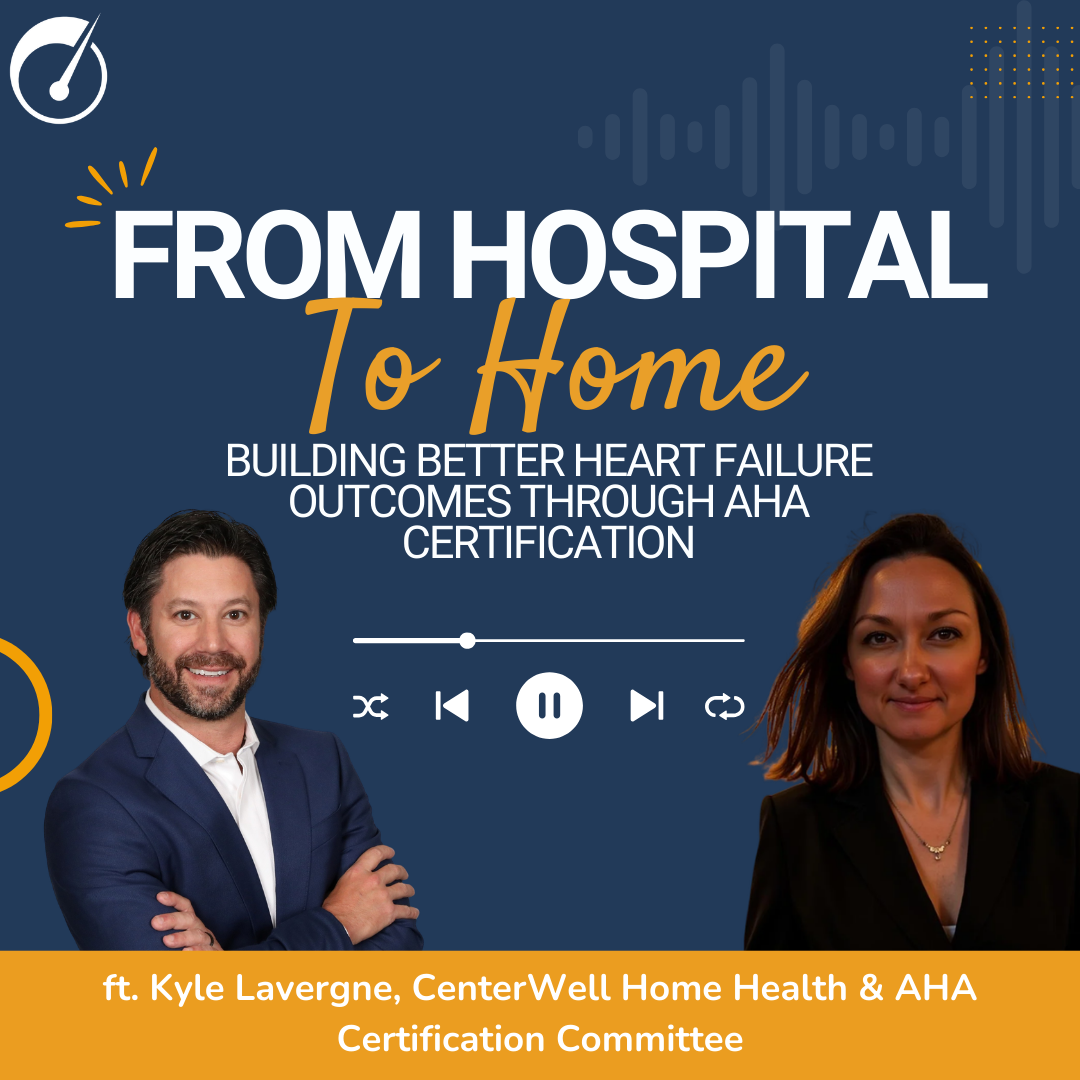
[00:00:29] Speaker A: Welcome to Home Health Revealed. I am your host, Hannah Vail, and today I have with me Kyle Laverne. He received his Bachelor of Science in Nursing degree from the University of Louisiana, Lafayette in 2002. Don't want to date anybody but his Master of Science in Nursing degree as a family nurse practitioner at Northwestern State University in 2007, then completed his Doctor of Nursing practice with honors at the University of Louisiana at Lafayette in 2021.
[00:00:58] Speaker B: He.
[00:00:58] Speaker A: He is a researcher, a speaker, and a frequent guest lecturer. He is a volunteer for the American Heart association and the chairman at the AHA Home Health Heart Failure Certification Committee and is an appointed member of the AHA Quality Healthcare Certification Science Committee.
Welcome, Kyle. We're so glad to have you.
[00:01:19] Speaker B: Well, thanks for having me, Hannah. Nice to be here and get to speak to everyone today about home health and heart failure. I'm really excited.
[00:01:28] Speaker A: Yeah, it is an exciting topic, right? And for listeners who may associate AHA primarily with hospitals like I did, it's only recently that I've learned about this incredible certification program, which is why I wanted to get this information out to our listeners, our audience.
Can you share what prompted AHA's expansion into certification programs for post acute and home based care providers?
Sure.
[00:01:55] Speaker B: And Hannah, if you don't mind, let me give you a little bit of background about my career and how I arrived here, if that's okay first.
[00:02:03] Speaker A: Yeah, I would love that.
[00:02:04] Speaker B: So when I was an rn, I actually worked in cath lab and ICU and worked there. And then I decided to go on pretty early on in my career, as you saw, go and become a family nurse practitioner.
Well, with that, we had two kids at the time, so I had mouths to feed, so I needed to find something that I could be very flexible with. And my wife's best friend actually told me I should do home health.
So, Hannah, I'll tell you, going from shocking people and stents and pacemakers and defibrillators to going have, you know, say, coffee in the home and teaching someone about their diabetes or their heart failure was not what I expected.
But I learned a valuable, valuable lesson that man, so much care can actually be delivered into the Home to help these patients learn how to self manage themselves.
My home health patients became my patients in the clinic. So that was very interesting. So I worked there for about six years and then I moved on into cardiology for about seven years. And with that I worked with a very large group of cardiologists down in South Louisiana. So again, kind of going back to my roots and now here it comes full circle. I'm back doing home health and overseeing programs. So it kind of gives you a little basis of kind of where I've been and where I've come from.
So you know, to answer your question, Hannah, you know, heart failure, gosh, it's such a very complex disease and we found that it doesn't just live in one part of the healthcare system. It really follows the patients across every level of care from hospital to skilled nursing to home health and even sometimes hospice. And really because of that, working in collaboration with the American Heart association, we realized we needed to support the entire continuum, not just the hospital setting. Expanding into what we call the post acute and home based certifications and skilled nursing certifications was really about making sure that heart failure specific care is front and center no matter where the patient is.
If we want to improve outcomes, we can't just focus on the hospital stay alone. We have to make sure that the same level of quality, quality care and very disease specific attention continues once the patients go home and into the post acute setting.
[00:04:35] Speaker A: Yeah, I love your experience.
Such a rich life of learning and being in the patients space and thinking about it from a very global perspective, which I do really love and appreciate because I think over these last few years especially I'll say since, since COVID it has really come to the top to have the perspective of following these patients all the way through, especially when it comes to heart health is such an important piece of care.
And these certifications then how do they align with AHA's maybe broader mission to improve cardiovascular health and reduce hospitalization readmissions?
[00:05:20] Speaker B: Actually great question. So heart failure care works really best when every part of the system is aligned and really communicating. When hospitals and home health agencies and other partners are all following the same evidence based expectations, you naturally see better outcomes. And one of the biggest benefits is reducing unnecessary hospital really readmissions and possibly admissions. Certification helps ensure that really the care patients receive after discharge really supports the work that began in the hospital.
We're trying to really create a seamless system of care rather than really isolated touch points.
[00:06:09] Speaker A: So can you walk us through what the heart failure certification entails and which types of organizations are eligible for the certification.
[00:06:20] Speaker B: Absolutely. So for home health, the certification is really built around six core requirements or standards. First, an agency has to actually, it sounds basic, but they have to have a heart failure program. So that's the foundation and the basis. You know, from there we really look for administrative oversight and a committee that's going to oversee the heart failure program, really monitoring things like metrics and policies and things like this really. Then we go into heart failure specific staff education because the staff, we need to make sure that the staff is educated on what is the latest evidence based medicine to treat these patients.
And then really, you know, when we're, you know, Hannah, when we're in the home, we're teaching the patient and, or the caregiver how to care for either themselves or their loved one. So we have to make sure that there's a strong patient and or caregiver education.
You know, we also expect a very robust care coordination, really working really closely with the referral source throughout the episode of care and ultimately a discharge. And you know, all this must be based on evidence based guidelines. And finally, agencies need to track performance improvement metrics to show both compliance and outcomes and to see where things need to change to improve outcomes. So really any home health organization that can meet these standards is really eligible to begin to pursue certification.
[00:08:05] Speaker A: And then how does AHA so let's say the agency has some of these things in place.
How does AHA then support these agencies in meeting those requirements? Maybe through tools that you provide education or like ongoing guidance?
[00:08:23] Speaker B: Yeah, so AHA really walks alongside the agencies throughout the journey. So the team really provides guidance, they answer questions, they're available, they really help the organization understand what each requirement looks like in practice.
They offer things such as webinars, many which are really highlight the real world models that other agencies have adapted and they may be able to adapt into their practice as well. But it's really important to remember that while we can guide and support the agency from the AHA standpoint, ultimately we have to put this work into action.
The certification is really a partnership, but the transformation happens within the organization with AHA walking alongside you.
[00:09:14] Speaker A: Are there specific metrics or data points that agencies have to track in order to maintain their certification?
[00:09:22] Speaker B: Absolutely. Yes, there are metrics. So agencies are really expected to track both the process and outcome measures and really submit them quarterly through the AHA portal. So the process really measures might include things like daily weights, consistent heart failure, clinical evaluation, some of the outcome measures, look at things like preventable hospitalizations for heart failure visit utilization and admissions to the agency. So these metrics help to ensure that the program isn't just in place, that it's actually working. And I'll tell you, Hannah, the AHA has really spent a lot of time and the committee that, that I helped chair has really spent a lot of time with members throughout the the United States who all contribute to the committee, really looking at what really matters when it comes to home health. Because we know that, you know, the hospital metrics are a little different from the home health metrics that CMS judges us on. So we to incorporate as many of those CMS measures that are were being measured in home health to make it a little bit easier for our agencies to track these measures as well.
[00:10:41] Speaker A: So would that be like through OASIS documentation? Is that kind of what you're referring to with utilizing the vehicles that are already in place?
[00:10:49] Speaker B: Yeah, so things like PPH and these kind of things that we're already tracking. So we're looking at, you know, just being able to track them specifically on things like heart failure patients, looking to see the education, ensuring that the education is being delivered appropriately. So some of these are through OASIS measures as well.
[00:11:09] Speaker A: Okay.
Now with the education and some of those supports, I can definitely see how this benefits a home health agency to have this partnership. In addition to that though, how does being AHA certified help home health and hospice agencies strengthen relationships with maybe referral partners or hospital networks?
[00:11:32] Speaker B: Absolutely. So we already work closely with hospitals across the country through programs like get with the Guidelines. So the certification just naturally helps to strengthen these connections. So when a home health or say a hospice agency is AHA certified, hospitals know that that agency is aligned with the same evidence based standards that they currently follow.
So we also, you know, the AHA also helps to connect certified agencies with hospital and hospital systems and even with skilled nursing facilities that are also AHA certified.
So it creates a true system of care, which is exactly what heart failure patients need. So it really helps to bridge the gap, Hannah, to really help that continuum of care for those heart failure patients.
[00:12:24] Speaker A: And I can imagine that hospitals kind of view that AHA certification as a marker of clinical reliability when choosing their partners.
[00:12:34] Speaker B: Correct. You know, Hannah, one of the things too about having a certification is, you know, it is a process. And the AHA does look at all your processes and policies to ensure that you are meeting the standards that they have said that we have voted on as a committee to, to create these standards.
So when you go, you know, you do get the Quote, you know, seal of approval, if you will, from American Heart. So you can talk to the hospital systems to say, you know, we do have a validated program that is approved through this process by the American Heart Association.
[00:13:11] Speaker A: Have you seen even maybe formal referral agreements or preferred partner lists develop from hospital systems as a result of the certification?
[00:13:22] Speaker B: Yeah. So, you know, really, really and truly, aha. Is seeing more and more of that. So while patients always have a choice, hospital and hospital systems are beginning to recognize that their patients go after discharge. They're really watching where they go because their outcomes are depending upon it as well. So we're increasingly recommending and seeing partners recommend who can deliver this strong, consistent, evidence based heart failure care. And certification helps agencies stand out as these reliable partners.
[00:13:54] Speaker A: How do agencies typically communicate certification to maybe patients, families and referral sources to really maximize that impact?
[00:14:03] Speaker B: Yes. So certification like I just talked about comes with the ability to use the American Heart association logo. So we have a little check mark that you can use. And when you get certified, you're allowed to put that on some of your collateral.
These agencies often really integrate that into not only printed material, but also into digital and on their websites for patients.
Really beyond marketing, the real impact comes from the relationship agencies build with their referral sources based on this certification. So it kind of goes back to relationships a little bit, Hannah.
So the certification opens the door to a deeper sense of collaboration and trust, which really strengthens those connections over time.
[00:14:52] Speaker A: Yeah. And it's a very recognizable logo.
The Cheerio box.
I remember when I think about the American Heart association, one of my earliest memories of it was doing the jump rope contest in elementary school. Did you ever do that?
[00:15:09] Speaker B: I did do that.
Hannah, you're starting to date us now.
I know it. But maybe we should go back. Maybe we should go back because I think so many of us are, you know, so many of our children are on iPads all the time and, you know, you know, gaming devices. Maybe we should go back to doing a little bit more of the jump rope.
[00:15:27] Speaker A: A little bit, yeah. How old are your kids?
[00:15:30] Speaker B: So my oldest just got married. Hannah, she is 24, she's an RN.
And then I have a 21 year old who's about to graduate in education.
And then I also have a 13 year old. So all girls.
[00:15:45] Speaker A: Wow. Life is busy.
[00:15:47] Speaker B: Life is very busy. Life is very busy. But, you know, all good.
[00:15:51] Speaker A: Yeah, Sounds like, sounds like a lot of fun. One following the family business with the RN education. Right. Also part of what you're doing. And then you know, 13. 13, man, that's. Parenting is no joke. Parenting is one of the hardest things I have ever done. I'm in the thick of it right now.
[00:16:09] Speaker B: So how old are your kids, Hannah?
[00:16:12] Speaker A: 16, 14 and nine.
[00:16:14] Speaker B: Oh, yes. Yes, you are. And think of it. Yeah. And I will tell you, it's interesting. So, you know, the oldest is following in my footsteps, if you will, as an rn, and the middle child is following in the education footsteps of my wife, her mother.
So I'm curious to see where the little one is going to go. We'll have to see.
[00:16:35] Speaker A: Yeah, we. Our little ones are wild cards. So she.
The older two named her. We just, you know, we're just like, have you brushed your teeth this week? Like, you're good, right? Totally.
[00:16:46] Speaker B: Definitely have been there.
[00:16:50] Speaker A: We don't love her any less, I promise. We just have learned to care, I guess, about some of those little.
[00:16:55] Speaker B: She'll be.
[00:16:55] Speaker A: She'll be fine. She'll make it.
[00:16:57] Speaker B: Absolutely. We all. I think we all did the same thing, you know, I'll tell you, you know, when we were first married and we were going somewhere with our oldest up, we had an expedition at the time, and we. We brought everything when we traveled, you know, and then by the time we got to the youngest one, I think we would go places, and it's like, did you bring a diaper?
Oh, wait. I mean, we. It was just a whole different. Whole different ball game here, you know?
[00:17:24] Speaker A: Absolutely.
So, anyways, yes. Let's bring back the jump roping and all the fun things for the American Heart Association. It was good times.
I actually think I won one. One year in my gym, I remember thinking there was me and another girl and like, I was gonna die before I let her win. I would have died on that jump rope.
Those old, like, clinky plastic little, you know, pieces that go together that look like noodles. You know what I'm talking about?
[00:17:53] Speaker B: The old jump ropes, and they were all twisted together and all crusty. It took us half the class just to untie them.
[00:18:02] Speaker A: Yep, Yep. Anyways, back to aha certification. What does. What does a process timeline look like from initial inquiry to final recognition with the certification for an agency?
[00:18:16] Speaker B: So it really depends on where the agency is starting. If they've already have a very well established heart failure program, they may need. They may be able to move to the process in, you know, three to six months.
Agencies that are building or really refining their program could take longer. So it all depends on how much work is needed to meet the six core requirements.
What I have found a lot of agencies do have heart failure programs and they may have some of the education and they may have developed some of that and they may have some of the processes and they are probably looking at some of the outcomes already. So some of that needs to be fine tuned. What we do have found and what I've seen is that not all agencies ultimately have a true heart failure committee.
So sometimes just forming that and starting that process takes a little bit of time. So in, in my experience, that's what I've seen that some agencies don't have. So that kind of takes a little bit of time. But all in all, Hannah, AHA is here to walk the agency hand in hand to get all these processes set up and overseen.
[00:19:25] Speaker A: So for agencies who are listening today, who may be interested, what's the best way to learn more, begin the certification process and get connected?
[00:19:35] Speaker B: Absolutely. So the easiest way really and truly is to reach out to the AHA website, which is certified careart.org so that's certified
[email protected] and then someone from the team will connect with you and reach out to you, begin the discussion to help you begin your journey.
[00:19:59] Speaker A: Okay, awesome. Thanks for that information.
And then maybe one more question.
What's one piece of advice you would give to home health or hospice leaders who are considering AHA certification but are unsure about taking that first step?
[00:20:17] Speaker B: So, yes, you know, I think the biggest piece of advice I could say is that this is really a collaborative journey. So you're, you're not doing it alone. AHA is here to walk alongside you from the very beginning, throughout the certification process and ultimately beyond. So the process is very supportive and it's designed to help your organization grow in very meaningful ways.
[00:20:44] Speaker A: I love it. Gosh, what question have I not asked you that you're dying to tell us about today?
[00:20:51] Speaker B: You know, I really want to just talk a little bit about a couple things, you know, and kind of, I guess, Hannah, as we wrap up, you know, I think the biggest takeaway is that heart failure truly requires a unified system wide effort.
So when every part of the continuum from we talked about, from the hospitals to the home health to the skilled nursing to hospice, to the caregivers at home, when these are aligned around the same evidence based standards, then patients have the opportunity to really feel that difference. To have better quality of life, to have improved outcomes.
Certification, it's not just a badge that you wear, if you will, it's not just that stamp of approval.
But really and truly, the certification is a commitment.
It's a commitment to delivering the highest quality but consistent care for a very complex disease. We know heart failure is very complex, you know, and, and what we've seen is that when agencies really take the time to invest in this work, clinicians feel more confident, families feel more supported, and then outcomes improve in really meaningful ways.
[00:22:16] Speaker A: Kyle, thank you so much. It's been so great to have you. I'm going to link to some of the content that we have referred to in the show notes, but, man, thank you for what you're doing,
[00:22:33] Speaker B: Sam.