Episode Transcript
[00:00:03] Speaker A: Welcome to Home Health Revealed, the podcast for home health and hospice leaders who want to stay connected to the industry and ahead of what's next.
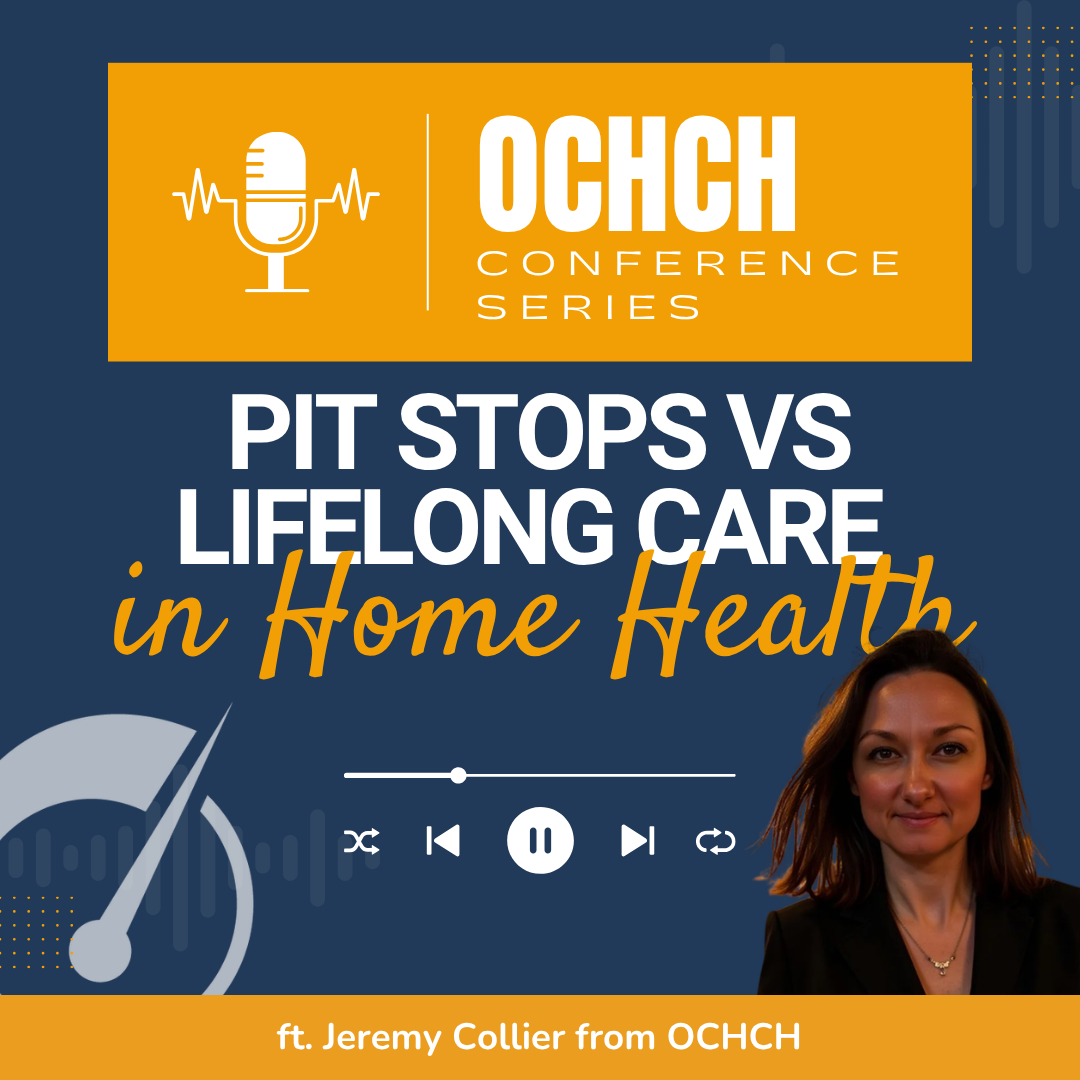
[00:00:11] Speaker B: Hi, everybody, I'm Jeremy Collier. I'm the director of Growth and Innovation at the Ohio Council for Home Care and Hospice.
[00:00:18] Speaker A: So before that, what were you doing?
Because you're new?
[00:00:22] Speaker B: Er, correct. I was doing business development for a paramedic group out of Columbus, Ohio. And paramedicine is quickly rising on the charts or being watched by people for the post acute world to be utilized in many different ways.
[00:00:37] Speaker A: And when you came into this position with Ohio Council, what have you learned? Like, what's been surprising, maybe?
[00:00:44] Speaker B: I think what's been surprising is the difference between Medicare and Medicaid home care agencies, their path, where things are going. I think there's been a big learning curve for me on hospice and the nature of hospice right now and what's going on with new hospices.
Yeah, I think those are the things that I'm really starting to understand and learn and grow my knowledge base in right now.
[00:01:06] Speaker A: So when you say there's kind of two different paths for Medicare and Medicaid, what, what are those paths that you see?
[00:01:11] Speaker B: Well, it's funny that you talk about that because I can see kind of the paths blending for a solution in the near future. When you have Medicaid, you're more having a patient for life. That's the philosophy, that you never want to leave them and you want to take care of them and you want to set up resources to make them independent and healthy. Medicare is more like a pit stop in nascar.
Let's get you fixed back on the road, get your wheels.
Absolutely.
[00:01:40] Speaker A: Yeah.
[00:01:41] Speaker B: So it's interesting to understand the unique differences between both of those and then how they might coexist together in certain situations.
[00:01:48] Speaker A: And then you talked about hospice and kind of the narrative around there, if I can put some words in your mouth, what are you feeling? What are you seeing with hospice?
[00:01:57] Speaker B: I think what a lot of people are feeling and seeing with hospice these days is not at all what hospice is. You know, we're focused on fraud, waste and abuse.
[00:02:06] Speaker A: Yeah.
[00:02:07] Speaker B: And certainly hate to see any or all of that going on. But when you have a benefit as powerful as hospice, I think it's important that we remember all the positive that can come out of that, maintaining that we still try to erode the waste and fraud and everything that we can. But really, in hospice now, we're seeing pockets of unique hospices with really different solutions or services that they're offering for families and for the patient. And I think if we just keep on pushing those bounds, we can kind of redevelop our hospice offering in the United States. And I actually think we can learn from other nations and other countries about what they're doing well in that space.
[00:02:48] Speaker A: I don't know that people always realize how new of a concept hospice is, especially hospice at home really is in the United States. I want to say 1970s. Is that about right? That.
[00:03:00] Speaker B: I think you would be in the right range there. I know that when I started selling hospice in the early 2000s. Yeah. There wasn't a real concept of hospice at home. You went to hospice of Dayton? Yeah, that's the one that I knew actually, when we were starting to sell hospice, when I was at a home care agency called Alternate Solutions at that time was actually trying to change the word because everybody associated the word hospice in Dayton, Ohio, with hospice of Dayton. That's it. There's nobody else. So we really tried to use palliative care because it was such a tough market to crack. But now all these new companies coming along and new concepts being offered, I think it strengthens the hospice care in the state.
[00:03:44] Speaker A: Yeah, I would agree. We've come a long way. Still a ways to go.
[00:03:47] Speaker B: Yes.
[00:03:48] Speaker A: But we've definitely come a long way with the power of the hospice benefit when you can start taking advantage of that. Because I do think people put it off and don't take advantage of their hospice benefit until. Not gonna say it's too late to benefit. But there's definitely not the fullness of what they could have experienced. And I think that goes for the family, maybe even more so than the patient. I don't think families are truly getting that full benefit either. So I think the more we can talk about it, whether it's on this podcast, at some of these events, getting information out, a lot of it's just education.
We're trying. We're doing the things we know to do.
[00:04:22] Speaker B: It's a benefit, it's a solution, but most importantly, it's a journey.
And it should be a journey.
[00:04:29] Speaker A: Yeah, I agree.
[00:04:31] Speaker B: When I got Into Healthcare About 23 years ago, my passion was home care. And I'm very passionate about what we got going on in the state with home care. Right now. If you first look at home care, there could be a lot of negativity because we just got a reimbursement cut.
If you look at some of the other signs, when you're looking and reading about rural health transformation and how we're going to do things differently. I think there's extreme value in home care and there's extreme value in home care growing.
[00:04:58] Speaker A: Very much so. And I do feel like Ohio is at the forefront, be pushing some of those changes, being at the table for conversations, which I really appreciate to be a part of this environment where we're looking at. We're looking at stats, we're looking at numbers. We're also looking at the needs. Ohio is quite a mix of rural and urban. I think a lot of people think of maybe Cleveland and Columbus, but there's so much in between.
[00:05:20] Speaker B: Yes.
[00:05:20] Speaker A: That's very, very rural. And I almost think of Ohio as a mini United States. Like, we definitely mimic some of the population span.
[00:05:29] Speaker B: Yes.
[00:05:30] Speaker A: And so I always feel like if things work in Ohio, this is my own. This is Hannah Vail's own little opinion about things. But I do feel like things that are piloted in Ohio can really be applied nationwide just because we do have that mirrored demographic.
[00:05:45] Speaker B: We have a great mix.
And you're getting me thinking about our clinically integrated network.
[00:05:51] Speaker A: Okay.
[00:05:51] Speaker B: And ochn, which I was a small part in developing. But that's where we're at the table with payers, and we're talking about providing care in different ways. Maybe that's mixed with a paramedic. Maybe it's more home health aid heavy because they want a different experience.
I think the time that we've had over these seven years in OCHN to develop a relationship with payers, now we're starting to have conversations that are really going to be impactful.
[00:06:19] Speaker A: I completely. Yes, the OCHN is a very. I won't say completely unique, but I don't think that people all have the ability to be a part of something like ochn. So I just want to pause because I know that people who are listening to this are all over the United States, not just in Ohio. But will you kind of break down what OCHN is and does? Because I feel like this is very reformative in concept.
[00:06:43] Speaker B: Yeah, absolutely. So we're a clinically integrated network. We started out at about 25 agencies that came together to create a partnership with the payers in town. Ask them what's important to them and what is home care doing and not doing that you like, led to very good relationships over this last seven years. And. And we're constantly just pushing these relationships forward. Now that the doors of communication are open with the payers, anything's possible. It's an extremely unique offering because I can remember getting into home healthcare and being at alternate solutions and Looking across the street at Gym City and being like, ooh, they're my competitor. Yeah, I gotta take them down at any cost.
And now later in life, I tend to be like, hey, there's power in numbers. We're all trying to do the same thing and take care of patients.
So let's all come together for the greater good.
[00:07:34] Speaker A: And something that is very. I think the catalyst to bring this change, like you said, is that communication being open. We have a tendency, me, I'm going to point fingers at myself to view the payer is the bad guy. And I think the more we do away with that and truly come to the table talking about what's best for the patient. Yes, rates have to make sense. Yes. There has to be some negotiation. Negotiation can be more than rates. It can be things like authorizations, time for payment, like everything's. Everything's negotiable. And so when you're talking, though, really with an agency representative, with the ochn being kind of the person in between to talk about what's really mattering to the agency so they can provide care, sometimes it is rate, sometimes it's not. But how can we get to what's next and what's next? To continue developing and not have things timestamped to where they don't make sense anymore. But we've always done it that way.
[00:08:28] Speaker B: I think I lost you a little bit there.
[00:08:30] Speaker A: I don't.
[00:08:30] Speaker B: If there was a question there, I didn't catch it.
[00:08:32] Speaker A: Nope, no question. Just me pontificating over what you've said. Sorry.
[00:08:36] Speaker B: No, that's great. That's great.
[00:08:38] Speaker A: That's. That's just me. Sorry, I'm thinking out loud and using my words.
[00:08:42] Speaker B: No, but you bring up a really good point. I mean, I think there's a shift in the support that's needed from the council and as I've only been here three months, but reaching out to people, going to agencies and having meetings, looking at them in the eye and understanding like, hey, I'm just trying to get my medic Medicare number. I don't know what I need to do next on licensure, then I've got to do this. Yep. That's when the council should be there.
[00:09:04] Speaker A: Yes.
[00:09:04] Speaker B: Saying this is your next step and this is what we'll do next. So we need to provide them with a roadmap and we're doing that these days.
[00:09:10] Speaker A: Yes. The council is very, very involved. Okay. That kind of. If we want to close this up in a way that's really useful, how can somebody get a hold of the council. If they want to become a part of the council, be a member, start getting that information, being part of the conversation. How can they reach out?
[00:09:27] Speaker B: Absolutely. Myself or Jim Goldsberry. And on LinkedIn, it's Jeremy Collier. Or you can call me on my cell phone, 937-287-0485. I'll be glad to answer.
[00:09:37] Speaker A: Hey, that. That's a gutsy move right there. Just go ahead and text him, add him to any, like, lists, you know, for spam. Sign him up for all. I'm joking.
[00:09:45] Speaker B: I delete report all the time, so it's fine.
[00:09:48] Speaker A: Well, it's been great to talk with you. Thanks so much for having us.
[00:09:50] Speaker B: Thank you. Have a great day.
[00:09:51] Speaker A: You too.