Episode Transcript
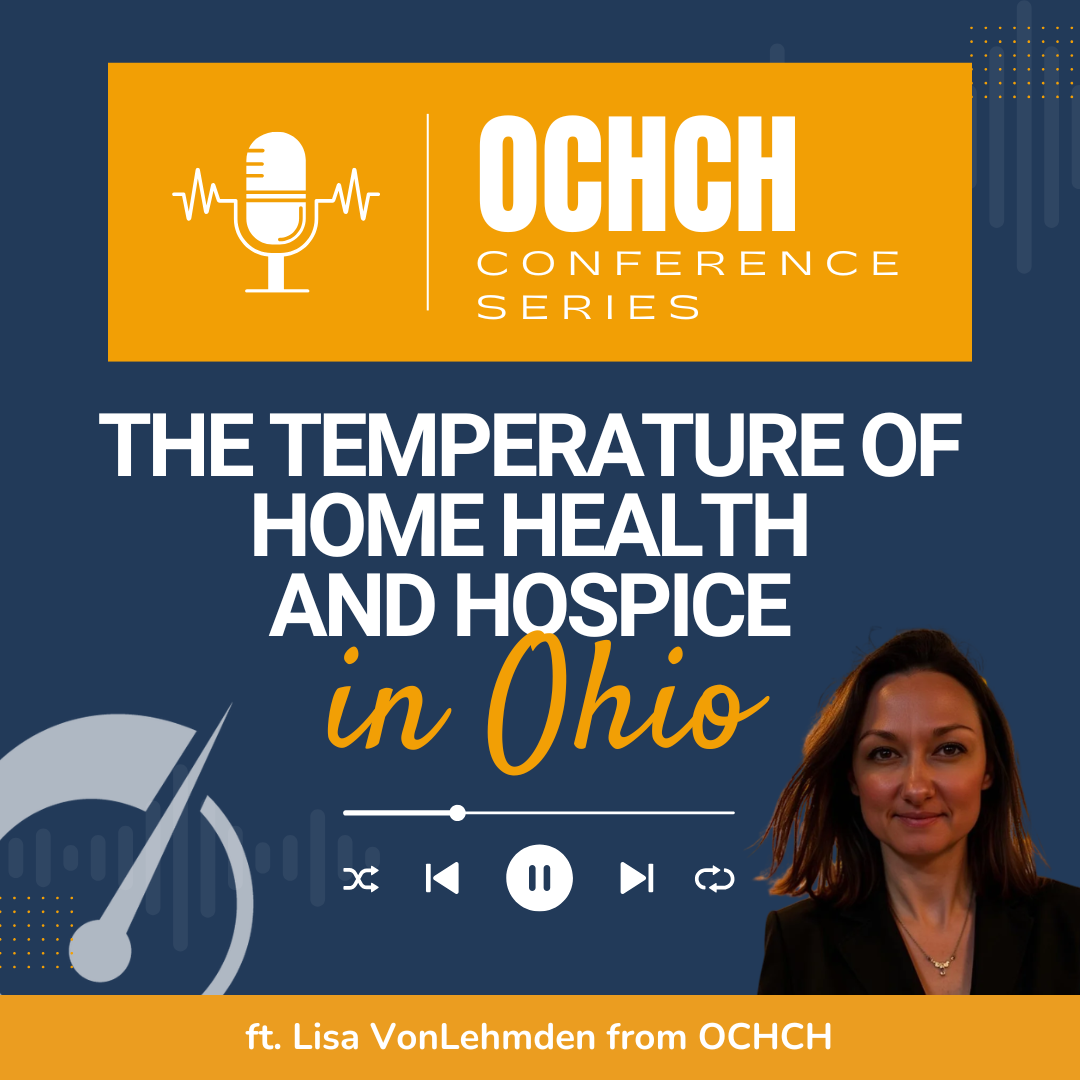
[00:00:03] Speaker A: Welcome to Home Health Revealed, the podcast for home health and hospice leaders who want to stay connected to the industry and ahead of what's next. Yes. So, Lisa Von Lemden, everybody. She's actually a repeat guest, and we've had her on a couple of times, done some recording, had so much fun together over the last few years.
[00:00:19] Speaker B: It has. It has been a really good time, and it's been awesome meeting you. I remember meeting you back in 20. 2022.
[00:00:26] Speaker A: Yep.
[00:00:27] Speaker B: When we were still at the convention center.
[00:00:29] Speaker A: Yeah.
[00:00:29] Speaker B: And you had your coffee shop.
[00:00:31] Speaker A: I'm sure I did.
[00:00:31] Speaker B: And it was you and your mom. And our common bond was that you were originally from Ohio, just like, 20 minutes down the road.
[00:00:37] Speaker A: Yeah. We live really close. My husband actually grew up in the town that you live in, so I felt connected. Even though I lived far away, I would get to come back, and it felt like home to me.
[00:00:48] Speaker B: Right.
[00:00:48] Speaker A: People here. People here are better.
That's top secret. But Ohio people are just. We're just good people.
[00:00:55] Speaker B: Are we? Yeah. Ohioans are awesome. Yeah. I mean, there's. They're happy, which I don't know how some days, because, I mean, horrible weather.
Hey, everybody. It's going to be 70 degrees today, and then tomorrow morning, there's going to be snow on the ground.
[00:01:07] Speaker A: Exactly.
Yeah. And then I got to move back to Ohio in 2024, so we've been able to connect a little bit more. I've been able to do some of the regional events, but I have been so privileged and amazed to get to see the growth of the Ohio Council, and you have just led growth in an incredible way.
[00:01:24] Speaker B: Well, thank you. I mean, honestly, I had no idea what I was doing when I came into it. I really didn't.
[00:01:28] Speaker A: Those are the best ways to learn and be right. Like, you're like, all right, we're getting this done. I don't care. Like, come hell or high water, I'm pushing up my sleeves.
[00:01:35] Speaker B: I think I'm in good company right now. Right. No, I mean, in all actuality, I think I just kept telling everybody, we're gonna run it like a business. Yeah, we're gonna run it like a business, because I know how to run businesses, but I don't know how to run state associations. And what we wanted to do was create a scenario in which our membership believed in the fact that we've all been there, you know, so when we went out and started seeking out, you know, employees and colleagues to come into the council, we were thoughtful about bringing Drew and Jen in, because they had that state association experience that we really needed. But then everyone else that we brought in thereafter are people who have been owners or operators or employees of home care agencies and hospice companies. And they can speak, speak from experience. You know, I always say I can look someone in the eye and say, I have laid awake in bed wondering how I'm going to make payroll. I know what you're going through, and I think that's a big deal. It really kind of has lent trust between the members and the actual council. And what we've seen as a result is not just an increase in membership, but an increase in all of the services that we're providing.
I mean, the help desk is ringing off the hook. And it's not just quick emailed answers. Hope is picking up the phone and calling the agencies back and saying, let's talk this one through. Tell me exactly what's going on. And we're providing like real live guidance on what we're going to do next. It's not, you know, a copy and paste from, you know, what the national alliance thinks is the best practice, because that's what our agencies need. This is an ever changing environment. I mean, the patients are becoming more acute. We're being asked to do more.
And, you know, we really want to be able to provide that level of support. So I think that's why we're seeing the growth that we're seeing. It's exciting.
[00:03:20] Speaker A: It really is. And even from like a state association perspective, you know, Ohio's state association, so it's the Ohio Council for Home Care and Hospice, you guys do.
I'm going to say the word minister because I can't think of another word but meet the needs of, in a very profound way, your members. So it's not just. And I get to see a lot of different state associations. So I am speaking from some level of experience. Not all of them for sure, but some of them are. You pay your dues, you get your little certificate, you're a quote unquote member, but there's not engagement. And that's what I feel like Ohio has done. They have driven engagement through regional offerings, through just conversations that are meaningful.
Sometimes it is emails, but I feel like there's a presence throughout the state. You guys have two annual events. I'm going to call it annual. I know the fall one is called the Ohio Annual. This one is the Financial Management Conference. And yes, there is some separation and we're focused on finances, but really the entire home health and hospice world right now has to focus on finance, because of the way that clinical impacts finance. We are to the point where we can't separate everything. So the conversations really do kind of centralize.
But talk about these events because a few years ago when we first met, the Financial Management conference was newer, right?
[00:04:40] Speaker B: Yep.
[00:04:40] Speaker A: And it has grown. You're maxed out on your vendors. There's so many people here. It's a buzz. People can hear it in the background.
This is, this is where people come to really talk these things through.
[00:04:51] Speaker B: Yeah. So it's really exciting, you know, and I'm, I'm going to, I'm going to mention one thing. You know, when we wake up in the morning, we, we, we, we say we want our agencies to never question why they're cutting a check to be a member.
Okay. So this isn't about taking a check and sending a certificate.
If, if our agencies aren't getting the value and aren't getting the engagement and the experience, then we didn't do our jobs. Right. Right. We are truly here to support. So I don't ever want to, I don't ever want to rest on my laurels and think like, well, we're just entitled to a check because it's somebody's civil responsibility because it's not or a state association built to support. So hence the Financial Management Conference. Right. And for anybody that thinks that, you know, this is healthcare. Healthcare is a business.
Right. And there's a massive spotlight on the financial side of the business because we can't continue to provide care in the communities. We can't continue to go into Ohioans homes if we can't keep the lights on. You know, and it's getting tougher and tougher. You know, we continue to face cuts here in the state of Ohio. We rolled out electronic visit verification statewide probably about a year and a half ago and it's been a rolling roll since.
And now January 1st, we just rolled out next gen and we're going to be adding another how many counties effective April 1st.
So you've got agencies all throughout the state of Ohio who have never dealt in the duals world. Right. Who are now being faced with having to understand whether or not they're billing Medicaid or Medicare, you know, and then the four payers that the state of Ohio has selected, all awesome to work with, you know, great, great payers that we have great relationships with. But this is new. And anytime we're doing something new, there's a lot of unknown and a lot of tripping and a lot of falling. And unfortunately in Our world, when we trip and fall, that affects the bank account and that affects payroll, and that affects care delivery. So financial management conference this year has really been keyed into being. Being able to provide information, support and guidance on billing practices, the revenue cycle. We've got Palmetto here virtually live streaming for Medicare this morning and then, excuse me, Medicare certified this morning and then hospice this afternoon. But this whole two days is really about being able to provide information, knowledge, and experiences, you know, from agency to agency on how we're managing our finances, where we can cut cost, where we can be more efficient. And, you know, although we don't want to call health care a business, it is. And I think the more that we can empower every line of our agency, from the clinicians in the field to the CFO on. On that dollar and what it looks like and how it's coming in, I think we've done right by our Ohioans. Really.
[00:07:38] Speaker A: Yeah. And the clinical.
Right. I think sometimes there's just this. There is just this, like, mental barrier that people have. Like, I'm caring for the.
You do the back office numbers stuff. Right? Because we're wired differently. Caretakers are wired in a different way. I'm generalizing, but for the most part. And so coming together and really understanding the impact that we have across those worlds, I think just makes for a more powerful, better understood, systematized opportunity within these agencies.
[00:08:11] Speaker B: It's tough. I mean, I think most people know this. I have my own agency as well. It's a small agency in Northeast Ohio. And, you know, I had to have a sit down with all of our admitting clinicians. And I told them, I'm like, listen, roll up your sleeves, folks, because we're gonna get dirty today because we're gonna talk about things that you don't want to talk about.
I know you are caregivers. You go into the home, you love on our folks, you teach, you do all the right things. But now we have to talk about episode management. We have to talk about the fact that our PDGM payment might only be $2,100, and we've got, you know, 22 visits on the schedule.
I mean, you know, there are. There are outliers and there are one offs, but there's also empowering the clinicians to understand their responsibility in the whole cycle as well. Because agencies are machines. And when even one spoke is broken or out of place, it affects every other aspect of the machine. And the machine can't run. Right. You know, so I think it's really empowering Every level of the agency to understand the financial responsibility that we all do have.
[00:09:13] Speaker A: Yeah. Because don't you think there are these aha moments? I know I've talked to some clinicians, and we've looked at some different aspects of OASIS and kind of how some of even the GG items impact finances. And, you know, those are numbers that I love to play with, those little levers, just to kind of see the ifs and thens. Right. The documentation has to support those things. And we're looking for medical necessity in your notes. And, you know, all those things, you almost have to kind of put on a clinician hat, think about your patient, take that hat off, and then think about it as a business. And that has to be taught. Do you feel like when you sat down with them, there was this like, aha, or this maybe a global perspective then of like, oh, my gosh, I didn't realize how all of that trickled down.
[00:09:50] Speaker B: It was a total aha moment. And actually it was really uncomfortable. I'm not going to lie.
We had the TV screen up, and I pulled up a specific episode of Care, and the admitting clinician, the RN was in the room, and everybody could see that, you know, it was her case. And I said, I'm not picking on you. I promise I'm not picking on you. But we went through line by line and we talked about, you know, the cost of each visit, and then we talked about why and, you know, why all of these visits and if there is medical necessity all day long.
[00:10:21] Speaker A: Yes, absolutely.
[00:10:22] Speaker B: And the team knows that about me. I mean, if we lose money on cases, like, that's fine. We got to give the patients what they need. But, you know, it was kind of a moment where I was looking around the room and everybody was sort of like, nodding their heads and they were like, okay, we get it. And one of our lead physical therapists finally kind of said, like, you know, guys, we need to come together and do this because we need our company to be financially healthy. And I was like, yes, yes. Like, that's exactly it. You guys are still going to do your job. We're still. Still going to go out and kick butt. We're still going to strive for all of our star ratings and all of the things that we want our patients to feel when we walk through the door, but we're just going to do it with a little more knowledge. Right. You know, and that's why we also, flip side, I have the Rev Cycle team. Go out in the field, go do home visits, go see what the nurses and physical and occupational therapists are seeing.
[00:11:17] Speaker A: Yeah. I got to do a visit with. With your team, which was.
So, I mean, I feel like, you know, what goes on, like, you know, in your brain what goes on, but then you go and you, like, see it, feel it, you know, smell it, all the things, like, you are inundated with that experience, and it just opens up more questions, more ideas, like the curiosity and then kind of reconciling. Okay. What happens on the back end
[00:11:41] Speaker B: really is a necessity. And it's. It's one piece of advice I would give at any agency. You know, walk in each other's shoes, have your revenue cycle team and your billing team go out in the field, see and see it firsthand, because it does change your perspective. I mean, as much as we're talking about empowering our clinicians to understand the financial side, flip it.
Have. Have. Have your business people go out and see what we're actually doing in the home, because it's pretty darn special.
[00:12:08] Speaker A: Yeah. I mean, it really is. Yeah.
[00:12:12] Speaker B: So.
[00:12:12] Speaker A: And good to see. I like that. I like the crisscross of being in each other's shoes.
[00:12:17] Speaker B: Yeah.
[00:12:17] Speaker A: And I love that you did that with your team. I think that's so powerful. And maybe some agencies just need to hear if, you know, if you feel like you're in an uncomfortable situation and you don't want to call somebody out de. Identify that. Like, just have them look at it with, you know, this is somebody's. I don't know who it is. Maybe somebody in this room, maybe not. Right. But let's pick out some things and talk about what we could do better, because we have to work.
[00:12:39] Speaker B: Work.
[00:12:40] Speaker A: It's not even that we have to do more with less. It's that we have to do the work with wisdom.
[00:12:45] Speaker B: Oh, absolutely. And, you know, that book, Crucial Conversations has. Has never been, I would say, more relevant than right now. I mean, we. We. We really are in a dynamic world. I mean, and we've been saying since COVID and since the pandemic that there's a spotlight on home health and, you know, hospice and care in the home and. And all of the things. Right.
And that spotlight continues to be on us, but it is a really.
We're in a really interesting time because, you know, we go into somebody's private home.
[00:13:19] Speaker A: Yeah.
[00:13:20] Speaker B: Right. Like, that's. You don't. You're knocking on the door. You have no idea who's behind that door. You have no idea what's behind that door. You know, but at the same time.
Then you talk to the clinicians, and they so love what they do because of that intimacy, because of what's behind that door. You know, right now, I'm actually working one on one with a family who's got their mother discharging from a subacute up in Northeast Ohio. And, you know, it just. It just reminded me of all of kind of the insecurity and fear that goes into it, you know, because I'm looking at it from the side of the clinicians. We knock on that door, we don't know what's on the other side. Put yourself in the family's role. Okay, There's a knock at the door. You have no idea who. Who's. Who's on the other side, but that person is coming in with the responsibility of taking care of your loved one or yourself.
And by the way, if you're receiving that level of care, you're. You're actually defined as homebound, which, in and of itself, that is scary. Like, what do you mean I can't leave the home? Like, so, you know, what we do is so incredibly special, but we have to be able to have crucial conversations. You know, we have to be able to sit down, down with our clinicians and with our families and really kind of, you know, referee, if you will, like what's happening. Because it's a very unique and interesting level of care. And, you know, whether we like it or not, we get extremely close to these folks, and we're still people taking care of people. So, you know, you have to be willing to have some interesting conversations to really be able to get through to both families and clinicians. And I just totally went off on a tangent.
[00:14:59] Speaker A: No, that's good. I do.
So I listen to several podcasts, you know, of course, along with this one. I don't actually listen to this one. Once it's done, it's done. Usually I don't want to hear my own voice again.
[00:15:10] Speaker B: Oh, I hate hearing my own voice. I will never listen to this. So I have no idea what's actually going to make it into the podcast.
[00:15:16] Speaker A: All of that. I'm not editing. No, but I listen to several podcasts and some of them that I have been talking with about leadership. And is that friction that you're talking about? So the crucial conversations. I've not actually read the book. It sounds like one that, like, I need to put in my little repertoire, but it's these friction that we can sometimes shy away from just because of the uncomfortability of it. But Actually, that's where we need to be. And as a leader, you have to be willing to engage in the friction, be part of these hard conversations, knowing that they bring about change. So as much as we possibly can as our human being selves, take out the emotion of it.
Although we are very passionate people in this industry, we have to take out the emotion as best we can and be willing to have the hard conversation, talk about what works best for the patient, what works best for the clinician, and put all of that together to create a future that looks brighter as we move into an aging population that's increasing, staffing, shortages, all the things that are making our industry what it is right now.
[00:16:17] Speaker B: Absolutely. Some of the toughest conversations actually end with the best outcomes. You just have to be ready to go into it and really be honest and raw.
[00:16:26] Speaker A: Yeah.
[00:16:27] Speaker B: But appropriate and kind.
[00:16:29] Speaker A: And that is such a mix.
[00:16:31] Speaker B: It is. But if you could figure out the art of it, it's game changing. And I will say anybody that's worked with me knows that. I mean, I enter into some pretty tough conversations.
It's done with respect and kindness, but it really does bring truth out. And, you know, when you, when you get to the reality of, of the truth and you look at the perception versus the reality and you explain perceptions and realities and you really walk through a situation, you can get to a point where everybody can kind of understand, like, oh, okay, I see what just happened there. Now let's talk through how we're going to get through that.
And again, we're people serving people. You know, there's going to be, there's going to be mistakes, there's going to be tough times. Right. But you have, your leadership team has to be willing to come to the mat and talk it through and, you know, make, make the appropriate changes, twists, whatever it may be. But, but again, it's home care. Like, there's no recipe. There's no, no two days are the same. So we really just, I mean, it's a fluid, it's a fluid level of care, you know, but I love it.
[00:17:38] Speaker A: Yes. And I think people appreciate that level of willingness to engage. I also think it teaches clinicians how to be more effective in the home and how to make decisions, because they are decision makers. They are making probably thousands of micro decisions a day. And that builds who you are as a clinician. But when you're in the home, you can't pop your head out the door and call your, you know, cardio nurse friend to ask a question about this patient that you're you're dealing with. You're literally having to pray to God that you have the right resources in the back of your trunk and they're not expired.
[00:18:12] Speaker B: And.
[00:18:14] Speaker A: And then cowboy nursing.
It is. It is a wild, wild west of cowboy nursing. Totally. Oh, gosh. Well, we could talk all day. We really could. And if you think of something later and you want to come talk some more, please do.
[00:18:26] Speaker B: Don't offer that to me, Hannah.
[00:18:29] Speaker A: But it's great to be here. It's really great talk to you. Thanks for coming up.
[00:18:33] Speaker B: Awesome. Thanks so much. We'll see you soon.
[00:18:34] Speaker A: Okay.