Episode Transcript
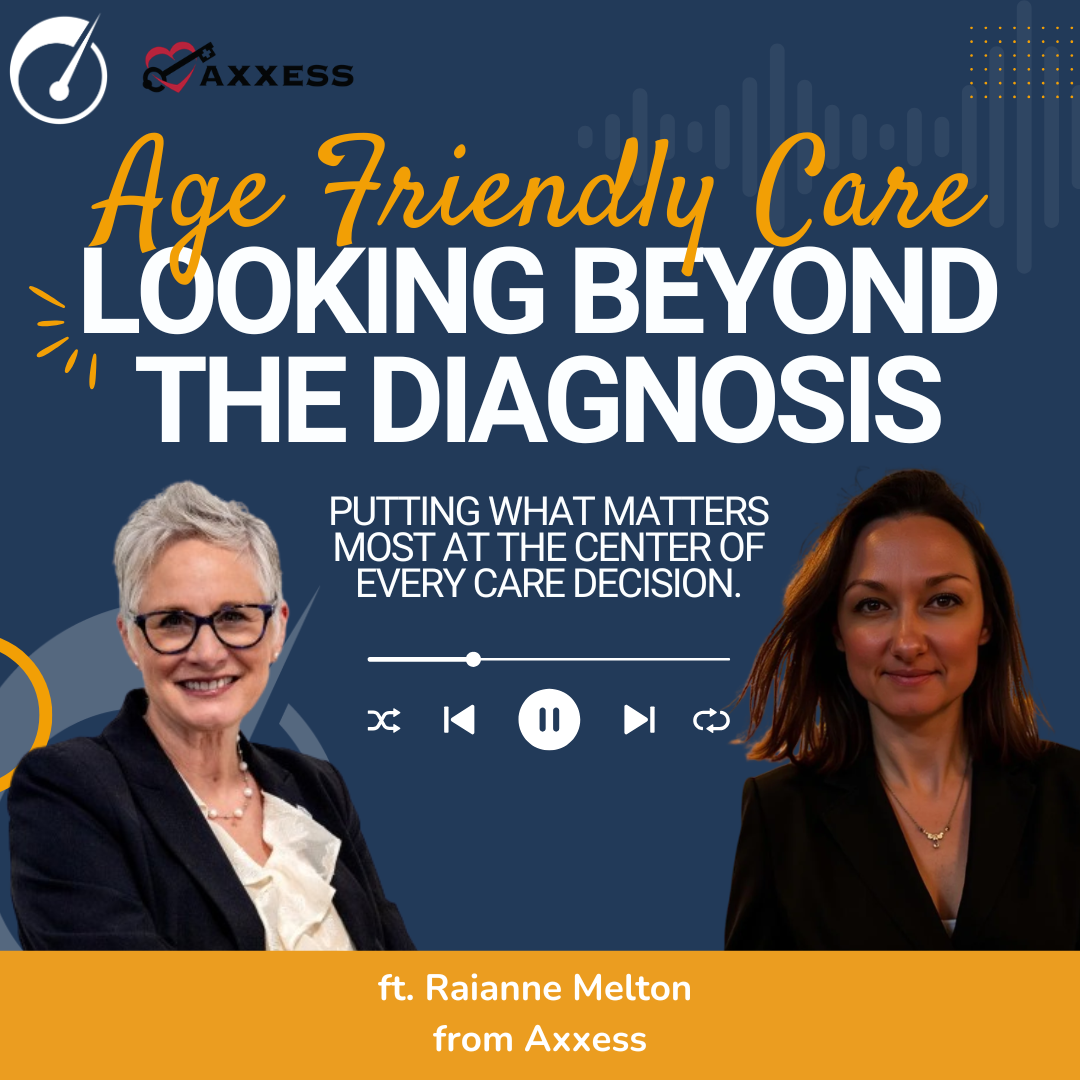
[00:00:03] Speaker A: Welcome to Home Health Revealed, the podcast for home health and hospice leaders who want to stay connected to the industry and ahead of what's Next Home Health Revealed podcast. I am Hannah Bale, your host and I am here today with Raeanne Melton. She is the Senior Director of Clinical Services Professional Services at Axxess and as you know, is one of the nation's fastest growing home healthcare technology companies.
She serves as a subject matter expert in hospice and palliat, helping to develop training as a consultant and certification courses for these specialties. She also supports patient engagement for Access's CHAP Solution, leads content development, serves as an ANCC Lead Nurse planner, participates in the Alliance Education Work Group and the Emerging Models and Innovative Care Work Group, and is an Alliance Grassroots Ambassador. She is also a recipient of the McKnight's 2026 Pinnacle Marketplace Influen.
With 20 years of hospice care experience across multiple organizations, she has held several leadership roles. Most recently, she served as Director of Clinical Strategy for Banner Health, where she developed strategic education to support current and future business opportunities and helped redesign the palliative care delivery model to improve patient outcomes.
Raeanne earned her bachelor's degree in nursing from the University of Phoenix and holds CHPN certification through the Hospice and Palliative Care Credentialing Center.
Welcome, Raeanne.
[00:01:43] Speaker B: Thank you. It's so nice to be here with you, Hannah.
[00:01:46] Speaker A: That is quite a bio. You have just amazing experience, great rich history in this industry.
[00:01:54] Speaker B: Well, you know, when you get to a certain age, you know, just.
Yeah. Which we're not. But with time comes experience, I found.
[00:02:06] Speaker A: Are you. No. You're probably not dealing with any of the smoke advisory from the Canadian fires.
[00:02:14] Speaker B: No, we've got monsoon rain.
We're having flood watches.
[00:02:19] Speaker A: Oh, no. So we've got. It's just completely hazy outside from the Canadian fires.
[00:02:25] Speaker B: And we're talking about it yesterday in. Was it yesterday? No, it was the day before yesterday. We went to Legal Seafood right there in the, in the mall of the hotel for lunch and we were sitting at the window and the waitress said, this guy is looking yellow. And it's because of the fires from Canada.
[00:02:43] Speaker A: We're just right on the other side. So a lot of New York are dealing with a lot of that today. Just fun, you know, whatever. And something else I was talking about today that I was going to mention to you. Oh, the daylight savings time. Have you seen.
[00:02:59] Speaker B: We're so excited about that. Although there was a little bit of a downside for me because I'm actually, we do. We are we stay on standard time the whole time.
Arizona, it does not change time.
So six months of the year I'm on mountain time, which means that working in Dallas, my day starts at 7am and six months of the year I'm on Pacific time, so my day starts at 6am if this goes into effect, I'll be, I'll be at that 6am start for the rest of my career probably.
[00:03:44] Speaker A: Yeah. And is that you like it or you don't like it?
[00:03:46] Speaker B: No, I don't like it. No, I don't like it.
[00:03:48] Speaker A: Does that one hour make a big difference?
[00:03:50] Speaker B: It makes a big difference. Yeah.
[00:03:53] Speaker A: It's been interesting to see the discussion around some of the statistics of. Okay, if you do daylight savings and have that extra hour, you know, longer, like later sunset accidents at dusk, kids going to school at certain times, like.
And I was really interested about the risk of stroke and some of the things that happen when we. Time change.
[00:04:19] Speaker B: Yeah, it's hard.
When we moved to Virginia for 28 years, we hadn't changed time.
You know, it took us a week to adjust to the time change the first year.
[00:04:34] Speaker A: Yeah.
[00:04:35] Speaker B: Yeah.
[00:04:37] Speaker A: It is amazing how that just, I mean it's just one hour, right? You think it's just.
[00:04:41] Speaker B: Yeah, yeah.
[00:04:42] Speaker A: But how it takes to adapt to that. So.
[00:04:45] Speaker B: Yeah. Yeah, yeah.
[00:04:47] Speaker A: What are you hoping for then? Is it, it would be the.
[00:04:50] Speaker B: I'd rather, I'd rather if we were gonna go and we just stay on standard time, then I'd have that. I'd be on mountain time. But it looks like it said it. I mean it definitely said daylight. Stay on daylight savings time.
So I'll be, you know, three hours from the east coast and which is hard when you, when you're traveling to present and that three hour difference, you know, and you get an 8:00am or 9:00am session and it's 5:00am your time.
[00:05:21] Speaker A: Yeah, I know it does for me. It's usually getting in and having a dinner reservation at like 7, but it's really 10 my time when I go wet.
[00:05:31] Speaker B: Right, right, right.
[00:05:33] Speaker A: By 10 I'm ready for bed.
[00:05:34] Speaker B: Right.
[00:05:39] Speaker A: Well, yeah, here's the fingers crossed because I, I am like good for not changing my microwave that I can just do away with every single.
[00:05:48] Speaker B: No, I mean I think it's ultimately, I think it's the best thing.
[00:05:52] Speaker A: Yeah. Welcome to yes. And you have had some incredible experiences and today we're going to be talking about age friendly care. I'm really excited to talk through this topic with you. I can't wait to hear some of Your story.
And I really would just like to start with, can you walk us through your own health journey? Because I think that's going to set the stage for our conversation.
[00:06:15] Speaker B: Sure. Well, In December of 2625, I was notified through testing that I had breast cancer.
And it was sort of like at the. Around the same time, I was notified by McKnight's that I'd won a Pinnacle Award.
And congratulations. I know, I know. It's like, wow, I. I'm getting an award and wow, I have breast cancer.
[00:06:45] Speaker A: Yeah. That's big news.
[00:06:47] Speaker B: Yeah. And fortunately, I was. Had been followed very closely because through a. A family member who had also had breast cancer, who had genomic testing, we all got our genomic testing done, and we found. Many of us found out that we had a pathogenic gene.
So I was followed very closely.
But I knew it's December.
I get in to see the breast surgeon and the medical oncologist in January.
I really want to be in New York on March 18th to receive my award. They even asked me, what music do you want to walk across the stage to? I mean, it's like, oh, my goodness. I mean, really feeling special.
Yeah.
[00:07:38] Speaker A: What was your walkout song? I would like to know what your choice was.
[00:07:42] Speaker B: Yeah, well, so my son, who's a big Nancy Sinatra fan, wanted me to have these booth use these boots are Made for Walking. And I said, babe, I love that idea, but you know the lyrics. One of these days, these boots are going to walk all over you. It's probably not the message I want to send.
So I chose my funeral song. So for years, I've been teaching my grandchildren how they're going to dance out of my funeral to Spirit in the Sky.
So that was what I. That's what I chose.
So I go to see my breast surgeon, and there's the breast surgeon. It's at a teaching hospital. There's another surgeon who's doing a fellowship, and the PA is in there. And I said, so what do you know about age friendly care?
And they said, well, we've never heard of it.
And I said, well, let me tell you what it is.
It's for the care of older adults. And it's based on four principles. What matters most, Medication, mentation, and mobility.
And I'm going to tell you what matters most to me. On March 18, I need to be in New York City so I can walk across that stage and get my award and say the whole team socialized, that they socialized it to the medical oncologist, the plastic Surgeon, I would go, they got me in. I mean, I see them in the middle of January. They schedule my surgery in early February.
They expedited everything when I would go in for visits. Have you picked out your outfit for the trip? Are you all ready? Are you feeling strong enough to go?
And I really felt one in my own mind, having clarified why I needed to recover when I wanted to recover, do it quickly, and the fact that the whole team was engaged, I felt really cared about.
And I think that's a perfect example of what age friendly care is.
[00:10:04] Speaker A: Yeah. And so for listeners who've never heard the term, you talked about the four M's, can we just break it down a little bit more to talk about really what age friendly care is? Can you expound on those?
[00:10:16] Speaker B: Absolutely. So in 2008, the World Health Organization launched the Age Friendly Care initiative. And in 2017, the John E. Hart foundation and the Institute for Healthcare Improvement partnered together to create the framework.
And it is based. Some people call it the 4M, some people call it age friendly care. But basically what you're focusing on at every visit is what matters most.
Medication, mentation and mobility.
So it becomes a. It's a framework. It's not, it's not a practice, but kind of, it is a practice, but it's really a change in the way we talk about health conditions.
And, you know, I come from palliative care and hospice. We have goals of care conversations all the time. But a goal for care is very different than what matters most to you. And I'm going to tell you, as a hospice nurse, I've heard maybe before the four M's, before 2017, I heard patients saying to me, I. My grant, my. My first grandchild is going to be born.
I want to be here long enough to hold my first grandbaby.
My son is going to prom.
I want to. I want to see him go to prom.
I want to walk my daughter down the aisle.
We've heard, we hear these things, but. And that's what matters most, which is very different than I want to be pain free.
[00:12:00] Speaker A: Yes. Right. Goal for treatment versus what matters to you. Yeah.
[00:12:04] Speaker B: Yes. Or, you know, thinking in it from a home health point of view, you're having a total knee or maybe you had a total hip done. And maybe your goal is you want to get up and walk. You want to walk your dog on the beach.
That's what's important to you. That's that ultimate goal. I want to, I want to be able to hike again, things like that. So I I think it's really just a little paradigm shift which really makes a difference and impacts patient engagement tremendously.
Because what we know about at least the hospice CAHPS survey is there's one question that is asked that if it's answered strongly, agree increases would recommend an overall rating by double digits.
And that question is, did your hospice team care about your loved one?
Single most important question to get right if you want to elevate all your scores.
[00:13:16] Speaker A: Yeah. And this 4M age friendly care speaks directly to that.
[00:13:22] Speaker B: Absolutely. So let's talk about the 4M. So what matters most? We want to align each client's specific health needs and goals and outcomes to what they are able, what they can achieve and what they want to achieve.
Medication. You know, the older you get, the more medication you make. But how, how, how can we look at it to try to avoid those medications that are disruptive, the benzodiazepines, you know, some of the, even, you know, sometimes antihistamines can cause delirium, distress, all kinds of things. So really looking at the manic, managing that medication and really looking at it is with the, you know, idea. We want to treat symptoms, but we also don't, we want, we don't want to cause harm. So how do we manage that?
Mentation.
We want to sustain cognitive ability as much as we can.
We want to avoid delirium, we want to avoid anxiety. And so how do we do that across all of the settings? And then mobility, whether it's your ability to transfer from bed to chair or your ability to walk for as long as possible, we want people to be able to move, move safely.
So all of those things are part of this framework.
[00:14:55] Speaker A: Yeah, and they really tie back to, I know in our conversation, this human centered design idea where clinical goals and a patient's goals may not actually be the same, but that the care should be designed around what the patient's priorities are so that they do feel cared for.
Not just as a case study of what we can do to further this clinical, but clinically, but as a person, as a human and what they really want with their life.
[00:15:27] Speaker B: Absolutely. But there is an upside for the providers too.
Care for older adults is complex. It becomes more manageable when you use this framework.
You more quickly identify the core issues that are going to be roadblocks.
It helps, it helps the care team organize the care and everybody's on the same page. You know, imagine being in IDT and you know, instead of saying, you know, 82 year old, you know, Caucasian woman, blah, blah, blah, Blah, you say, you know, I just want to remind you that Mrs. Jones, what matters most to her is that her dog is safe and with her on her bed during the evening or something like that. So really the whole team knows? Oh yeah, we know. We make sure that, you know, we always take a treat for the dog. You know, we know how important the dog is to her.
So that is really important. And, and it's relevant for all adults, older adults, regardless of the disease they have.
There's, you know, you don't need to know, you know, very highly specific things about caring. This is about caring. Right. So it makes it much easier. Yeah, yeah.
[00:16:58] Speaker A: And all the difference in the world.
And from an agency perspective, there are benefits to the agency as well as benefits to the patient. But if an agency wants to start implementing this slight shift in framework, that makes a really big difference. Where do they begin?
[00:17:18] Speaker B: So there are a couple of really easy steps. I'm going to say that I am sure that every agency out there does part of age friendly care. They just have not organized it and put it into a. The framework and talked about it as the four M's.
So the first thing they should do is go online.
You can put in age friendly care into your search engine and you will find, especially from the John E. Hart foundation, all of their literature is at no cost.
They want people to do this.
You can go. They actually, they let you use their images, they let you use everything because they want people to do this.
[00:18:04] Speaker A: Great resource. Yes.
[00:18:06] Speaker B: Yeah, it's an absolute resource. The next thing to do is do an assessment of the care you're providing and find out where you're hitting the mark and where you need, where there are opportunities to improve, which is really quite simple to do. You know, and I, and again the resources that are provided make it really simple for you to do.
The next thing is, you know, you do whatever the same thing you do whenever you're talking to your team, you get them engaged. I think that this is something that is really easy for teams to embrace because it's simple.
It is, it's easy to understand and they're already doing so much of it.
So I think that that's it. Now I will tell you if you are, if you have an accrediting organization and it is chap they at your next survey, if you decide to implement age friendly care, they will accredit you as a, as a, they will certify you as an age friendly care provider at no cost. They just add in that survey which, you know, I Just applaud chap Teresa Harbor, Kai Gwynn, their National Medicare Director.
They have really embraced this and made it very easy so you can become Age Friendly Care certified and imagine what that would do as a marketing, a bit of marketing for your team.
Tremendous.
The other thing is to your EMR vendor, I will say access. We are CHAP verified. You know, we, we have been our hospice, palliative care, home health and home care solutions have all been verified as meeting all of the CHAP standards for those business line. But we also asked for age friendly care verification and they went through our, our solutions, our platforms for each business line and verify that we provide ease of documentation for what matters most, medication, mentation and mobility that meets their standards for age Friendly care.
Knowing that that's also something if you're looking for a new EMR vendor you want to do Age Friendly care is to find out if they're, they're verified with CHAP
[00:20:46] Speaker A: and then as far as policy documents, is there a way that that can be added into their formal policy documentation to talk about that? And I'm guessing that would be a part of what CHAP does through that verification.
[00:21:00] Speaker B: But yes, yes, they would look at that. And I, and I think that again, as you, as you get the framework together so that you can go through either verification or at least just practice the framework, you know, I think it's always helpful to have those policies and practices in, in place. And I think that, you know, I, I do a lot of compliance stuff and I'm always asking people, you know, you need to have a standard operating procedure. Where's your standard operating procedure? And why that is important is that if you can't write down, you can't write it down. You really don't know what you're doing and it's not standardized.
So simply that act of writing down what the steps are allows for clarification, clarity and really allows for. It makes it easier to teach as you onboard new staff.
[00:22:02] Speaker A: Right. And like you said earlier, getting the staff involved in maybe even creating that policy to talk about how it's going to work within their organization, what they're already doing, you may and I'm guessing staff are already doing a lot of these things and they're going to get behind it because staff love to meet the patient where they are. They are patient facing anything they can do typically to make the patient's life easier to meet them where they are. They're 100% on board.
[00:22:29] Speaker B: And as a nurse I want to do, I want to practice In a way that makes, makes my practice effective. But I also want it to be easy for me.
You know, I want the documentation to be easy. I want the. And I think this framework also supports that.
But I think the most. I'm sorry.
[00:22:49] Speaker A: No, no, go ahead.
[00:22:51] Speaker B: I think the most important thing is what it's going to do for your patient engagement scores.
[00:22:56] Speaker A: Mm.
Right. Beyond just being the right thing to do. Right. We talked a little bit about and I'd love for you to expound on what's the real roi, if you will.
[00:23:08] Speaker B: Yeah. And I think that roi, you know, is in improving patient engagement scores. Now what I have found and access also is a CAPS vendor. So I knew CAPS Hospice CAHPs from the provider side really well. But after I joined Axis, I had the opportunity to work with our CAHPS team and there was so much I didn't know that goes on behind the scenes with our vendors. You know, I did not know, I did not know that the vendors, cap vendors are surveyed by CMS every year and that it's not a friendly accrediting organization kind of survey.
They, you know, it's. If you, my experience with these surveys is if you, if they look at 100 records and they find one, one miss, you get cited for it.
So you, you know, 99 of the time you've gotten it right. But they found one time when you got it, you didn't get it right, you get cited.
So I mean it's very, very, very strict. And one of the things that CMS talks about at these surveys a lot is return rates. And that's one of the reasons in 2025 they made the change to the hospice CAHPS surveys where they have a long. They went from 42 day survey period to a 49 day survey period. They instituted a web mode, they instituted a pre notification letter, they shortened the survey and simplified the questions, all with a goal of increasing return rates.
Well, you know, this can be, you know, it's challenging because, you know, there's a couple of things with CAHPs that we know. Which number one is you're always going to hear with some from somebody who didn't like the care.
[00:25:13] Speaker A: Yeah. Strong opinions shine through. Right. Either super positive, but most often super negative. And that's true for a restaurant you eat at even.
[00:25:22] Speaker B: It's exactly.
So you're always going to hear from that person. You're always, you're always going to hear from some that. And that that person who was dissatisfied. It's going to be, it may be on One single negative event you're going to see on your caps return.
[00:25:45] Speaker A: Unfortunately.
[00:25:46] Speaker B: Unfortunately. Sad but true.
[00:25:49] Speaker A: Right.
[00:25:50] Speaker B: So when you change your framework and with the focus on what matters most, medication, mentation and mobility.
But what matters most.
And at every visit, every staff member is verbalizing. I know. This is what matters most to you.
When they get to that question on the CAHPS survey, did the hospice team care about your loved one?
They're going to say strongly agree, right?
[00:26:22] Speaker A: Yeah, they would have to.
[00:26:24] Speaker B: They would have to.
So this is like a very, I think it's an easier way to really take a new look on how you're talking to your patients and family about hospice survey.
And you know, CMS is very specific about what we can and can't say to clients about the survey. But what we can say is, is this.
And you can say it at admission, you can say it at every visit. That can be a little redundant. But at least at the discharge visit, any team member can say, it's been such a privilege for us to take care of your mom.
I just want to remind you that you will be getting a survey and we really would love to know what we did. Well, but if there was any opportunity for us to improve, we'd also like to know that.
And your opinion will help other people
[00:27:34] Speaker A: and that also gives them the opportunity right then and there to express anything that maybe they would like to talk through or was misunderstood and then maybe solve it then. So when you get to the actual survey, you've already solved anything that might come back as negative.
[00:27:52] Speaker B: Absolutely, absolutely.
So I think what I've heard from clients that have implemented age friendly care, and I talked to a home care company, private duty. I've talked to home health, I talked to palliative care and hospice organizations.
And the decrease in fall rates is just dramatic. That, that I think that when you go in and you have four things at every visit, you're going to talk about every visit, what matters most, medication, mentation and mobility.
Every single time, by every, whether, whether it's the aid, whether it's the hospice aide, she goes in, he or she goes in and says, you know, you know, we want to make sure that we're transferring you safely. You know, we're, you know, we're focusing on your mobility, you know, I'm going to help you transfer, you know, all of those things I think help patients hopefully build up a little muscle memory.
And the caregivers who are generally the family is also going to see that modeling.
And I think that's going to make a difference.
[00:29:08] Speaker A: Yes. Which also can reduce your rehospitalizations. Right. Due to falls.
[00:29:12] Speaker B: Absolutely.
[00:29:14] Speaker A: Things that trickle down just from those really important conversations that come from that age friendly care model.
[00:29:23] Speaker B: Absolutely. And when we think about medication, we think about the struggles we have with deprescribing during hospice from hospice admission and when is the right time to depress, prescribe what medicine? And you know, as a hospice admission nurse, I always had a lot of luck by saying, you know, when we're going to look at your medication, what I'd like to do is look at your medication and see how we can give you the fewest number of pills for the biggest benefit. Would you like me to do that? They always said yes.
So setting that stage and then getting rid of those statins and the vitamins and stuff that are not going to benefit them for the long run, but it really sets the stage for if they're on a, you know, insulin or a diabetes type 2 med that we can say, you know, you know, how we stop these meds here? We're at a point now for your safety, it's time to stop this. You're, you're eating, you know, 95% less than you did at admission. And in order to keep you safe, we're going to do that.
Talking about all these meds. It really just sets it up so that deprescribing process becomes more natural and easier to talk to the family about.
[00:30:50] Speaker A: Yeah. You know, I think one of the other things that we wanted to talk through is some of the hospice special focused programs and things that are happening in that realm right now.
[00:31:01] Speaker B: Yeah, yeah. Well, the moratorium is, it's very interesting.
I was just at the Alliance Financial and Technology Summer Summit. As for you.
[00:31:13] Speaker A: Yes.
[00:31:14] Speaker B: And you know, I think the number one concern is the moratoria and you know, looking at compliance right now is going to have to be everybody's responsibility, no matter who you are on the team. And you know, I've always had a lot of success with my staff at organizations when I include them as part of the solution.
Help me understand how we, you know, anybody have any ideas on how we could do this better? We're at risk for this. You know, how can we do it better? And really helping them to understand the importance of really following the conditions of participation.
You know, I've been telling everybody I've been talking to, I've heard a few concerns by organizations who have not updated their 855 A and that's caused them some distress. So you know, I'm recommending that you put on your calendar quarterly, you know, make sure turnover is so crazy. You know, if a board member leaves, if a administrator leaves, the alternate administrator changes. You need to get that updated as quickly as possible possible to avoid jeopardy. But mostly, you know, you just have to double down on following the conditions of participation. Right now, nobody is expecting this to end in six months, although they did
[00:32:51] Speaker A: say they'd give us a 60 day notice.
[00:32:53] Speaker B: Yes, we're almost there.
Yeah, I think that everybody's expecting that. Everybody I've talked to is expecting this to go on for at least a year or 18 months.
In the early 2000s, there was a home health moratorium and it extended to three years.
Hopefully we're not going to do that.
But I did have a really good conversation with Jennifer Sheets, the new president and CEO of the alliance. And there's a couple of things that I'm really encouraged by.
The Alliance's message is very clear that while we all want corrupt criminal players out of our, out of business, we all want them out of the business.
But they need to be very careful. CMS needs to be very careful about painting us all with the same brush.
Where people become afraid to get hospice and home health services because, you know, they're fraudulent businesses.
So I'm sure you're, you've had the same experience that I have had.
I met hundreds of owners and operators of care at home businesses.
I've never met one that was intentionally, criminally trying to commit fraud. Never, ever. I, I've met dedicated, caring people who might have made an honest mistake.
Because there's a lot of detail.
[00:34:44] Speaker A: Yes, yeah.
But acting out of ignorance as opposed to true fraudulent intent. Yes. Yeah.
[00:34:54] Speaker B: Is very, very different.
So for the good of everybody, you know, we want them gone. You know what we're, what we seem to be finding is that they close shop and move to the next state over.
I live in Arizona. We're getting, you know, we're very close to Southern California. We're getting, you know, people come in here, Nevada is being hit hard by that, by bad players. But you know, I think that, you know, just really looking at how you can focus on those things that matter, hospice eligibility, accurate, accurate documentation that is consistent, you know, and we've all heard the story where the nurse says they're a fast of a 7C and the social worker goes in and said, I had a wonderful conversation with them today. Well, you don't get paid for, you lose, you lose your reimbursement for stuff like that so making sure people are documenting consistently.
I actually have written an ebook for hospice and one for home health with seven easy steps on what you need to focus on.
I'd be happy to share those contacts with you.
[00:36:25] Speaker A: Yeah, I'd be happy to link them in this, in the show as well. If somebody wants to be able to get a copy of your ebook.
[00:36:32] Speaker B: Yeah, yeah. Because I think that it's really, it's just focusing on the basics and you know, they are actually. CMS is actually also looking at your vendor contract and they're looking for stark law violations. They're looking for how do, how are you reimbursing your sales team? You know, if you're allowing your sales team to sign consents, you're probably at risk for.
You're at risk.
So if they can't, they're, they're being. If your sales team is being bonused for admissions or referrals and getting consent signed is considered a star club violation. So those are the kinds of things that you just need to get. It's a good time. It's like spring cleaning. Getting your house in order. It's a good time to focus on getting the house in order and looking
[00:37:30] Speaker A: to make sure you have vendors who are supporting compliance, who are making, you know, suggestions and as much as we can get this stuff done in real time, continue to improve operations, clinical documentation and make sure that, you know, care all the way through to payment looks cohesive, your documentation supports, it's defensible if you were to have to look at it on a case by case basis. And so you get rid of those outliers by standardizing what happens consistently within your agency. 100%.
[00:38:08] Speaker B: Absolutely.
[00:38:10] Speaker A: And then as far as age friendly care, it's a piece of that puzzle. Right. It does support your compliance.
It's going to help support your scores. It's going to help you from a marketing perspective as well. And it all around is just a
[00:38:25] Speaker B: great product, probably going to improve staff satisfaction, maybe affect staff retention.
You know, that you're doing good work and that the business you work for is focused on the right things.
You know, I think that's very powerful.
[00:38:44] Speaker A: Yes.
And I think one of the things that we're talking about, the alliance and you know, I was in some of the sessions which were really great, I appreciated the information. I felt like there was a lot of transparency offered at this conference, a lot of real conversations that happened surrounding the moratorium. Home health leaders who were willing and able to articulate and speak up for what they're Truly facing and people there from CMS to talk through some of their rationale and methodologies that maybe gaining that understanding at least it helped me see. Okay, I get why we're here.
I know that that alliance Jennifer Sheets did say, you know, we are against just broad stroke situations that cause the good guys to have the repercussions because of the bad guys. But also some of the state by state issues that you were talking about. States have issued their own moratorium, but what we're seeing is they'll just cross state lines to do the same thing, which is why it had to be implemented nationwide so that we can. It's. It's that family meeting, right?
All the kids gotta come into the living room. We've all got to make sure everybody's doing their part. We're all keeping to that same level of quality and the standards that we expect.
Knowing that we're up next for what's going to happen. I mean, we're all going to be in a place of needing care in some capacity. If it's not us, it's our loved one. That's going to happen too, sooner than later.
I know I've walked through it with a loved one from hospice and I've said many times, being on this side of billing and, you know, coding and documentation, paper patients, it's very, very different. It becomes very real when somebody slides that noe across the table and you're sitting next to your loved one and all of a sudden those cahps, scores, that feedback, all the things, it just kind of comes rushing through because you're dealing with it, with a super heavy emotional state of being and that documentation.
Honestly, I couldn't have cared less, you know, about the details of that because all of a sudden this is my person, right? So I care. I care about what matters to him.
[00:41:08] Speaker B: Yes.
[00:41:09] Speaker A: This is my grandfather that I'm talking about. An army experience paratrooper. And one of the cool things that we even said sitting at the table, you know, what is it? What is it you want to do? I said, do you want to jump out of a plane one more time? And he was like, no.
He goes, I've done everything I wanted to do.
[00:41:29] Speaker B: Oh, wow, that's a. That gives me goosebumps. That's a testament.
Yeah, yeah.
[00:41:36] Speaker A: Really cool and great hospice experience. I mean, we just had amazing caregivers all the way to the end and it was a wonderful experience. Yeah, I do get a little, little teary, a little emotional thinking through all of it.
[00:41:49] Speaker B: But man, they, they, you're smiling. And you know what I'm going to tell you, as you know, I always felt my role in hospice.
We know that every death becomes a story. You just told us your story. Right. Your granddaddy story.
And really, it's my, it was my job as the hospice admission nurse to get them set up so that when all was said and done, even though they were a little teary, they were smiling.
[00:42:22] Speaker A: Yes.
[00:42:23] Speaker B: As they recalled, rather than being angry and bitter and, well, even maybe having PTSD because of the experience they had as their loved one died.
So, you know, I think that, you know, it's the thing that we love about, I love about hospice is that, you know, truly, you're not just taking care of that one individual. You're taking care of that whole family.
And that was beautiful. Thank you for sharing.
[00:42:55] Speaker A: Yeah, yeah, I do. I am very, very appreciative. Even thinking back, it was a very positive experience. And I, I hope that's what we're able to continue, you know, beyond this moratorium, beyond some of the red tape we're having to go through right now. I truly hope that we're able to continue offering that level of care that people have confidence in, the care that we're able to provide, because there are a lot of good things happening despite some of the negative that's rising to the surface right now.
[00:43:24] Speaker B: Absolutely. And I think if there's one thing that I would, you know, love for any listener to think about if they're a hospice provider is that hospice providers have got away or along for a lot of years because of the type, our clientele, we're dealing with people in the last days of their lives.
I think what CMS is now going to be asking us to do is continue to tell the stories.
But demonstrated in their documentation, we've been able to slide a little bit over the years. We've gotten a break maybe, and those days are over.
So just be sure to help your staff understand what's on the line.
I would hate to lose what Steve Landers, the former president of the alliance, called our national treasure hospice care.
[00:44:29] Speaker A: Yeah. Yeah, I love that reference.
Now, if any of our listeners want to learn more about you, I know we said we'd link to your ebook, but if they want to contact you or learn more about Access and what they offer, where can they find that information?
[00:44:47] Speaker B: Well, my email address is R. Melton M E L t o n at access ax x E-S-S.com and anybody's welcome to email me. And I will make Sure. I get the links for those compliance ebooks to you. So, you know, really my goal or my company's goal is to support the industry.
And I should mention that every May, the first week of May, we have an industry conference, Agile. It's in Dallas, Texas. It's going to be on May 3rd through 5th this year. And it's not a user conference, it is an industry conference where we try to gather the greatest, most engaging speakers that we can to really support everything that people are doing that important work they're doing in the field.
[00:45:45] Speaker A: Yeah, this was my first year at the Agile conference and it was absolutely amazing. I loved it. Engagement was so high.
Everybody on your staff was super friendly, helpful.
I mean there was, I mean there was a lot of knowledge that was passed on for users. I will say that even though you said it's not a user conference, if you are an Access user 100%, get yourself there.
But then also if you're just in the industry and want to connect with people of like mind, like mission, great place to do that too.
[00:46:17] Speaker B: Thank you for that.
[00:46:19] Speaker A: Yes, yes. Well, in conference wise, where's the next conference you will be or Access will be?
[00:46:26] Speaker B: Okay. So you can find me next in Dallas, Texas in September.
Access and Mac Legacy are partnering for a work a one day compliance workshop and I will be there. That's going to be a lot of fun.
And then I may be the next step may be the Virginia, West Virginia Labor Forum at the end of September.
[00:46:56] Speaker A: Okay, done.
[00:46:57] Speaker B: I'm someplace everywhere. I know I'm in Oklahoma. I hope to be in Southern California for chapka.
Yeah, hope to be. I'm going to be in. Yeah. Tulsa, Oklahoma in November. That should be fun. Yes, yes. So hitting the road.
[00:47:17] Speaker A: Yes. You're kind of everywhere these days, so I'm sure people can connect with you on site if they're going to be at any of those, which is really cool. We love to get out and talk to the people.
[00:47:27] Speaker B: That's right. It's the best why we do it.
[00:47:30] Speaker A: Thank you so much, Ray and appreciate you coming on.
[00:47:34] Speaker B: Thank you, Hannah. It's been delightful.