Episode Transcript
[00:00:03] Speaker A: Welcome to Home Health Revealed, the podcast for home health and hospice leaders who want to stay connected to the industry and ahead of what's next.
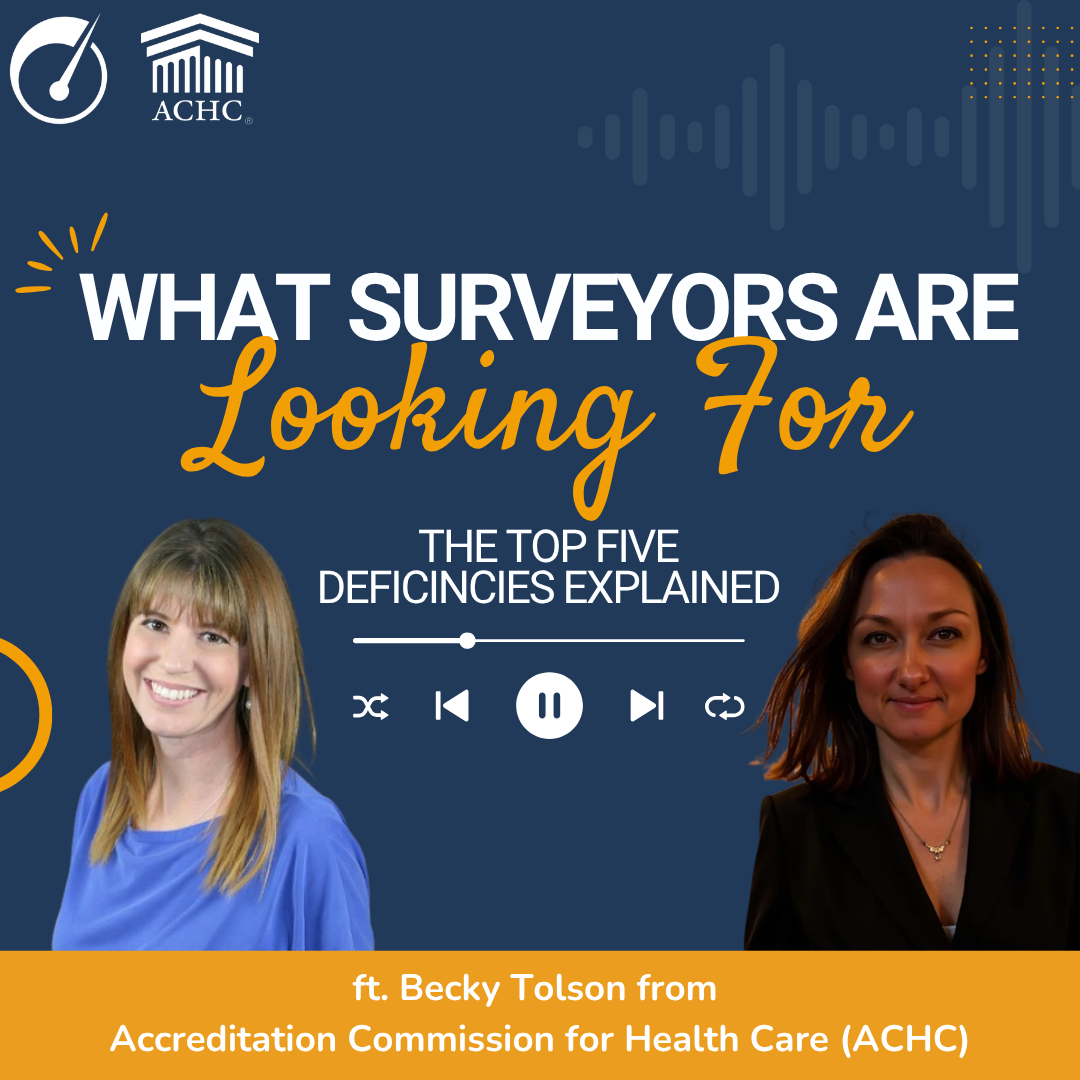
Right. Well, welcome to Home Health Revealed. We're so glad that you are listening and interacting with us today. I have a very special guest from the achc, and I am going to let her do her own intro.
Becky, take it away.
[00:00:25] Speaker B: Thanks, Hannah, and thanks for having us. My name is Becky Tolson. I am the clinical Operations manager here at Accreditation Commission for Healthcare, or achc.
So what I do here is I supervise and oversee primarily our surveyors that do home health and home care surveys for our agencies.
But I do do a lot of education, and we have a lot of partnerships with folks and organizations out there that, you know, provide. We want to provide education on how to get prepared for the accreditation surveys that we do perform.
[00:01:02] Speaker A: Yes, a lot of great work, a lot of great partnerships. I just got to go to your academy this year, and it was such a great time. Really good to get to connect with just good people in the industry, a lot of industry knowledge. So thanks for kind of following up on this podcast and reconnecting with the audience. And you do a lot of work with surveyors, as you said. And I think agencies have a lot of questions around what they're looking for. And, you know, there's a little bit of anxiety around it when somebody says they have a surveyor in their. In their office.
[00:01:34] Speaker B: Right.
[00:01:34] Speaker A: So can you tell us when surveyors walk into an agency today, what are they really focusing on?
[00:01:42] Speaker B: So there's a lot of moving parts. And as you said, a lot of people are very nervous, and we try to ease that, those nerves with our survey experience. You know, we want that survey experience to be very educational.
You know, we are there to do a job, obviously, and find things, making sure that they're following the standards and cops.
But we want it to be a learning experience. So while we're there, we do do a lot of education.
But in the end game, what we want is to see good, quality patient care. So, you know, that end result is we're making sure that the agencies are doing what they're supposed to be doing. They have policies in place to provide and outline that quality patient care. And so there, as a result, they're implementing those and they're following the standards that either their state or CMS or their accreditor has set for them.
So it's really looking at that bigger picture. We look at that patient care from admission to discharge, and we want to see that pictures Painted oftentimes on paper.
And so just ensuring. And obviously we'll do things like home visits to kind of ensure that in lifetime as well.
[00:02:53] Speaker A: Based on those trends that you're seeing, where are most of the deficiencies really coming from?
[00:03:00] Speaker B: So most of them do come from that patient care aspect. So there's actually certain cops that we see tagged a lot more often. And it's always that patient care. It's things like the comprehensive assessment, things like the plan of care. And so making sure that not only is that quality care being provided in lifetime, it's being documented thoroughly as such as well.
[00:03:25] Speaker A: And I know one of the things that you mentioned to me and I think we see this as well when we're reviewing documentation and talking to these clinicians. But it's not a lack of good care.
The care seems to truly be happening.
[00:03:39] Speaker B: Bedside care.
[00:03:41] Speaker A: It's the problematic part is the documentation of what we refer to lovingly as the paper patient.
[00:03:47] Speaker B: Correct? Correct, Absolutely. So it's making sure that documentation is thorough, it's detailed. You know, again, it does. We keep saying paint that picture. You know, you should be able to have anybody walk into your agency and it should be clear what is going on with that patient at any given time.
[00:04:09] Speaker A: And I know you were going to share with us today some of the most commonly cited tags is tags. The right word tags.
[00:04:18] Speaker B: Yeah, we'll have the top 5G tags that we can discuss today. Yeah, absolutely.
[00:04:23] Speaker A: Okay, let's jump right into that. I'm anxious to hear what those top five are and share that with our listeners.
[00:04:30] Speaker B: So here's the top five home health deficiencies we see. We'll see them here on the next slide. But I want to show you which coa they actually stem from. They stem from four different cops. So as we mentioned, they're all patient care related.
So you have the comprehensive assessment for the patient, you have the care planning. So this is where we see the actual plan of care.
We have infection prevention and control.
And then we have this one that's called skilled professional services. This is where we're going to see deficiencies tied to those nursing notes. So seeing that they're actually following the plan of care and that they're actually documenting well in those visit notes when they provide that care to the patient.
I do have them starred. So the ones in red are our top condition level deficiencies. So this is the areas where we see oftentimes multiple deficiencies in one cop.
When we see those and when we see a lot of level one tags or we see this happening in a lot of see records a lot of instances.
This is where agencies are prone or can be prone to being elevated to that condition level, which is really what you don't want when you have your survey because oftentimes that will what makes you dependent and that causes us to come back and make sure you have abated those issues.
So these are the top four that we tend to see that get elevated. Those are the areas. So usually it's, it's, you know, showing that there's some sort of systemic issue. It's not just a one off issue. It's something that's, you know, something that they had multiple issues or they were out multiple things within that cop.
[00:06:16] Speaker A: So when you talk about a level one tag, how many levels are there and can you, for someone who may not know, talk about what those levels are and maybe those conditions that you would come back.
[00:06:28] Speaker B: So there's, there's technically a level one and then there's non level tags. So we used to have in the past level one and two and then non levels, we kind of changed that a few years ago in home health. So now it's just the level ones. They do consider the level ones the high priority tags. And so I actually do have a slide here to show you guys that shows all the Level 1 tags.
These are the ones that CMS does consider to be the most prominent, most priority, obviously tied to patient care. These would be things like if you're not doing them correctly or you know, often not doing them at all, it's going to lead to a patient jeopardy issue. So these are high priority tags. So when agencies are getting prepared for survey or making sure that they're within the cops, if anything, these are the most important that they want to ensure that they're on top of.
Because like I said, these are the ones that tend to lead to elevating us, you know, an agency to a condition level which we really don't want.
So when we look at the top five tags, oddly enough they're all level one tags. So they're things that are high priority issues. And so they're things that we do need to see that the agency is in compliance.
Because if they're not, there's probably a big bigger issue systemically wise going on.
[00:07:56] Speaker A: And so the first one, and if anybody's listening on a platform that does not have visual, you might want to switch over to YouTube if you would like to see some of these slides that Becky is showing. But the first one here, the G574 is the plan of care, which is what we were just discussing. Becky, why do you think the plan of care continues to be such a common deficiency?
[00:08:19] Speaker B: Yeah, so going into the plan of care, it's because there's so many components and moving parts to it agencies, if you look at the tag, you know, there's all these different components you have to have. And so the ones that are tied to the cop, you need to ensure that they're honestly completed to start.
If you don't have them completed on your documentation, you know, that's a big red flag issue.
But it's because there's so many components, it can take one just component not being, being completed or being incorrect for the agency to be out in this tag.
It's also oftentimes if you're not detailed enough in the component. So one of the things that does have to be on the plan of care, for example, is a listing of the medication. So if you don't have all the medications listed at that point in time of the patient's care, or it's not detailed enough, or medications have changed, or when you have treatments as well, if you're not being detailed in those treatments, especially when you start to get into more acute or intricate care like wound care and infusion, if you're not providing those details, as far as, you know, what you're cleaning the wound with, where the wound's located, what dressing you're using, you know, all of those things have to be encompassing in the plan of care. And so oftentimes it's. It's that lack or lack of attention to detail that we see is an issue with that.
[00:09:50] Speaker A: And then within that med. So the med profile, is that the second one or is that within this plan of care, there is a listing
[00:09:58] Speaker B: of the med profile and of the med list, I should say, in the plan of care. But to go into the next one, that is the med profile. So 536 is the med profile.
And so oftentimes we do see those two tags cited together, they kind of go hand in hand because a lot of EMR systems these days that agencies use, you know, they pull that med profile into their plan of care. So if you're not entering it correctly into the med profile to begin with, it's not going to pull over to your plan of care correctly.
So oftentimes if it's wrong, let's say at the start of care research, we'll see that wrong in both areas. And so therefore it does get tagged in both areas, but not all the Time. Sometimes agencies are good about keeping that MedPro profile updated ongoingly when meds change, but then it doesn't get pulled over, let's say into that recert accurately. So it really just depends making sure that they're staying on top of, you know, making sure that it's correct in both areas, but also knowing their EMR system oftentimes to make sure that it is being reflected accurately in the record.
[00:11:11] Speaker A: What's the biggest mistake you think agencies are making when it comes to medications tracking and documenting those?
[00:11:19] Speaker B: Usually it's the ongoing updating of them. So agencies are really good about having that med list accurate from the get go at that start of care.
But when there's med changes as that care progresses, you know, they're not updating that lifetime. So they need to make sure if there is something like a dosage change or they discontinue a med or add a med, they have to stay on top of those changes lifetime. Not necessarily waiting to that recert. Because keep in mind that recert is a 60 day span.
So you don't want to wait until you're doing that recertification. You need to be doing it live time, making sure that that list is always current. So again you, no matter when that surveyor walks through that door, they can pull that list from that day and see all the accurate meds that that patient is currently on.
[00:12:10] Speaker A: So to avoid a citation when it comes to the meds, what would a surveyor really expect to see in that documentation?
[00:12:16] Speaker B: So we need to see it live and accurate, but we also need to see them complete. So we need to make sure that the meds include all the components. So it needs to have the name of the drug, the dosage, the route.
If it's things like we see a lot of deficiencies tied to things like topical meds. Because if you're putting a topical ointment or treatment on a patient, where is it being applied? So we need things like location, up to where to apply that, things like infusion flushes, you know, if they're using, you know, heparin and normal saline, those are medications that technically have to be listed on the medication profile. Or oxygen, even oxygen is considered a drug. So sometimes we see that missing for patients that are on oxygen therapy.
[00:13:08] Speaker A: Good notes.
Anything else within the medication profile here that I've missed?
[00:13:16] Speaker B: Reconciling is a big issue as well. So making sure when you do have that complete med list, and keep in mind the med list does have to be prescription and non prescription. So anything that the patient is taking.
So it's really important to check and reconcile those meds. Really every visit, every time you go and see that patient, ask them have they had any changes in their medications.
But there, there is the role of the home health agency to reconcile those meds. So making sure that there's no, you know, side effects that the patient is experiencing or significant drug interactions.
If they are and something is, you know, being compiled or coming up as a red flag, then they need to reach out to that prescriber to address that and kind of follow up in that sense of that care. So they're really adding, acting, excuse me, as that patient advocate, you know, when it comes to that care as well.
So the next one is 7, 10. So this one actually has to do with following the plan of care. So we talked about 574, which is the plan of care and has all those great components that need to be included. So here we need to ensure, and those visit notes that we are actually following that plan of care. So the plan of care kind of, you know, is our roadmap. You know, that's what's going to tell us what we need to do, how we need to get that patient to that destination, you know, what's that destination we're trying to achieve and how do we get them to that? So look at those nursing notes as kind of that, that along the way that, that trip to get them there. So making sure that we're following that plan of care. Obviously if we've seen changes in that plan of care, we should see things like orders, supplemental orders that have been, you know, ordered and you know, transcribed in the record, but we should always be able to look and see, okay, are we doing what we said we were going to do with that plan of care? So oftentimes we see sometimes that, you know, especially with wound care or things where there's a lot of changes going on with the patient that they're not providing the right wound care. There's something happened or there's been a change. And sometimes that may be because there's a different nurse going in different times. You know, maybe that nurse was out one visit and they didn't realize that an order had changed. And so it's a matter of making sure we're always doing the most up to date accurate care. And that's reflected in the nursing notes.
[00:15:48] Speaker A: Why are agencies cited for this?
[00:15:52] Speaker B: So you're usually, it comes down to that, again, documentation.
So again, ensuring that we have the most up to date orders, the clinician is aware of them, and that's what they're documenting and in the care notes, so making sure that there's evidence of that.
And so again, sometimes we see that, you know, they're not providing the care that was ordered. We can also see sometimes where other therapy, other services, like therapies, I should say, are ordered and they are never provided. So if we see evidence of, you know, let's say therapy ordered at the time of the start of care, but we never see a therapy evaluation being completed, you know, those could be things that are cited here because they were technically ordered, but it wasn't addressed as far as why that didn't happen. You know, maybe the patient refused and that's okay. That's within their right. But we need to see that documented into the patient record itself.
[00:16:49] Speaker A: Is this usually due to communication breakdowns or documentation habits?
[00:16:55] Speaker B: It can be both. I would say majority though would be documentation.
Usually agencies, I feel, are pretty on top of the communication and what's the latest orders. It's just they're lacking in the actual documentation piece of putting it on paper.
[00:17:13] Speaker A: Do you have a best practice recommendation for communication within an agency when it comes to the plan of care? What are some things that you see high functioning agencies doing?
[00:17:23] Speaker B: I always say you can't document enough. So any little communication when it comes to that patient's care, A lot of agencies document that in the clinical notes, but there's a lot of things going on behind the scenes. So, you know, everything doesn't just happen with that patient's care. When you're in the home, right, you're making this, you're making calls to the physician's office.
You're that middle person. So whenever you're getting changes and instructions or orders and you're communicating that to the patient or family, you know, every little thing you should be documenting. If you're having to reach out to the physician multiple times to get, you know, a result or communicate something, you know, document that, you know, you, you did the work and you did the effort. So I always say document every little communication and contact that you can.
[00:18:11] Speaker A: Does that stand in favor of an agency? If they've documented that they've reached out to this physician, they've done a lot of their things. How does that play into maybe any of these tags or citations?
[00:18:23] Speaker B: As long as they're still providing the care that's as ordered, you know, by the latest orders, then yes.
Okay, so yes, that shows us that you're. You're doing the right thing. As the patient advocate, you can't make a physician write. Write an order, unfortunately.
So to, to a degree, yes. You still want to show that you as an agency have done that due diligence.
[00:18:49] Speaker A: Understand?
Okay, are we ready for the next one? Number four. I feel like the countdown is on here.
[00:18:56] Speaker B: Yeah. So we have. The next one is 7:16.
So this is actually called preparing clinical notes. So really, this is the detail that we see in the clinical notes. So oftentimes we talked about lack of detail in the plan of care. This is where we would cite lack of detail in the clinical visit notes. So when we actually seeing you perform those visit notes, we want to see what it is you're doing step by step.
So, you know, if you're doing wound care, we don't want to see you, we don't want to see you recording you perform wound care per MD order. We want.
We want you to show us that you know what that order is. So in those clinical documentation, your clinicians need to step by step, you know, implement what it is they're doing. So, you know, remove the old dressing, they cleaned the wound with normal saline, they applied, you know, a certain type of dressing, they wrapped it with gauze. You know, all of those moving parts we need to see not only in the plan of care, but also here in the clinical note. So to document something just performed wound care per MD order or performed infusion administration per MD order, you know, that's not going to be acceptable enough. We need to know, and you need to show us that you actually know what the order says, because you'd be surprised how many times here again, back going back to 710 where they documented that they didn't do the right wound care.
So it's very important to be detailed in their clinical notes.
We also look here to see that they're using things like approved abbreviations. So like if they have a policy within their agency, as far as what abbreviations can be used in documentation, you know, these are things that we would pull or ask of the agency to make sure they're appropriate. So the agency sets that.
And so if we are seeing abbreviations being used in documentation, that is what we're going to do is we're going to compare it to that agency policy.
Okay, I hadn't thought of that.
[00:20:57] Speaker A: That's a great, that's a great point. Because notes are only as good as they can be understood.
[00:21:03] Speaker B: Right, exactly. So abbreviations can be, like I said, acceptable, but you need to have a policy in place for it. And so those are things we look at and we would cite here if, if unapproved abbreviations were not being used.
And then just like I said, oftentimes it's lack of detail. If you're providing teaching something, you know, as simple as teaching, you shouldn't just say, say, you know, I taught patient on diabetic care. Well, what about diabetic care? Did you teach them? Did you teach them on diabetic diet? Did you teach them how to give their insulin? You know, a little more specifics that can kind of again, paint that picture of what's going on during that visit.
[00:21:46] Speaker A: What are some.
Well, I know one of the things you mentioned was you called it cloned documentation. This to me is like a copy and paste practice. Right, Right. Why is that such a big concern from a survey perspective?
[00:22:01] Speaker B: So we see a lot of the cloned documentation with EMR agencies that are using EMR systems, which I think most these days are with as tech savvy as we are. And EMR systems are great.
They can be a big pro, but they can also be a crutch, so to speak, when it comes to that documentation, especially when it comes to the nursing notes.
So we don't want to see visit after visit after visit, the same verbiage, you know, the same things you're doing. Yes, you may be going in there and doing the same wound care each time, but what else are you doing with the patient? You know, are you teaching them something particular about their, their plan of care, about their disease process?
So we don't want to see that clone or that kind of copy and paste.
And a lot of EMR systems are great in a sense because they will pull a visit from the previous visit that, you know, that kind of narrative or assessment.
But clinicians need to make sure they're always tweaking that or customizing it to the visit that actually occurred or to the care that actually occurred.
So it is kind of a red flag to us as surveyors when we do see the same, you know, thing being said over and over and over and over.
And we do catch agencies when they use that because you'll see things like, oh, the doctor has an appointment today at 3:00pm well, does the doctor go to the doctor's office every time we're at the home, you know, that day? So it's things like that that they're not proofing or they're not customizing the visit notes, so to speak.
[00:23:38] Speaker A: Those EMRs are making it all too easy for them in some ways, and we appreciate the convenience, but yes.
So when you're looking for strong survey ready documentation.
What does that actually look like?
[00:23:54] Speaker B: So it's detailed obviously. I always say, you know, document, document everything we learn as nurses, you know, if it wasn't document, it wasn't done. And that definitely proves with the survey experience because the surveyor is not going to just take the word of someone telling oh yeah, we did this.
It needs to be in writing. So documenting as much as you can. Documenting in detail as much as you can.
I always say think about if you're, if the chart was to, you know, go in a legality perspective as well in a court of law, you know, is this going to be upheld? So making sure that the detail is in the writing, you know, as far as the care that was provided. So I never say, I try to say that you probably never provide enough detail in your documentation.
[00:24:45] Speaker A: I was talking with someone recently from a home health agency who said every clinical note should stand alone showing medical necessity, showing enough detail.
And do you, do you agree with that?
And then maybe what the question could be, what would make it standalone.
[00:25:04] Speaker B: Yes, I do agree with that because especially when you are billing Medicare, you do have to justify that constant skilled need. I will say that is a issue we see with a lot of especially newer agencies that are kind of getting up off the ground is justifying that skill need, especially if they're doing a lower cost or I should say less intricate hands on skill like teaching. So teaching is considered a skilled need by Medicare.
But here again, what are you teaching on and is it teaching appropriate?
So when you're documenting that as a, as your skilled need, you need to document again, you know, what are you teaching on? So we talked about the example of diabetic care. Well that's a broad range and maybe the patient's been a diabetic for 10 years so they already know about what diabetes on is on. You may not need to teach about what diabetes is, but maybe they had an exacerbation. So now they're now on new medications. So they're on insulin. So you're teaching them how to, you know, do their insulin. So those are the specifics we need to see.
But those are definitely the specifics that CMS will need to see if they ever, you know, adr those agencies medical records because they'll want to see and justify, you know, see that the agency is justifying that there is a skilled need there, that it's not just something that can be taught to the patient or caregiver and you know, they can be independent with their care in that
[00:26:38] Speaker A: regard, how can agencies realistically improve this without overwhelming clinicians?
[00:26:47] Speaker B: So again, I think the EMR systems are great.
A lot of EMR systems have the ability to make templates. So you can kind of have those cookie cutter templates, so to speak, which I think are great for, you know, things like if you're going to document a wound care procedure or an infusion procedure, you know, that's a lot of steps. And so if agencies want to build out those templates for those types of, of the pieces of the documentation, that's great and helpful to the clinicians. But here again, you can't just, that can't be your one all be all. You still have to customize it to the treatment because sometimes treatment vary a little bit differently. You have to customize it to the patient. You have to document things like how the patient tolerated the treatment as well. You know, any teaching that you've done.
So starting with a template is a good basis because that can cut down a lot of documentation.
But that template shouldn't be the same for everyone. So just like we have to set an individualized plan of care. When we do our plan of care, the nursing and the treatment has to be individualized as well.
[00:27:57] Speaker A: All right, we're down to the last one.
[00:28:01] Speaker B: Yeah, so the Last1 is G682, which has to do with infection prevention.
And so the other four that we've talked about really came down to that documentation of the care.
This is where we see the care lifetime. So this is where we see issues oftentimes identified during those home visits. So when we're out there shadowing the clinicians, you know, we're going into the patient's homes to see that care actually being performed. So there's a couple things we do assess for as far as those home visits. We assess for things like infection control being one which is tied to this tag, but also like following the plan of care.
And you know, we do interview the patient and family as well as part of that home visit process to see how satisfied they are with the care and, you know, are their patient rights being honored.
So out of all of those elements, the infection control is really the top deficiency we come across for home visits.
And so it's assessing for things like, you know, hand washing bag technique, if they're bringing an equipment bag in and you know, certain procedures. So if they're doing, you know, an infusion or a wound care procedure, making sure they're following their agency policy.
So oftentimes we see things like the clinician is not using proper hand hygiene, you know, items or they're not washing their hands at the proper times.
So maybe they're not washing their hands before they touch the patient or after they, you know, take off a dirty dressing, changing their gloves as well.
So sometimes it's the time points in which they're washing their hands or sometimes it comes back to that bag technique, you know, are they cleaning their equipment before they put it back into their bag? If it's multi use equipment, if they have a barrier set up, let's say if they're doing a procedure, you know, do they have a designated clean and dirty side that they're adhering to? And so really it's following that infection control that is set by, you know, organizations like the CDC primarily, but your public health departments as well.
So we look at agencies policies to see what they're following.
And oftentimes if we do observe like a treat, a certain treatment in the home, the surveyor will pull that, let's say nursing procedure or treatment procedure from the agency just to ensure that they are following that policy. Indeed.
So here it's again just making sure you're following those standard precautions and we're trying to prevent the transmission of infections and communicable diseases as much as possible.
[00:30:52] Speaker A: What is one simple practice that could significantly reduce citations here with these home visits.
[00:31:01] Speaker B: So I always tell agencies, do shadow visits, do you know, joint visits with your team.
So that clinical manager, whoever that case manager is, that supervisor, go out there with your clinicians, preferably in a surprise setting if you can, and see what they're doing out there in the field prior to us getting there as the surveyors.
Because sometimes you'll have clinicians who don't realize they're doing it wrong from the beginning and as a result they still do it wrong when we come do their survey. Then you have some that are doing it wrong before and they try to try to change things up during the survey and then because it's not their routine, something else goes wrong, something is said by the patient as they're doing it differently.
So go out there and see before the survey is happening, you know, in that live setting. But you can also bring in your staff and have trainings or you know, and services that way, have them show you how they're washing their hands, have them show you how they do bag technique.
So staying on top of those direct observations internally as an agency is important in order to get ahead of it before we as a surveyor do.
[00:32:19] Speaker A: Yeah, I do love the idea of Those supervisory visits, taking a coffee out to one of your clinicians while they're out there in real time, just so you can observe. And I think you've really outlined well that it's not that clinicians aren't wanting to do the right thing or trying to do the right thing sometimes. It's just those habits that become that over time. And so if, if you constantly do the right thing the right way, follow these cops, you don't have to worry about the survey coming. You don't have to have the anxiety and maybe the nerves that come with being watched doing something when you know you're doing right.
[00:33:00] Speaker B: So, sure. And obviously the cops are a good starting point and guidance.
But there are sometimes other ways to meet the intent of the cops.
But here again, we need to see that your staff are following your policies. So a staff may have done something differently at a different agency.
So when we're serving, then we need to see that they're performing that stuff the way your agency has and where the rates you're written in your policy.
So that's sometimes a lot of the big gaps that we see when it comes to serving agencies as well. It's not necessarily the staff members doing something wrong. They're not meeting the intent of the cop. But if your policy says that they're to do it a specific way, we need to see that they are doing it that particular way.
[00:33:48] Speaker A: Yeah, good point there.
As far as getting in touch with ACHC or even with you for additional guidance for connection education, what's the best way to find information or reach you?
[00:34:04] Speaker B: Our website is usually the best. So ACHC.org is a great resource which talks about all the programs and services we offer.
We do do a lot of education, so we do a lot of partnerships with strategic partners such as Health Rev, where they put on. And I believe you guys have a webinar series coming up as well that we're partnering with.
So we have our ACHU division and we do a lot of webinars on various things that expand beyond accreditation, which is great to help agencies in those areas.
But we also internally do. And that's part of what I do as well, is a lot of that education to get them prepared for accreditation. So definitely checking out our website. Our website has all of our contact information. If you do want to call into our customer care team, we now have a live chat robot too. If you want to type in a question or inquiry, you know, we can, we can answer your questions that way as well.
[00:35:05] Speaker A: That's great. Yeah. I'm so glad that you guys offer that resource. It's a great way to get things in real time, ask real questions. So thank you for that and thank you for presenting on these Top five things today. I think this has been really helpful.
Very practical, for sure. So we look forward to doing the webinar with you all. It's a masterclass on audit readiness, actually. So we're going to be talking about some very specific things within documentation and rcm, how it impacts the revenue, and then finally, how to build a habit ready agency so that you don't have to worry about being caught off guard. You're always ready to do what's right and it becomes habitual. So thank you, Becky, so much. I appreciate you being here.
Yeah.
[00:35:52] Speaker B: Thanks for having us, Hannah.
[00:35:53] Speaker A: We appreciate.
Sam.